Here is a fact about how crime works in America. If you want to move drug money, hide a bribe, dodge sanctions, or buy a house with stolen cash, you don't do it in your own name. You set up a company — a limited liability company, in Delaware or Wyoming or anywhere — and you put the company's name on everything. For decades, nobody in the U.S. government had to be told who actually owned it.
Congress spent roughly 15 years fixing that. In 2020, on a bipartisan basis, it passed the Corporate Transparency Act as part of the Anti-Money Laundering Act. The law did one thing: it required companies to tell the Treasury Department's financial-crimes unit who really owns them. Not a public registry — a confidential database that law enforcement could search when following the money.
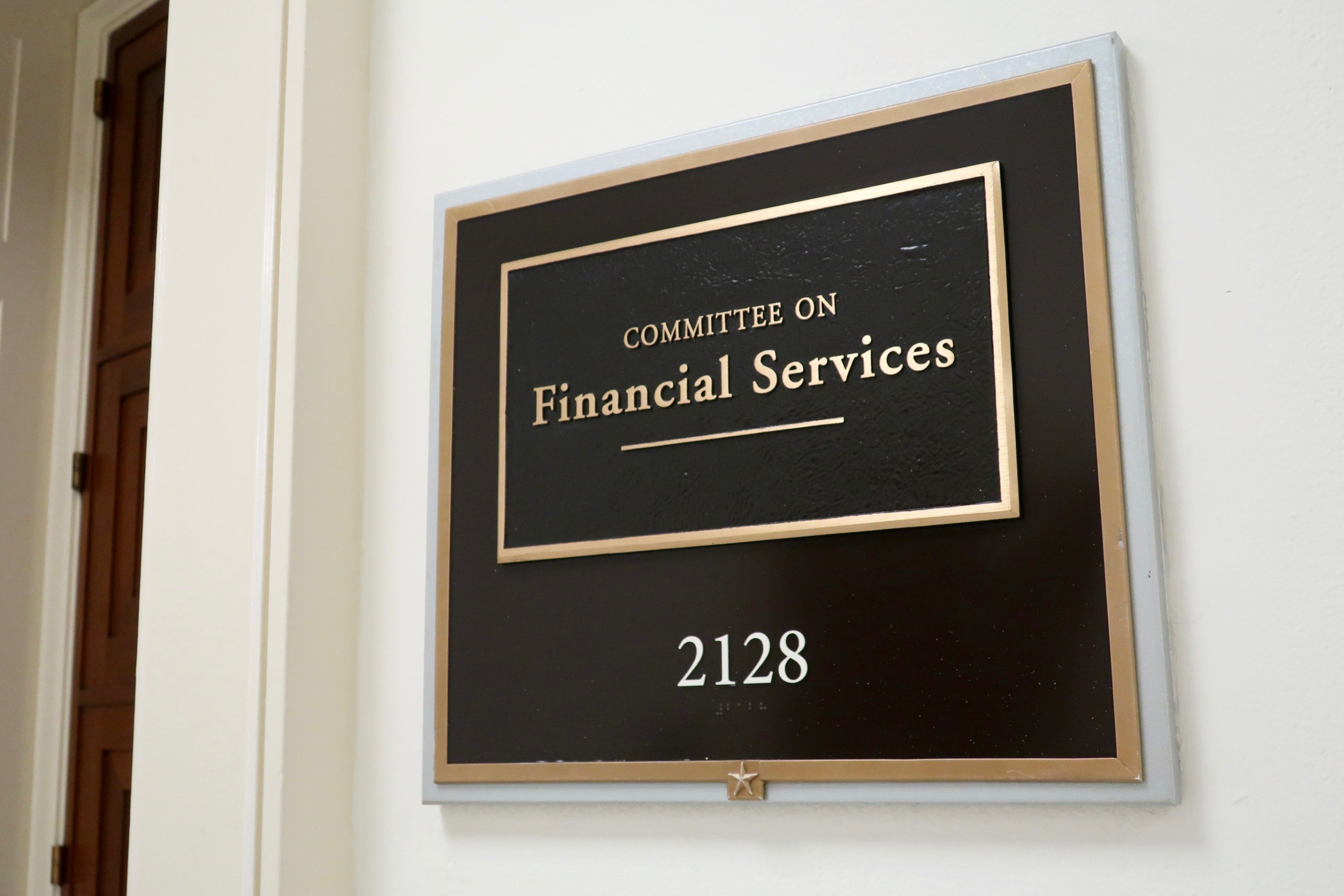
On April 21, 2026, the House Financial Services Committee voted to gut it. The vote was 26 to 25.
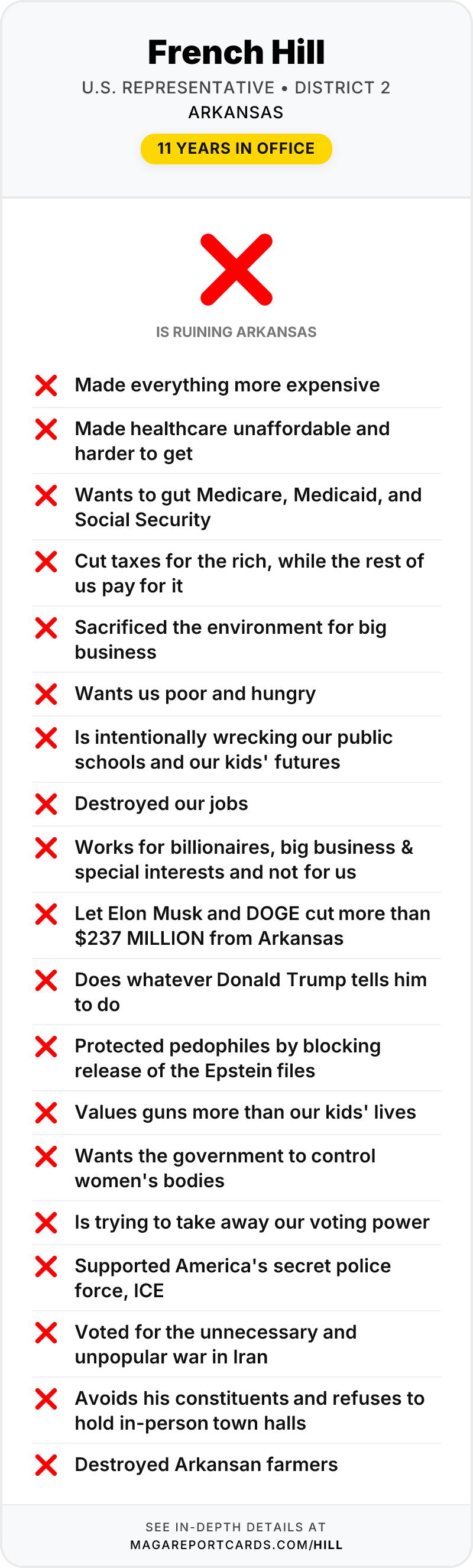
The chairman who ran that markup, and defended the bill on the record, was French Hill.
What the bill actually does
H.R. 425 — its sponsors call it the Repealing Big Brother Overreach Act — narrows the reporting requirement so it applies only to foreign entities. American citizens forming American companies would report nothing.
That exemption is not a trim. Analysts put the share of covered entities it cuts loose at more than 99%.
And there's a second piece that got less attention. The bill also directs the Treasury's Financial Crimes Enforcement Network to delete all the ownership information it has already collected on domestic companies and owners.
Not stop collecting. Delete. Records that already exist, on companies that already filed, wiped.
The people who chase this money begged them not to
This is not a case where the harm is theoretical or the critics are partisan. Read who lined up against it.
Debra LaPrevotte, a former FBI official who spent three decades investigating international corruption and recovered more than $1 billion in stolen assets, said gutting the law "would eliminate a key tool needed by law enforcement to follow the money."
Jodi Vittori, a retired U.S. Air Force lieutenant colonel, put it in terms of American servicemembers: "America's enemies, including backers of the Taliban and Hizbullah, have used anonymous shell companies to fund their operations against our forces."
Erica Hanichak of the FACT Coalition, the anti-corruption group that tracks this law, was blunt: "There could be no greater gift to the fentanyl traffickers, fraudsters, and U.S. adversaries that rely on the anonymity that shell companies provide than gutting the Corporate Transparency Act."
Rep. Stephen Lynch of Massachusetts, a senior Democrat on the committee, listed what investigators lose: "Weapons trafficking, human trafficking, terrorism — without this data, prosecutors are left blind when investigating shell companies."
For what it's worth, the public isn't with Hill on this either. In a 2024 McLaughlin and Associates poll, 81% agreed that "asking some small businesses to do 20 minutes of paperwork identifying their true owner is a small price to pay for keeping our communities safe from drug trafficking, terrorist financing, and other financial crimes."
Hill's answer: the banks already have it
So how does the chairman of the House Financial Services Committee justify it?
His main argument was redundancy. "It's already the law to disclose beneficial ownership," Hill said, "and it is collected by every financial institution."
That's a real rule — banks do collect ownership information from customers who open accounts. But it isn't the same thing, and the difference is the whole point of the Corporate Transparency Act. Bank records sit inside thousands of separate private institutions. An investigator has to already know which bank to ask, and has to have legal process to ask it. The Treasury database is one searchable place where you can start from a company name and find a human being. That is what "follow the money" means, and it's why a former FBI agent called it a key tool.
Hill also argued that foreign bad actors would still be covered — "People from outside the U.S., corporations or individuals who try to form a pass-through entity in the U.S., would be subject to this rule" — and pointed out that Cyprus, the UAE and Turkey all have ownership registries and remain, in his words, "renowned money laundering places."
Take that argument seriously for a second. Registries in weak-rule-of-law countries don't stop laundering, therefore a registry in the United States won't either. By that logic no financial regulation is worth having anywhere, because somewhere it has been evaded. And it doesn't touch the actual objection, which is that the bill exempts Americans — the people who form the overwhelming majority of U.S. shell companies, and who are perfectly capable of laundering money without a foreign passport.
His other argument was the burden on small business: that the law subjects millions of entrepreneurs, plumbers and electricians among them, to a "confusing" filing requirement backed by criminal penalties for mistakes.
That's a fair complaint about the paperwork. It is an argument for simplifying the form, raising the error threshold, or softening the penalties. It is not an argument for exempting 99% of companies and erasing the files already on hand.
Why this isn't abstract
We published a story on this exact mechanism the same week. A congressional candidate in Texas, Brandon Herrera, routed 99.4% of his campaign money through an entity that isn't registered to do business anywhere and has no website, according to a Campaign Legal Center complaint. Figuring out who was actually on the other end of that money is the entire problem.
Multiply that by fentanyl networks, sanctioned oligarchs buying American real estate, contractors defrauding federal programs, and landlords hiding behind LLCs. Every one of them runs on the same trick: a company name with no name behind it.
The Corporate Transparency Act was Congress's answer. Hill's committee just voted to take it back, and to shred what's already been collected.
The chairman and his funders
It's worth remembering who Hill answers to.
He is a former bank CEO — founder, chairman and chief executive of Delta Trust & Banking Corporation from 1999 until he sold it in 2014 — now chairing the committee that writes the rules for banks, crypto exchanges, insurers and private equity. He takes eleven times what the average House member takes from finance, insurance and real estate: $1,620,940 against an average of $146,176. That sector is 77% of all the PAC money he raises. Just 2% of his money comes from small grassroots donors.
This is the same chairman who personally wrote the House resolution to kill the $5 cap on bank overdraft fees, a rule that would have kept $5 billion a year in ordinary people's checking accounts.
The pattern isn't hard to read. When a rule protects the public and costs the financial industry something, French Hill's committee finds a reason it has to go.
We deserve better.
Sources
US Congressional Committee Chips Away at Corporate Transparency Act — OCCRP.
House Committee Advances Disastrous Bill Gutting Corporate Transparency Act — The FACT Coalition, April 2026. Photo: FACT Coalition.