Peptides are short chains of amino acids. Some of them are real medicine. Most of the ones sold online for "longevity," muscle growth and fat loss have never been approved by the FDA for anything, and for years the agency's own advisory panels — mostly academics from Duke, Harvard and Johns Hopkins — voted them down one after another as too risky to put in compounded prescriptions.
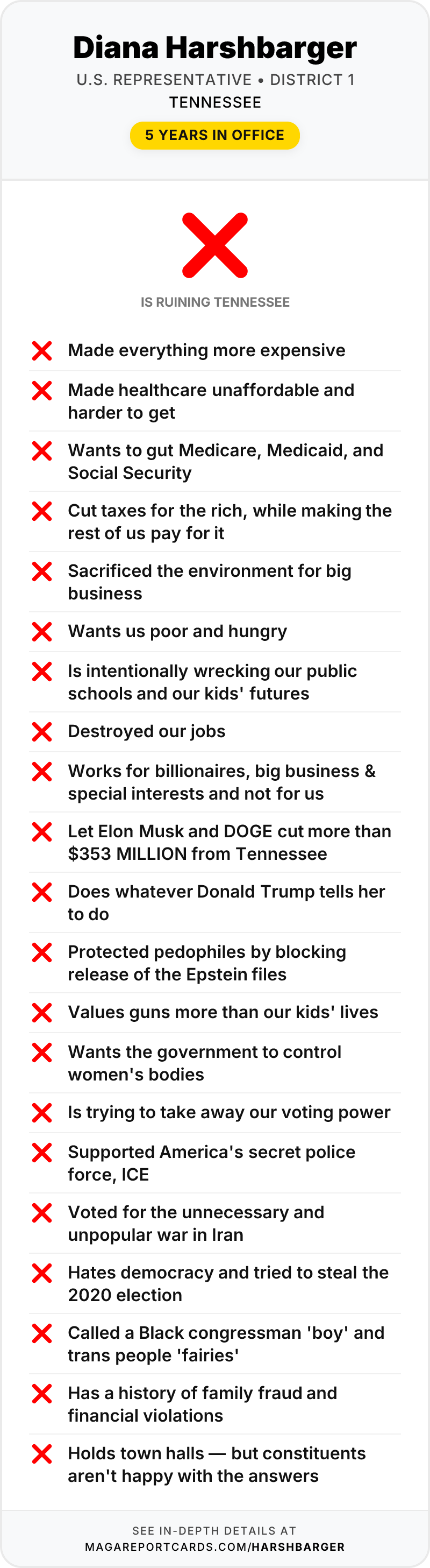
In 2026 that changed. Here is how, and here is Diana Harshbarger's part in it.
Step one: the letter
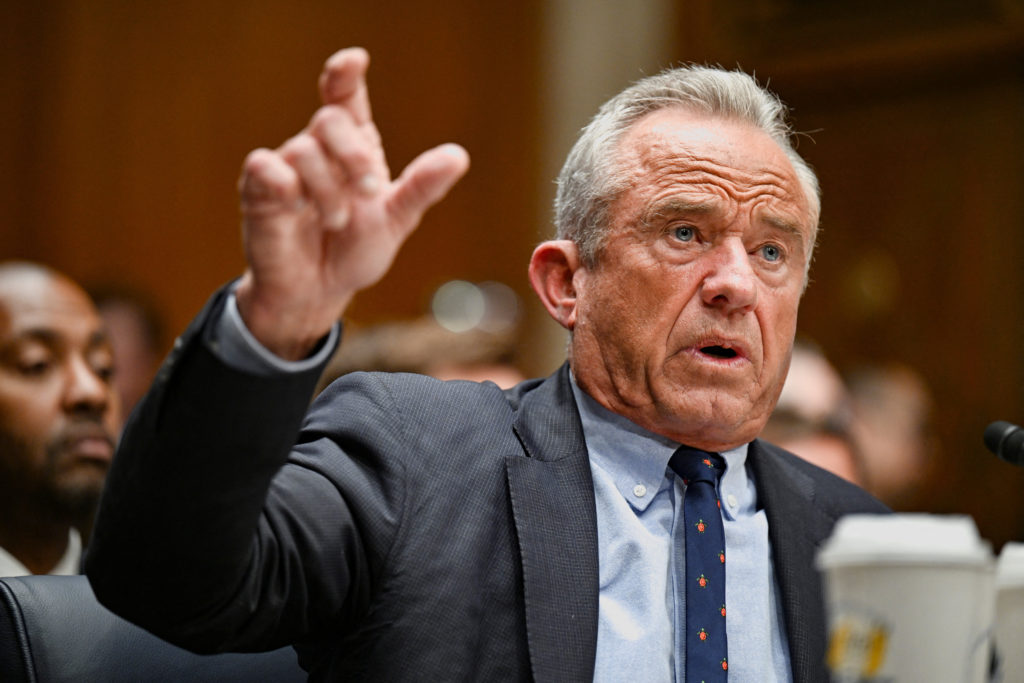
On November 10, 2025, Harshbarger wrote to Health and Human Services Secretary Robert F. Kennedy Jr.. The opening line is the tell:
"As both a pharmacist and a Member of Congress, I write to urge the U.S. Food and Drug Administration (FDA) to exercise enforcement discretion with respect to the compounding of certain peptides for patients."
"Enforcement discretion" means: stop enforcing the rule.
The letter names six peptides she wants left alone — BPC-157, CJC-1295, ipamorelin, thymosin alpha-1, thymosin beta-4 fragments (TB500), and GHK-Cu — and describes each in the language of a product catalog: wound healing, "muscle wasting, metabolic dysfunction, and age-related decline," "regenerative potential."
Two of those six have a specific problem. In the FDA's 2023 scientific review of peptide ingredients, as ProPublica reported, "Subjects in studies of six individual peptides — growth hormone releasing peptide-2, ibutamoren mesylate, ipamorelin, CJC-1295, AOD-9604 and melanotan II — experienced adverse events, including death." Causation was not established in those studies. But those are two of the six drugs Harshbarger asked the government to stop policing.
The letter is not hosted on her congressional website. It's hosted on a4pc.org — the website of the Alliance for Pharmacy Compounding, the industry's lobbying arm, which describes itself as "the voice for pharmacy compounding" and runs its own PAC.
The Alliance for Pharmacy Compounding is one of Harshbarger's largest donors, at $35,000. So is the National Community Pharmacists Association, at $35,000, and the Professional Compounding Centers of America, at $31,499. Three separate compounding lobbies, roughly $100,000, to a member who vice-chairs the House Energy and Commerce Health Subcommittee — the subcommittee with jurisdiction over the FDA.
Step two: the panel
In June 2026, the FDA released the membership of the reconstituted Pharmacy Compounding Advisory Committee, the body that recommends which bulk substances compounding pharmacies may legally use.
The Associated Press looked at the list and found it was no longer an academic panel. It was practitioners — people who prescribe, sell or promote peptides. Dr. Haleem Mohammed, who runs Florida clinics selling peptide and testosterone injections. Dr. Gabriel Alizaidy, who charges $500 for peptide and hormone consultations and promotes them on social media.
And Bobby Harshbarger — Tennessee state senator, pharmacist at his family's business Premiere Pharmacy, "which sells compounded medications for weight loss, longevity, pain and other conditions," and Diana Harshbarger's son.
That is the chain in a sentence: the congresswoman asked the agency to loosen the peptide rules; her son, a pharmacist at the family compounding pharmacy, was seated on the panel that decides the peptide rules.
The AP also noted, in the same story, that President Trump had pardoned Diana Harshbarger's husband, Robert Harshbarger Jr., who pleaded guilty to substituting an unapproved drug from China for one used by kidney dialysis patients.
Step three: the vote
The committee met on July 23 and 24, 2026.
Going in, FDA's own scientists had concluded in the briefing materials that every peptide on the agenda lacked the evidence needed to call it safe and effective for what it was being sold to treat. Staff warned the committee that peptides aren't even reliably the same molecule from one product to the next — the agency had encountered multiple different active molecules all sold as "BPC-157."
"There is no basis for an expectation that the common name will always identify the same BDS, the same specific chemical form and structure," an FDA staffer told the panel, according to The Hill.
Brian Lee, an associate professor of medicine at USC's Keck School, said the existing randomized data suggests BPC-157 "may be no better than placebo," and that serious harms like liver damage wouldn't show up in self-reported data. "I think this endorsement can be potentially harmful," he said, "and it cannot in good conscience vote yes."
The panel voted yes anyway. By 7 p.m. that Thursday it had voted to add BPC-157, KPV and TB-500 to the list — one vote covering all three, at eight yes, six no, one abstention.
STAT News summed up the outcome in a single line: "Majority of panelists who voted yes have ties to peptide industry."
The recommendation isn't binding — the FDA still has to run a rulemaking. But BPC-157 and TB-500 were both on Harshbarger's November letter, and they both cleared.
What's actually wrong here
There is a defensible version of this position. Patients with real conditions do buy unregulated "research-grade" peptides from overseas websites, and a legal compounding channel would be safer than that. One panel member described a patient whose black-market product turned out to be laced with MDMA. That argument was made, and it isn't crazy.
But that's an argument to be had by people without a stake in the answer. Here:
- The member of Congress lobbying for the change is a pharmacist.
- Her family owns a compounding pharmacy — the kind of business the letter would expand.
- Her son works at that pharmacy and sits on the panel.
- Three compounding-industry PACs are among her top donors.
- The letter making the ask is published by one of those donors.
- She vice-chairs the subcommittee that oversees the agency being asked to stand down.
Every one of those facts is public and none of them is disputed. Together they describe a policy being written by the people who profit from it, with the FDA's own scientists on the losing side.
The pattern in her district
This is not the first time the Harshbarger family's pharmacy business has collided with federal drug regulation. Her husband was sentenced to 48 months in federal prison and ordered to pay $848,504 in restitution for swapping a cheap unapproved Chinese ingredient into medication for dialysis patients — the exact failure mode FDA approval exists to prevent. Trump pardoned him in November 2025, three days before she sent the peptide letter.
She has also been funded three times over by the industry she regulates, ranking #292 out of 440 House members in grassroots funding.
A pharmacist in Congress is not a conflict of interest by itself. Writing the agency that regulates your family's business, on behalf of what your family's business would then be allowed to sell, while your son sits on the panel, is.
We deserve better.
Sources
- Rep. Diana Harshbarger's letter to HHS Secretary Robert F. Kennedy Jr., November 10, 2025, as published by the Alliance for Pharmacy Compounding
- Matthew Perrone, "FDA panel on peptides will include experts who promote the unproven chemicals favored by RFK Jr." — Associated Press, June 29, 2026
- Joseph Choi, "FDA panel votes to add peptides to permitted compounding list despite opposition from agency scientists" — The Hill, July 23, 2026
- Sarah Todd and Lizzy Lawrence, "In win for RFK Jr., FDA advisory panel narrowly votes to allow compounding of unapproved peptides" — STAT News, July 23, 2026
- Anjeanette Damon, "RFK Jr. May Reverse a Peptide Ban He Calls 'Illegal.' Former FDA Officials Say He Mischaracterized Their Work." — ProPublica, April 3, 2026
- Photo: Annabelle Gordon/Reuters, via PBS NewsHour