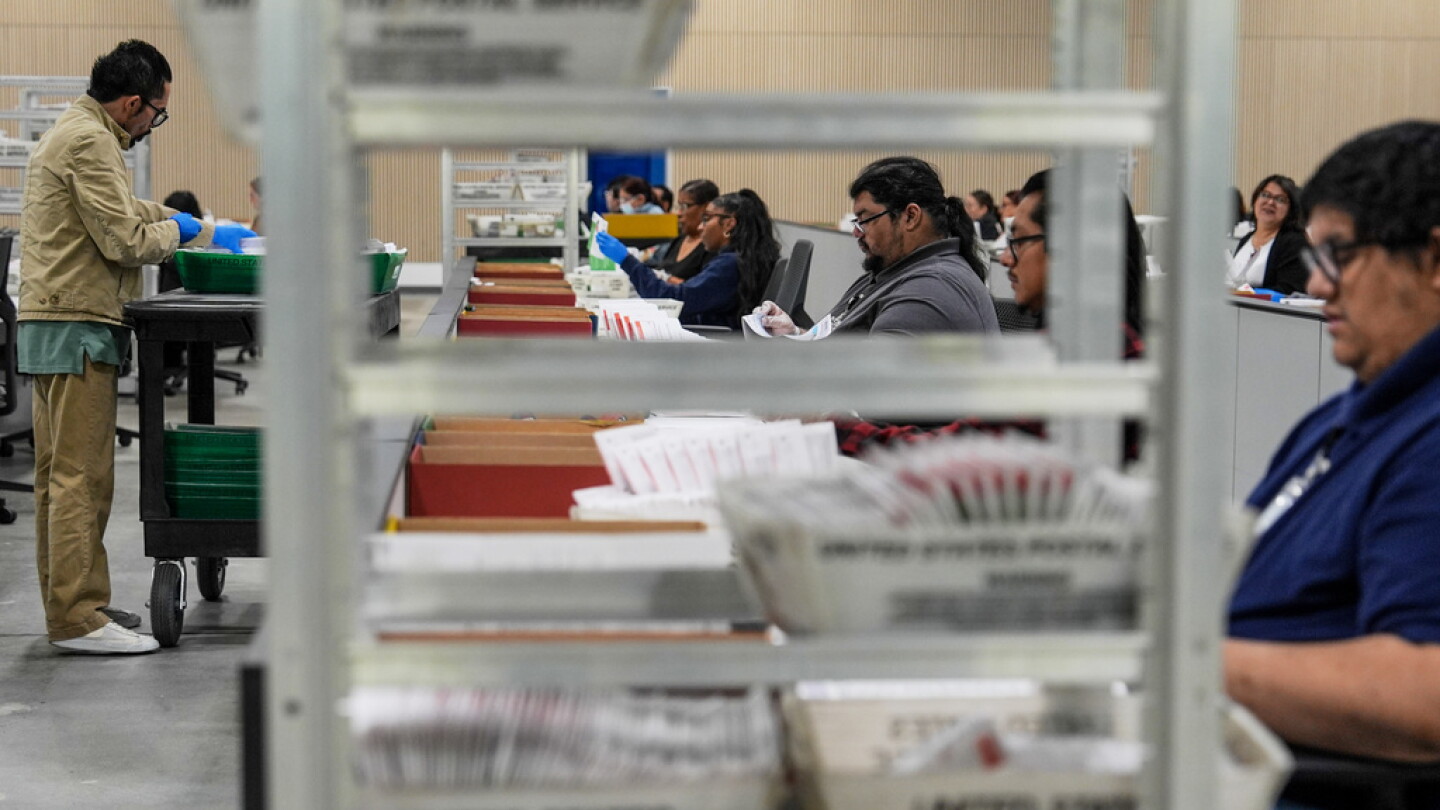
On Tuesday, as Michiganders voted, Justice Department election monitors in Dearborn asked poll workers for copies of their training materials. In Flint, monitors asked poll workers how they were trained.
State officials say that goes beyond what monitors are allowed to do. Under Michigan law, monitors are generally limited to watching. They can't question poll workers about their training, and they can't handle election materials. They need the local clerk's permission to enter a polling place at all.
So the state contacted the Justice Department. Its Michigan monitor coordinator, the state says, agreed something had gone wrong.
"That coordinator confirmed that this activity that the monitors were engaging in is not consistent with how the monitors were trained," said Angela Benander, a spokesperson for the Michigan Department of State. The coordinator said the department would remind the monitors in Dearborn what they can and can't do.
As of Tuesday afternoon, state officials said they had no other reports of concerning conduct. State officials also got reports of monitors speaking with voters in Lansing, but they had no concerns about those. Voting was running smoothly.
That is the good news. The rest of the story is why federal monitors were standing in those polling places at all.
Why the monitors were there
The Justice Department sent about 1,000 election monitors across the country. Seventy-one of them went to Detroit, Dearborn, Hamtramck, East Lansing, Grand Rapids, Flint and Warren.
The department also drew on federal law enforcement agents who aren't usually sent to the polls. We reported in October that it was recruiting criminal prosecutors for the job. Democrats and voting rights leaders warned the group could be used to scare voters.
In other places, it went quietly. League of Women Voters leaders in Ohio and Pennsylvania said monitors wore plain clothes and stayed out of the way. Nationwide, officials said Tuesday's problems were the usual ones: weather, power outages and technical trouble.
Andrew Walchuk of the watchdog group Common Cause put it this way: "We could have seen a lot of different scenarios based on what the administration wanted to get away with."
A year of trying
The monitors were one part of a much larger push. Over the past year, the Trump administration filed dozens of election-related lawsuits, on everything from voter rolls to ballot counting. States Newsroom reports federal courts halted nearly all of them.
The list from the final days alone is long:
- California. The Justice Department demanded the state set aside the ballots of 20,000 people it called suspected noncitizens, a demand we've covered. State and local officials raised doubts about its accuracy. A district judge and an appeals court said no. On Monday, the Supreme Court said no in one sentence, with no dissents. "Just a complete smackdown," said David Becker, a former Justice Department voting attorney.
- Alaska. The department sought to pause certification of the U.S. Senate election in advance. A federal judge quickly dismissed it.
- Threats to election officials. Justice Department lawyers raised the possibility that California election officials could be prosecuted if they counted the ballots of noncitizens. A judge blocked those threats, but a panel of the 9th Circuit halted that order on Tuesday. It was a rare win for Trump.
On Election Day itself, Homeland Security Secretary Markwayne Mullin warned on social media that if ineligible voters cast a ballot, his department "will find you, hunt you down, and you will be prosecuted to the fullest extent of the law."
And the Justice Department says it isn't done. After the Supreme Court loss, it said it would "pursue other legal avenues."
In summary
On Election Day, Justice Department monitors in Dearborn and Flint questioned Michigan poll workers about their training, which state officials say Michigan law forbids, and the state says the department's own coordinator told it that wasn't how the monitors were trained. The monitors were part of a roughly 1,000-person federal deployment and a year of Trump election lawsuits that courts nearly always stopped. The Justice Department has said it will keep looking for other legal avenues.
Source
Michigan officials flag improper interactions between DOJ election monitors and poll workers, Michigan Advance.