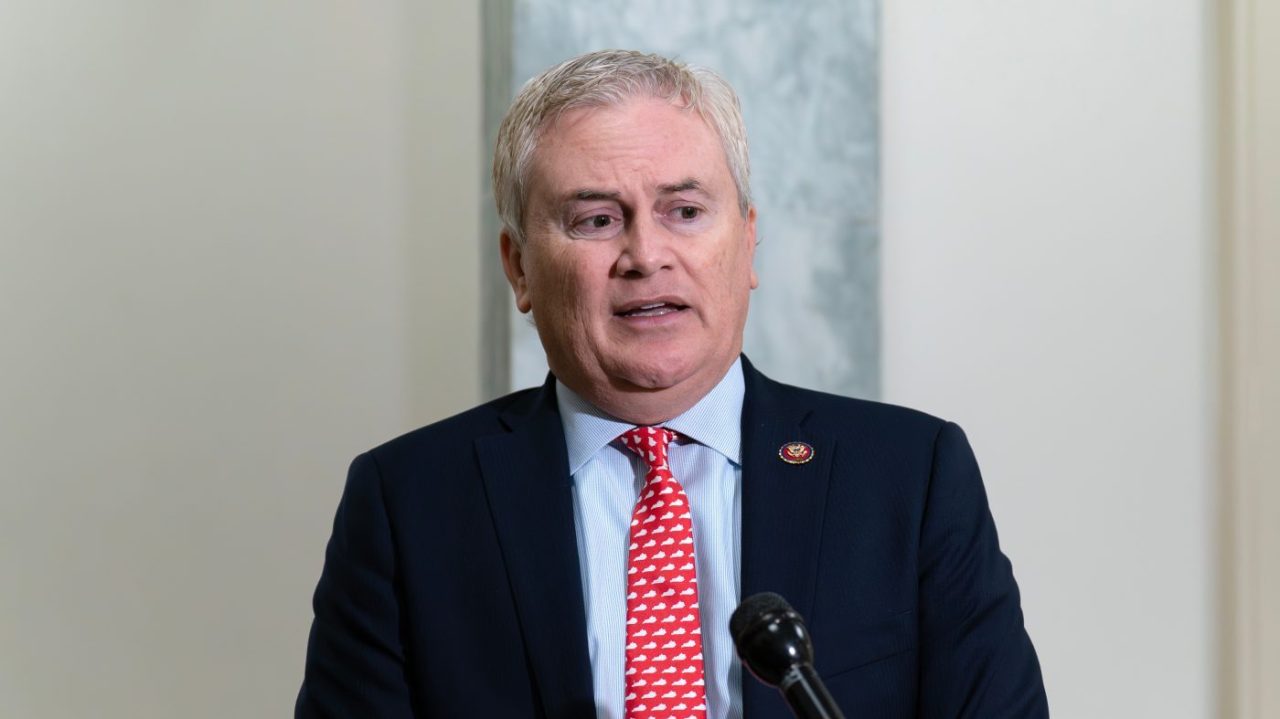
On Sunday, November 1 — two days before Election Day — James Comer went on Fox News and floated the idea that Alaska's next U.S. senator might not get to take her seat, no matter how Alaskans vote.
Comer, the Kentucky Republican who chairs the House Oversight Committee, was asked whether Democrat Mary Peltola might not be seated even if she beats Republican Sen. Dan Sullivan. "That's a big possibility," he said, The Hill reported. He added that he had not talked to Senate Majority Leader John Thune about it.
Polling averages show Peltola slightly ahead in the race, according to the Alaska Beacon. So a sitting committee chairman is telling the country, before a single vote is counted, that the likely winner might be kept out of office.
What he's upset about
The race has two Republicans named Dan Sullivan on the ballot: the senator, Dan S. Sullivan, and a retired teacher from Petersburg, Dan J. Sullivan. A New York Times report said Democratic campaigners tried to recruit spoiler candidates, including Dan J. Sullivan, to split the Republican vote. Peltola has denied any personal involvement.
Comer has seized on that report. He has opened an investigation and asked Peltola's former campaign manager and a Democratic operative to sit for interviews on November 5 and 6 — after the election.
But here is what The Hill reported in the same story: running a same-name candidate to pull votes from a rival, called "ballot-stacking," is a common practice, especially under Alaska's top-four system. Republican strategists told The Hill it is not illegal.
Comer didn't name a law that was broken. Instead he listed questions. "Did money change hands? And then you know what laws were broken after that?" he said.
So the order is backward. He hasn't found a crime. He's asking whether there might be one. And he's already talking about refusing to seat the winner.
Alaskans already settled this
Alaska tried to keep Dan J. Sullivan off the ballot once. The state said his campaign was meant to confuse voters. The Alaska Supreme Court ruled in his favor, and he made the November ballot. We covered that history when the Trump Justice Department sued to stop Alaska from certifying the race — but only if Sen. Sullivan loses. President Trump said he ordered that lawsuit.
On the same Sunday morning Comer was on Fox, a federal judge threw that lawsuit out. In a 20-page order, U.S. District Judge Sharon Gleason wrote that the federal government never explained what gave it the power to bring the case, so "this court lacks jurisdiction." The government said within two hours that it would appeal, the Alaska Beacon reported. Legal experts had expected the loss.
The federal government had asked the court to set aside every vote for Dan J. Sullivan while it investigated. Alaska's own attorneys answered that no pattern of marks on a ballot can show why a voter picked someone. Gleason took that request off the table too: setting those ballots aside so the voters could be investigated "is not a remedy that this Court can or should order as it clearly (violates) Alaskans' right to a secret ballot," she wrote.
That leaves Comer's idea as the next fallback: if the courts won't stop the count, maybe the Senate won't seat the winner.
Not his call — and not a small thing
Comer is a member of the House. Under Article I, Section 5 of the Constitution, each chamber judges the elections of its own members. The Senate, not the House Oversight Committee, decides who sits in the Senate. Comer even admitted he hadn't spoken to the Senate's leader.
And the power to turn away a winner is narrower than he makes it sound. In Powell v. McCormack in 1969, the Supreme Court ruled that the House could not exclude Adam Clayton Powell, because he was lawfully elected and met the Constitution's requirements to serve. The chamber, the Court found, was powerless to keep him out.
None of that stopped a committee chairman from putting the idea in voters' heads two days before they cast ballots.
Even Sen. Dan Sullivan, the Republican on the ballot, said the same Sunday that he would accept the results if he lost, according to The Hill.
A pattern from the Oversight chair
Comer has used the Oversight gavel hard against Democrats and softly when Republicans are on the hot seat. When the subject was the Epstein files, he let the attorney general skip the oath and the camera after spending two years subpoenaing the Bidens.
Now he is using the same gavel to cast doubt on an election before it happens, with interviews scheduled for the days after the votes are in.
What the record shows
On November 1, 2026, House Oversight Chairman James Comer said there is a "big possibility" that Mary Peltola won't be seated in the Senate even if Alaskans elect her. He cited a newspaper report about a spoiler candidate, a tactic Republican strategists told The Hill is legal, and named no law that was broken. The same morning, a federal judge dismissed the Trump administration's lawsuit to stop Alaska from certifying the race, and the Constitution leaves the question of seating senators to the Senate, not to Comer.
Source
- Comer says there's a 'big possibility' Peltola won't be seated if she wins — The Hill, November 1, 2026