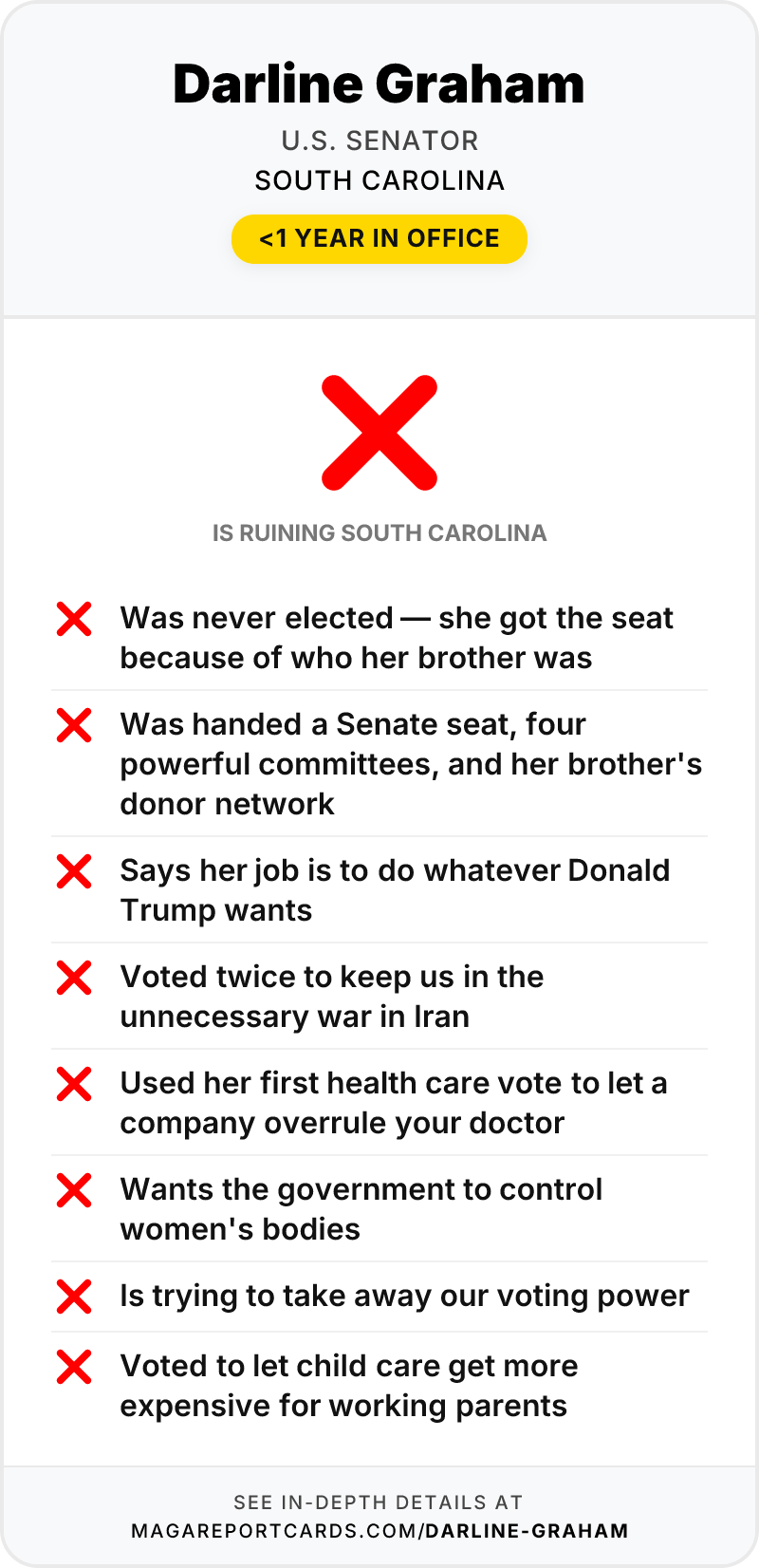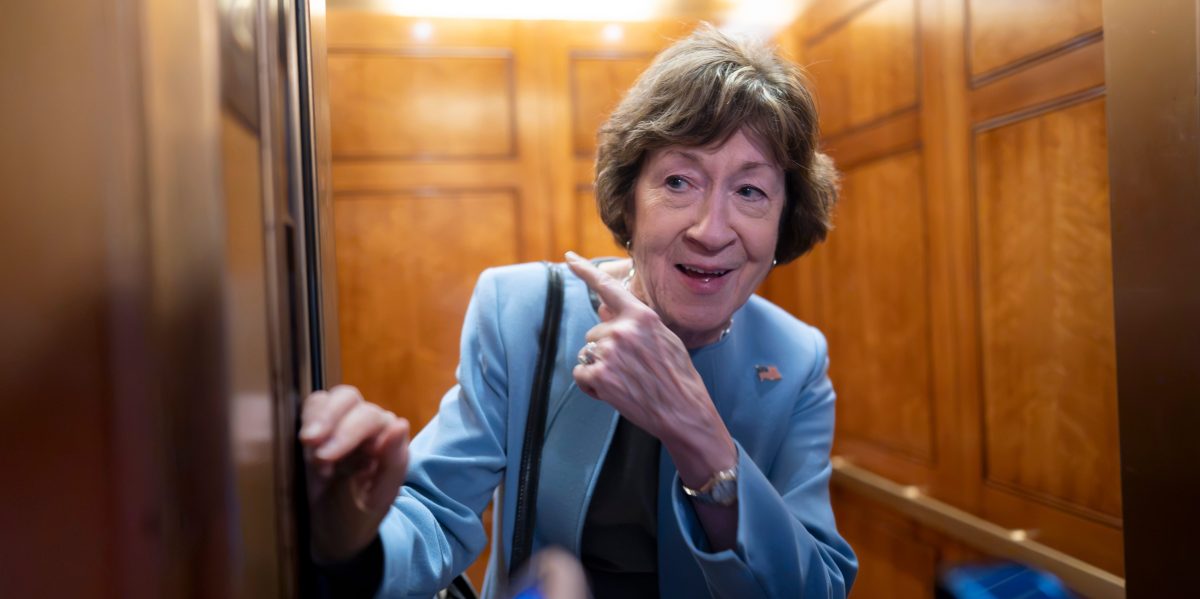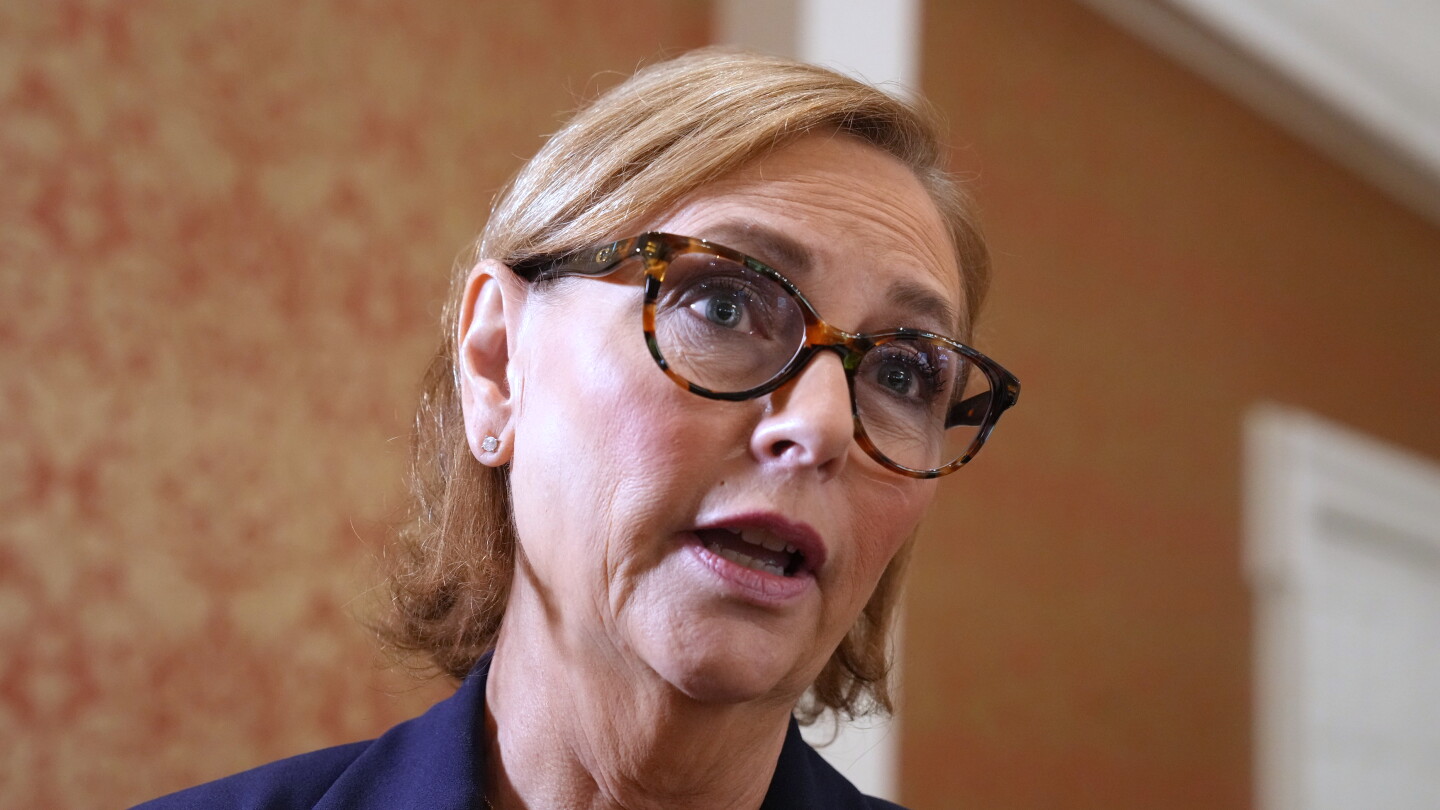
Darline Graham was sworn into her late brother's Senate seat on July 14, 2026. She announced she would run for a full term on July 23.
Over the next two weeks, the money came in fast — from chief executives, lobbyists and longtime Republican donors who had never given her a dollar before, because two weeks earlier she had never been a senator.
Some of it came in too fast, and too big.
On Monday, August 17, the Federal Election Commission sent Graham's campaign a formal letter saying her most recent report shows contributions that "appear to exceed the limits set forth in the Act." The letter is public. NOTUS reporter Mark Alfred first wrote about it.
The total: more than $24,000 over the legal limit, in the eleven days between July 26 and August 5.
What the limit is, and who blew past it
Federal law is not complicated on this point. An individual can give a federal candidate $3,500 per election — and a primary, a runoff and a general each count as their own election. A political action committee that has qualified as a multi-candidate committee can give $5,000 per election.
The letter names fourteen individuals and one committee. Among them:
- Charles Schwab, the chair and founder of the brokerage giant that carries his name — $7,000 on July 31, exactly double the limit
- Stephen and Christine Schwarzman — $7,000 each, both on August 4
- Barry and Esther Zyskind — $3,615.70 each, both on August 3
- Scott T. and Dede Ford — $3,643.56 each, on July 29 and July 30
- John J. McGovern Jr. and Kirk Rostron — $7,231.40 each, more than twice what one person may give
- Sen. Lisa Murkowski's Denali Leadership PAC — $10,000, twice what a qualified multi-candidate committee may give
NOTUS, which first reported the letter, describes the flagged donors as including the leaders of Blackstone, AmTrust, Micco Corporation, Westrock Capital Partners and NRx Defense Systems.
Look at that list again. The founder of a brokerage house. A private-equity chief. A defense contractor's boss. Three married couples writing matching checks on the same day. These are not South Carolinians writing $50 checks because they like her. This is the Washington money machine finding the newest senator and pointing a hose at her.
What has to happen now
The FEC letter spells out her options. Excessive money can be kept only if, within 60 days of getting it, the campaign properly redesignates it to a different election or reattributes it to another person. Normally that takes signed, written authorization from the donor. The campaign can also act by presumption in narrow circumstances, but then the treasurer must notify the donor in writing inside the same 60 days and offer a refund — and the letter is explicit that Murkowski's PAC money cannot be presumptively redesignated at all. If none of that happens, the letter says plainly: "the excessive amount must be refunded."
That is real money for a campaign this young. Graham's campaign reported more than $251,000 cash on hand as of August 5. The over-the-limit money is roughly 10% of everything she had in the bank.
The FEC calls this a Request for Additional Information. It is routine paperwork in the sense that many campaigns get one. It is not routine in what it says about a campaign that has existed for a month and has already had to be told the contribution limits.
The seat she was handed
Graham did not win this office. She was appointed to it after her brother, Sen. Lindsey Graham, died on July 11, 2026.
Everything she has done since has followed the same pattern: she inherited the institution, and she has been using it fast.
Her first big move as a senator was to cosponsor the SAVE Act — a bill that would require documentary proof of citizenship to register to vote, which millions of eligible Americans cannot easily produce. By her own account it was the first bill she put her name on. She had been in the Senate for days.
She also took over her brother's leadership PAC, inheriting the political money operation along with the seat.
And she spent her career working with disabled South Carolinians before her first Senate votes went the other way.
Now federal regulators have told her campaign it has taken money it is not allowed to keep.
Why this matters to South Carolina
There is a version of this story where it's just an accounting error — a treasurer who hadn't set up the software right, a batch of checks that came in during the confusion of a sudden appointment. That version is plausible, and the campaign will get its chance to say so.
But the thing an accounting error can't explain away is who was writing the checks.
Graham won the August 25 Republican runoff against Rep. Ralph Norman, 52.5% to 47.5%, carrying President Trump's endorsement, and is now the party's nominee for the November 3 general election. She has the fundraising list of a senator who spent more than two decades in Washington. And inside her first month in the seat, fourteen people and Lisa Murkowski's PAC had all sent her more money than the law lets them send.
They didn't do that because they know her. They did it because they know what a Senate vote is worth.
South Carolinians should ask what they think they're buying — and whether Graham intends to give it to them.
Source
Darline Graham's Campaign Must Give Back Megadonor Money — NOTUS, August 19, 2026, by Mark Alfred.