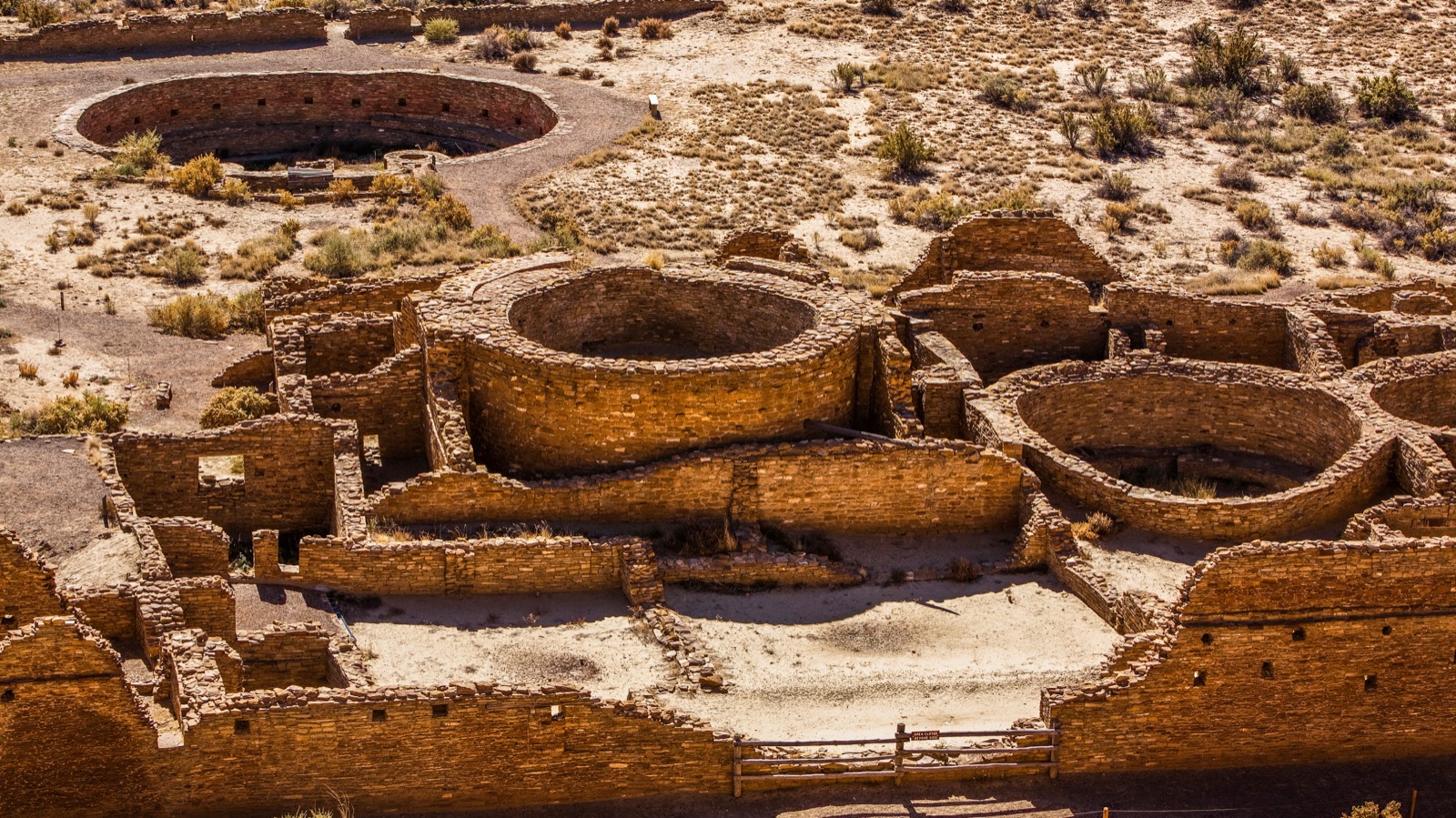
There is a place in northwestern New Mexico where you can stand in the ruins of a thousand-year-old city and look up at a sky as dark as the people who built it saw.
Chaco Culture National Historical Park is 53 square miles of ancestral Puebloan ruins — great houses, roads, and settlements built by Indigenous Pueblo peoples who were serious astronomers. It is a UNESCO World Heritage Site. Astronomers recognize it internationally as a dark-sky area, ideal for viewing the stars.
In 2023, the Interior Department drew a 10-mile buffer zone around it. Inside that ring: no new oil and gas drilling, no uranium mining.
The Trump administration's Bureau of Land Management now wants to erase it. That would open 336,400 acres right next to Chaco to drilling and mining.
The comment period was 14 days. 100,000 comments came in anyway.
Before a change like this takes effect, the BLM opens a window for the public to comment on it.
The window it opened here was 14 days — unusually short, and it closed in July.
Roughly 100,000 comments came in anyway, and they were mostly hostile. Tribal leaders, archaeologists, and conservation groups lined up against it.
Fourteen days is not how you handle a decision about a World Heritage Site. It is how you handle a decision you have already made.
The United Nations is now asking questions
UNESCO confirmed it has received information about the plan and is waiting on a response from the federal government about what it would do to Chaco.
Its position is not ambiguous.
"The world heritage committee has consistently considered extractive activities to be incompatible with world heritage status," a UNESCO spokesperson said.
The spokesperson added that projects proposed outside a World Heritage property "should not adversely affect their outstanding universal value" — the specific qualities that got the site listed in the first place — and should get proper impact assessments before anyone decides anything.
The United States has 27 World Heritage Sites, including Yellowstone, Yosemite and the Statue of Liberty. One of them, the Everglades, is already on UNESCO's "in danger" list because of development and pollution. Others can be added if what's happening next door is judged harmful enough.
That is the actual risk here. Not a fine, not a lawsuit — an internationally recognized American landmark getting formally listed as endangered because of a decision made in Washington.
What drilling next door actually does to it
Opponents laid out the specifics, and they are not abstract.
- Air pollution — a haze over a park people travel across the world to see, which would cut visitor numbers.
- Water — fracking activity near a place where, as one Navajo community leader put it, the aquifers are currently pristine.
- Light and flaring — bright industrial lighting and burning gas, in a night sky astronomers recognize internationally. The Pueblo people who built Chaco tracked the stars from it. So do stargazers now.
Daniel Tso, who served as a Navajo Nation council delegate, holds land allotments inside the buffer.
"I have allotments inside the buffer zone where the land is untouched, the aquifers are pristine," he said. "If the oil and gas companies go in there the sacredness of that land is gone."
Then he described what the outside of the line already looks like: "Outside this zone, some of these oil and gas wells are within 100 feet of Navajo people's homes, causing tremendous health impacts."
Within 100 feet of people's homes. That is what Tso fears is coming for the 336,400 acres inside the line.
The argument for doing it doesn't hold up
The pitch is urgency — America needs the energy, and it needs it from here.
Maude Dinan, New Mexico program manager at the National Parks Conservation Association, pointed out the hole in that.
"Almost all of the federal land around places like Chaco and Carlsbad is already leased for oil and gas drilling, so the idea there's an urgent new demand for this is an illusion."
The industry is already there. It has already been given nearly everything around the park. The buffer is the exception, not the obstacle.
Deb Haaland, the former Interior Secretary who oversaw the buffer zone's creation, said removing it would cause "irreversible damage." Of Trump and BLM director Steve Pearce, she said: "Their attempt to profit off this sacred place shows a clear lack of consideration and disrespect for the lives that New Mexicans live."
Chaco is not the only one
Chaco is where the threat is largest, but it isn't isolated.
Some Republicans have been lobbying the president to lift the ban on uranium mining near the Grand Canyon, also a World Heritage Site. And the administration has already leased thousands of acres for oil and gas drilling near Carlsbad Caverns in New Mexico, above a fragile underground cave system.
It fits a pattern this site has been tracking all year. The administration cut Utah's Bears Ears and Grand Staircase-Escalante monuments by nearly 3 million acres — about 90%. It has moved to scrap the Roadless Rule protecting untouched national forest, after 99% of the Americans who commented said not to. It erased the rule that made it illegal to destroy the habitat endangered animals live in.
Dinan said the run of decisions has changed how she reads this one.
"It makes me wonder where the line in the sand is; it feels that no matter how valuable or sacred a place is, the administration is willing to trade it all in."
The Interior Department and the National Park Service did not respond to a request for comment.
What it adds up to
The Bureau of Land Management wants to open 336,400 acres beside a UNESCO World Heritage Site to oil, gas and uranium extraction. It gave the public 14 days to object, got about 100,000 mostly hostile comments, and is moving ahead — while UNESCO waits on an answer the federal government has not given, and the industry's own leases already cover nearly all the land around the park.
Source
Oliver Milman, "Trump's Plan to Allow Drilling Near New Mexico Heritage Site Sets off Global Alarm", originally published by The Guardian and reproduced by Mother Jones through the Climate Desk collaboration, August 2026.