On April 28, 2025, the U.S. House voted on a bill to help people whose naked pictures get posted online without their permission — including fake ones made by artificial intelligence.
It is hard to find anything Congress agrees on anymore. It agreed on this. The vote was 409 to 2. Every single Democrat who voted said yes. All but two Republicans said yes.
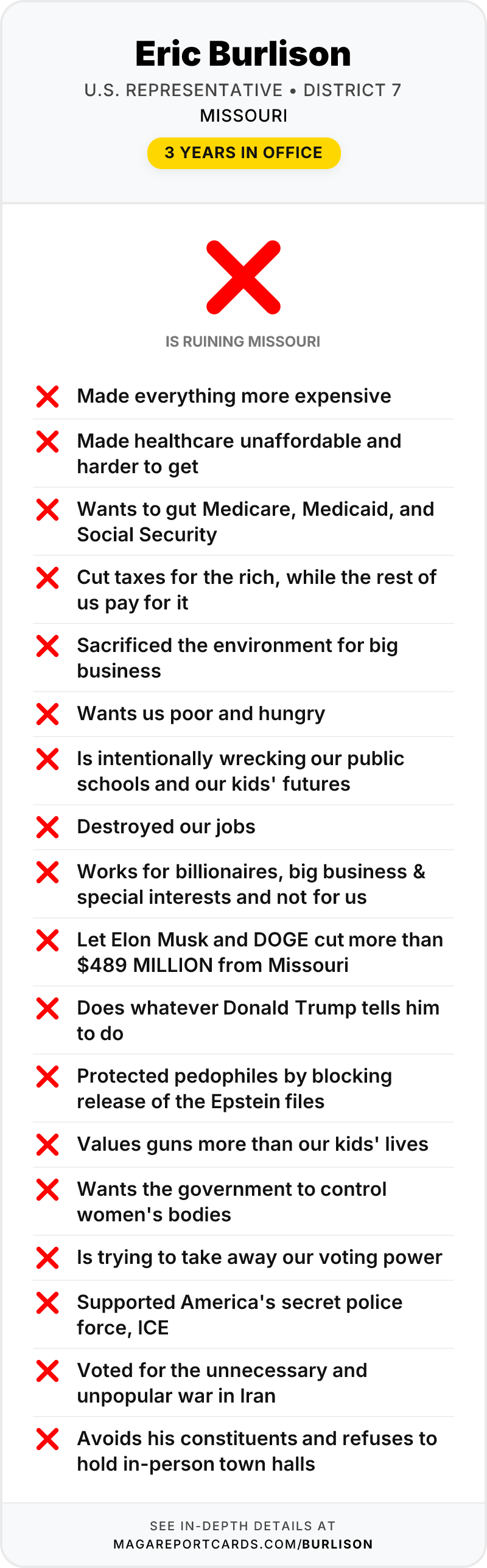
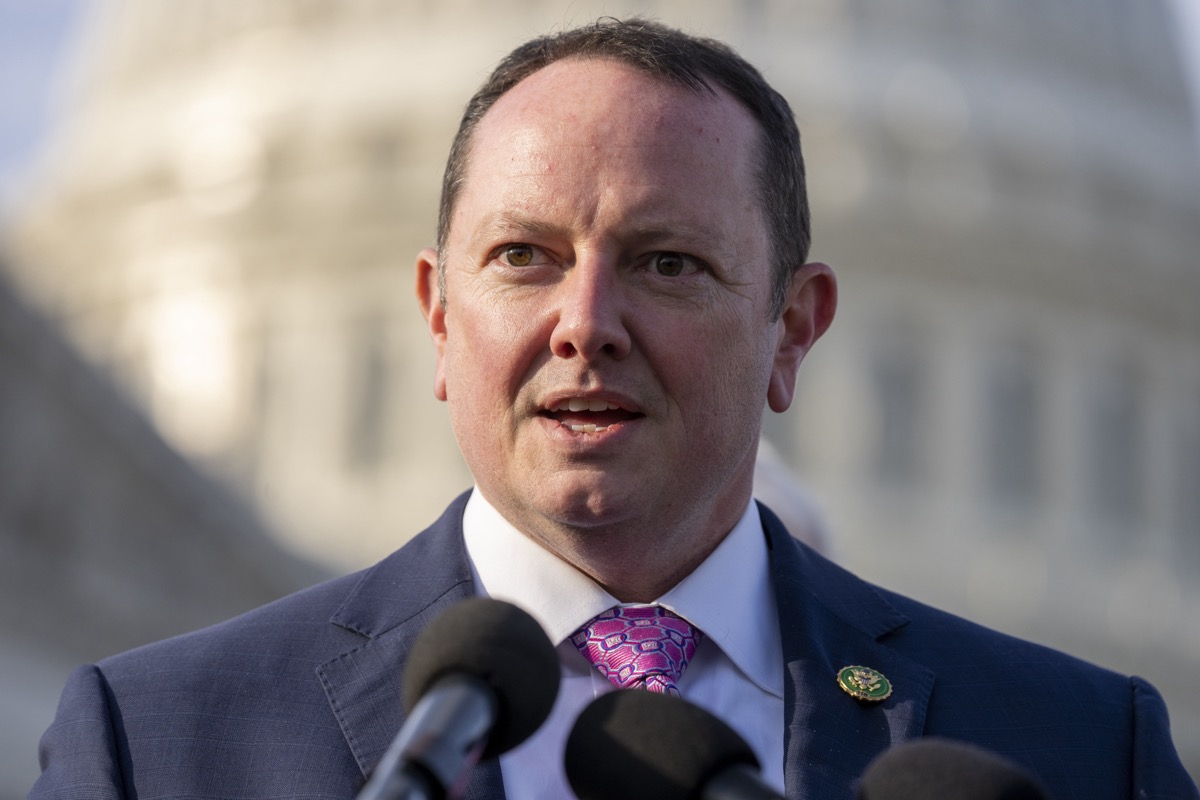
Eric Burlison was one of the two.
The other was Rep. Thomas Massie of Kentucky. That's the whole list. Out of 411 members who showed up and voted, two of them looked at a bill protecting victims of revenge porn and AI deepfakes and said no.
What the bill actually did
The Take It Down Act made it a federal crime to post someone's intimate images without their consent. That covers real photos. It also covers "deepfakes" — fake images a computer generates that look real.
It also did something victims had been begging for. It required websites to take the images down within 48 hours once a victim asks. Before this law, a victim could find their face on a fake pornographic image, email the website, and get ignored forever. Now the platform has two days.
The bill's summary says violators face "mandatory restitution and criminal penalties, including prison, a fine, or both."
This was not a partisan bill. First Lady Melania Trump campaigned for it publicly. President Trump signed it into law on May 19, 2025, with her signing alongside him in the Rose Garden.
Burlison had already voted no.
He didn't explain for a while
Here's a small detail worth noticing. The day after the vote, Newsweek reported that Massie had explained his no vote — he called the bill "a slippery slope, ripe for abuse, with unintended consequences" — but that Burlison had not said anything about why he voted the way he did.
So his own local TV station in Springfield went and asked him. Here is the statement his office gave them:
"Sharing non-consensual intimate imagery is abhorrent, but this bill unnecessarily federalizes the criminalization of conduct that states already have laws against, and many of them already have laws tailored to address AI-generated deepfakes. As such, creating a new federal offense is both redundant and constitutionally problematic. The further federalization of criminal law in this way undermines state authority, blurs lines of accountability, and risks duplicative prosecutions. Furthermore, while the bill attempts to safeguard free speech with a 'reasonable person' test, I remain concerned about its impact on First Amendment rights and the unchecked growth of federal power."
He makes two arguments there. The second one — a free speech worry — is at least a real debate, and other people have raised it.
But the first argument is the one he leads with, and it rests entirely on a factual claim: the states have already got this covered. Don't worry about federal help, he's saying. Missouri protects you.
That claim was not true.
Missouri did not have this covered
The reporters who got that statement did something useful. They went and checked whether Missouri actually had the law Burlison said it had.
They found no such law on the books. What they found were two bills that had not passed. Missouri House Bill 362 was stuck — out of committee, but it never made it out of the Missouri House. Missouri Senate Bill 411, called the "Taylor Swift Act," had last been discussed on March 26, 2025, about a month before Burlison's vote.
So on the day he voted no because states supposedly had this handled, his own state's version was still sitting in a pile of unpassed bills.
It gets worse.
Five tries. Zero laws.
Missouri lawmakers kept trying. In February 2026 — almost a year after Burlison's vote — seven different state lawmakers were still presenting seven different deepfake bills to a Missouri House committee, all at the same hearing, and admitting to each other that they didn't know which one to pick.
One Republican on the committee, state Rep. George Hruza, put it plainly: "Clearly, these are all important bills sitting here. I have no clue which one I should consider or we should consider."
Meanwhile the Senate version, SB 1117, has its own official history page on the Missouri Senate's website. That page lists every earlier version of the same idea. Look at the list:
"This act is similar to HB 362 (2025), SB 411 (2025), SB 1424 (2024), HB 2573 (2024), and a provision in SB 1444 (2024)."
That is five earlier versions of the same idea, going back to 2024. Lawmakers don't keep refiling a bill that already passed. And SB 1117 hasn't made it either — its status is still stuck at "Voted Do Pass" out of a Senate committee.
Burlison told his constituents the states had it handled. Missouri keeps trying and keeps coming up short.
The federal law he voted against is, right now, the protection Missourians actually have.
"Undermines state authority" — except when he does it
The part that's hardest to swallow is the states' rights argument, because Burlison doesn't believe it.
Three months before this vote, on January 24, 2025, he introduced the Life at Conception Act. That bill declares that unborn children are "persons" under the 14th Amendment — the part of the Constitution his own press release quotes, the one that starts "No State shall."
He was proud of it. In that release he said the bill "uses Congress' constitutional authority to define personhood."
One of the groups that endorsed it was blunt about what that authority is for. The National Pro-Life Alliance praised the bill as more important than ever because of "the many loopholes that abortionists are using to get around state protections for the unborn."
So: reaching past state law with a federal one is smart lawmaking when the subject is abortion. When the subject is a teenage girl finding an AI-generated nude of herself online, the exact same move suddenly "undermines state authority."
That bill is not a small thing, either. It turns up three separate times in our roundup of the Republicans with the worst records on abortion — the personhood-at-fertilization bill, with no exception for rape, for incest, or for the health of the pregnant woman, that the worst offenders keep signing onto. Burlison is the one who wrote it. He is not shy about using federal power. He's selective about who it protects.
He's not worried about AI
There's one more piece of this.
Burlison has made it clear he doesn't think AI is something to be nervous about. When a constituent in Carthage asked him this July how he could promise to protect southwest Missouri's water while supporting data centers that use enormous amounts of it, he told the room that people fear data centers because AI is "an unknown thing and we tend to fear the unknown." In that same answer he said that as a free-market Republican, "what the business is doing doesn't matter."
That's the same instinct showing up twice. When AI creates a problem for a regular person — your water, or your face on a fake pornographic image — the answer is that you're overreacting, and government should stay out of it.
What this costs people
Let's be clear about who this bill was for.
It was for the high schooler whose classmate ran her yearbook photo through an app. It was for the woman whose ex posted pictures she never agreed to share. It was for people who had no way to make a website take it down, and no police department that knew what law to charge.
409 members of Congress — Republicans and Democrats, Freedom Caucus members and progressives, the First Lady, and the President — all looked at that and agreed something should be done.
Eric Burlison looked at it and said the states have it covered.
His state didn't. It still doesn't. We deserve better.
Source
- 'Take it Down Act' heads to Trump's Desk; Rep. Burlison explains why he voted no — Ozarks First (KOLR/KOZL), Springfield, Missouri. Photo: AP.