On November 3, 2026, voters in Lackawanna and Luzerne counties in northeastern Pennsylvania will find a question on their ballot that residents put there themselves. It asks whether officials should be barred from trading stocks or placing prediction-market bets using nonpublic information they picked up on the job — and whether the county should publish an annual report of ethics complaints and stock trades.
And they were not close to the line.
In Lackawanna County, Action Together NEPA submitted 16,297 signatures against a requirement of 8,894; the county Board of Elections voted 3–0 to put the question on the ballot. In Luzerne County, the group turned in roughly 21,000 signatures against a requirement of 11,615 — the first time in that county's history that citizens have placed a proposed home rule charter amendment on the ballot themselves.
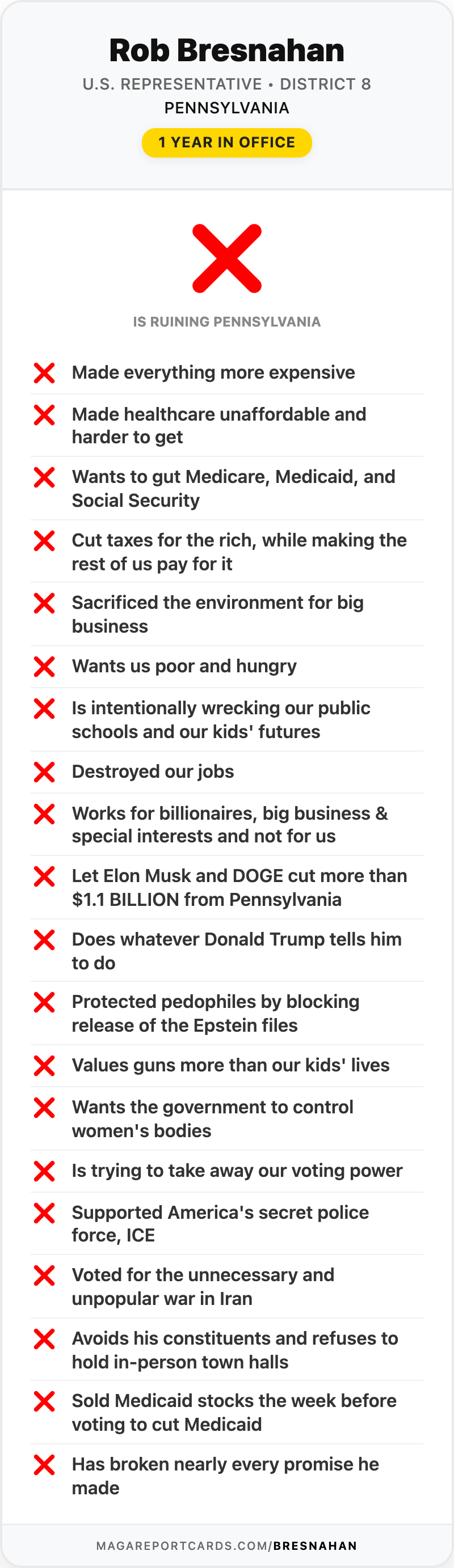
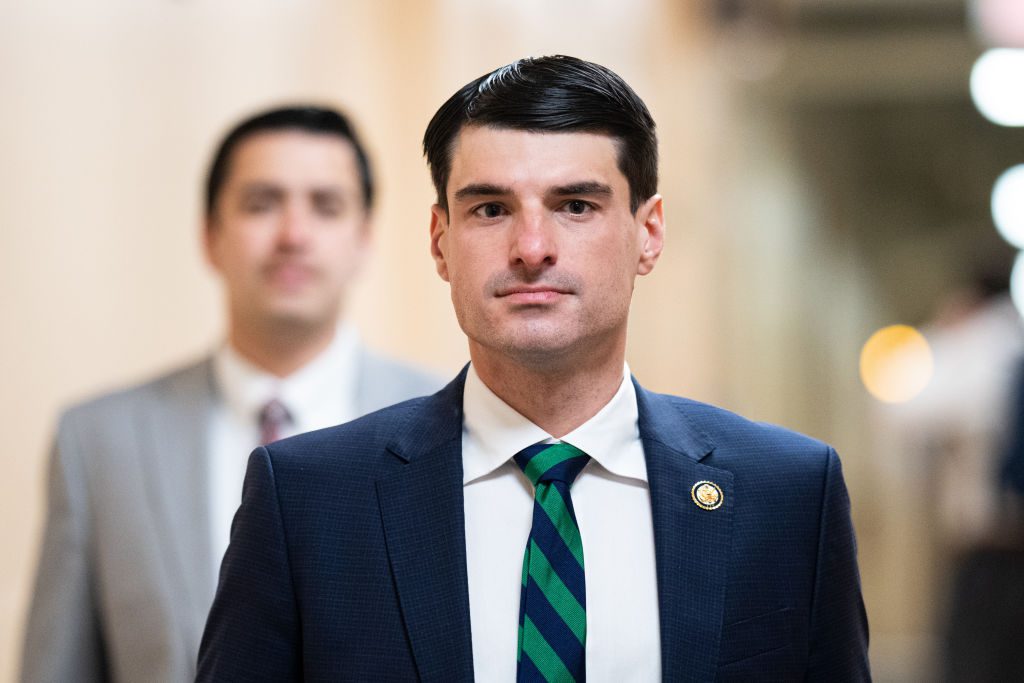
Lackawanna County sits entirely inside Pennsylvania's 8th Congressional District, and so does most of Luzerne — the rest of Luzerne is in the 9th. The congressman for the 8th is Rob Bresnahan.
The record that prompted it
The Keystone reported on August 31, 2026 that Bresnahan's congressional stock trading record is what "inspired" the drive.
We have written that record out in detail before. Within five months of taking office, Business Insider had counted more than 530 trades. Over 2025 he made almost 650 individual stock trades — enough that in November, NBC News reported, he "still ranks as the seventh-biggest trader in Congress by number of trades." The disclosure tracker CapitolTrades logs 653 trades across 320 issuers, worth $8.51 million, across his whole time in office — the issuers including municipal bonds and Treasury notes alongside the stocks. And in one of those trades, he sold stock in Medicaid providers shortly before voting for the bill that cut Medicaid.
He has said his trades are made by a financial advisor without his involvement. His constituents apparently do not find the distinction reassuring.
The ban wouldn't cover him. The disclosure would.
This is a county home rule charter amendment, so the prohibition binds elected county officials and county employees, along with the members and employees of county authorities, boards and commissions. It does not make anything illegal for a member of the United States House.
But the second half of the measure reaches further. It would require the county to publish an annual report of stock trades by county, state and federal officials representing the county. Lackawanna's elections board solicitor, Anthony Lomma, counted 135 elected officials the reporting provision could cover — up to and including, in his reading, the president and vice president along with state and federal representatives and senators.
So the practical effect on Bresnahan is not a ban. It is a hometown scoreboard: his trades, listed once a year, in a document produced by the counties he represents, because voters there decided they wanted to see them.
They wrote it themselves because Congress won't
Congress has not passed a stock-trading ban on itself. Bills get introduced, get cosponsors, and go nowhere.
So residents of two former coal counties went and amended the only charter they could actually amend, and gathered nearly twice the signatures needed to do it.
He introduced a ban himself
Bresnahan is not opposed to a congressional stock trading ban — in public.
He introduced one. In the same month he introduced it, he disclosed roughly 100 stock trades. That is about three a day, in the month he was asking his colleagues to outlaw the practice. His explanation, written as an addendum to his own disclosure filing, was that every investment decision is delegated to professional advisors and that he has "no role in, nor am informed of, specific investment decisions prior to their execution" — a claim that sat awkwardly beside his own earlier description, on Wilkes-Barre radio, of meeting his financial advisor to talk about "what different positions are coming up."
His campaign spokesman later told POLITICO that he had been "referring to 30,000-foot investment strategy and not about stock trades," and compared it to "a routine annual 401(k) meeting."
What the record shows
Voters in the two counties at the core of Rob Bresnahan's district gathered 16,297 signatures in Lackawanna and about 21,000 in Luzerne — nearly double the roughly 20,500 required between them — to put an insider trading ban on their November 3 ballots, in a drive the local newsroom reports was inspired by their own congressman's trading. Bresnahan made almost 650 individual stock trades in 2025 alone, sold Medicaid provider stock before voting to cut Medicaid, and introduced a congressional stock-trading ban in a month he made about 100 trades. The ban itself would only bind county officials. Its reporting provision would put his trades in an annual county report.
Source
Rob Bresnahan's stock trading under scrutiny as thousands of constituents push for insider trading ban — The Keystone, August 31, 2026.