On July 7, 2026, Rob Bresnahan launched something called the "Women for Rob" Coalition — more than 80 women across the five counties of Pennsylvania's 8th District, organized around his re-election campaign and his record.
One of the co-chairs put the pitch this way: Bresnahan's work on a hospital breast care center "is just one small example of the ways he has been a champion for greater investments in women's health services."
Three and a half weeks later, a teenager from Waverly Township wrote to The Times-Tribune to say she had checked the record.
"As a teenage girl, I don't understand how any woman can trust him to improve the lives of women and families when he voted for legislation that threatens their access to basic health care. Rob is no friend to women, despite what his campaign would like you to believe."
— Sarah Heine, in The Times-Tribune, August 2, 2026
She's right, and the record is worse than her letter has room for. Here it is.
What he told voters in October 2024
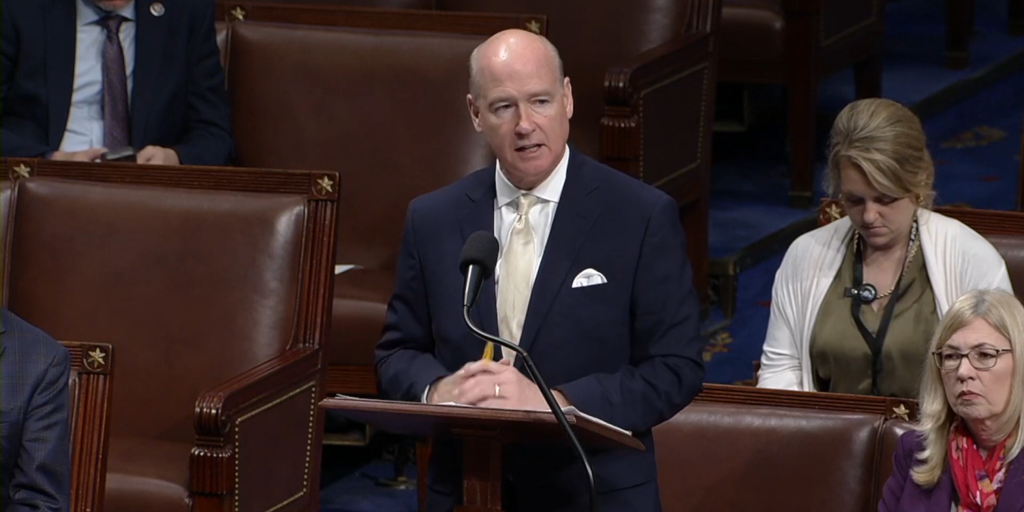
Bresnahan and then-Rep. Matt Cartwright met for the district's only debate on October 22, 2024, at King's College in Wilkes-Barre. Asked about abortion, Bresnahan was unambiguous:
"I would not support a federal ban on abortion under any circumstances."
And he explained the principle behind it:
"I don't believe a federal representative in Washington, D.C., should be making those decisions."
"You put it on the ballot, you allow the voters to decide what's best for their state."
That is not a hedge. That is a stated theory of his own job: a member of Congress has no business legislating on this, and the voters of each state should decide.
He beat Cartwright two weeks later.
What he did ninety-three days later
On January 23, 2025 — his third week in office — the House voted on H.R. 21, the Born-Alive Abortion Survivors Protection Act. It passed 217 to 204. Every Republican who voted, voted yes. Bresnahan was one of them.
H.R. 21 is a federal law about abortion. That's what it is. It reaches into delivery rooms in all fifty states and threatens doctors with a fine and up to five years in prison over how they handle the most wrenching late-pregnancy cases. We've written in detail about what the bill actually does to a family choosing comfort care for a dying newborn — including that a born-alive infant has been a legal person under federal law since the Born-Alive Infants Protection Act of 2002, which H.R. 21 cites by name. The new work this bill does is the treatment mandate and the prison term it lays on physicians.
More than a dozen medical groups, including the American College of Obstetricians and Gynecologists, called it "a dangerous government intrusion into medical care."
Ninety-three days earlier, in a hall in Wilkes-Barre, Bresnahan had said a federal representative in Washington should not be making those decisions. Then he went to Washington and made one.
Then he closed the Medicaid door at the clinic on North Main Street
The bigger vote came in July.
On July 3, 2025, Bresnahan voted for the "One Big Beautiful Bill," which passed the House 218 to 214. Buried inside it was a provision barring Planned Parenthood from billing Medicaid for a year — as Heine's letter put it, a ban on "federal Medicaid reimbursements for non-abortion health care services."
WVIA reported what those services are at Planned Parenthood Keystone: prenatal care, birth control, breast and cervical cancer screenings, STI testing. Keystone had seen 5,253 Medicaid patients in fiscal 2024, and for the first eight months of the ban it kept treating them unpaid — until, Reed later told the Times Leader, "we just couldn't afford to keep doing that, and so we began referring them out."
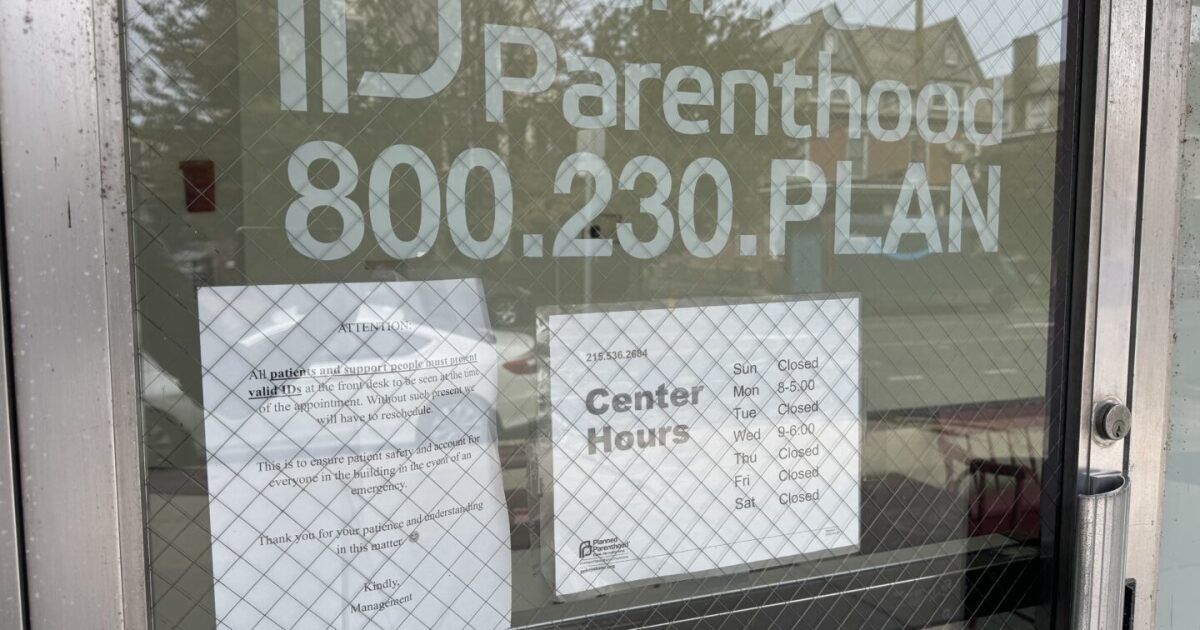
Keystone is the affiliate that operates the Wilkes-Barre Health Center at 101 N. Main Street — in Bresnahan's district, and the closest Planned Parenthood clinic for anyone in Luzerne County. Its services list includes birth control, STD testing, prenatal and postpartum care, and wellness and preventive care.
"We will do everything we can to maintain continuity of care and ensure our doors stay open," Keystone's president and CEO, Melissa Reed, said at the time.
Note what the coalition co-chair praised him for in July 2026: investments in women's health, specifically a breast care center. Breast exams are on the list of things his vote stopped Medicaid from paying for at the clinic in his own district.
A year of it, measured
The ban ran until July 3, 2026. The Times Leader reported what a year without Medicaid did nationally, comparing October 2025 through April 2026 with the year before:
- Birth control pills dispensed: down about 25%
- IUD and other long-acting contraception visits: down 26%
- Breast exam visits: down 20%
- STI testing: down 10%
- Nearly 30 clinics closed
Forty percent of Keystone's patients had been on Medicaid before the ban. It lost $1.2 million in Medicaid and Title X funding. One business day after the ban lapsed, Medicaid patients were back to 20% of its caseload — "that number is just continuing to grow," Reed said. The Wilkes-Barre clinic's own page still carries the notice: Medicaid accepted again starting July 6, 2026.
That is the cost of the vote, and it is not abstract. It happened to specific people in Luzerne and Lackawanna counties who put off a cancer screening because the appointment stopped being covered.
This is a habit, not an accident
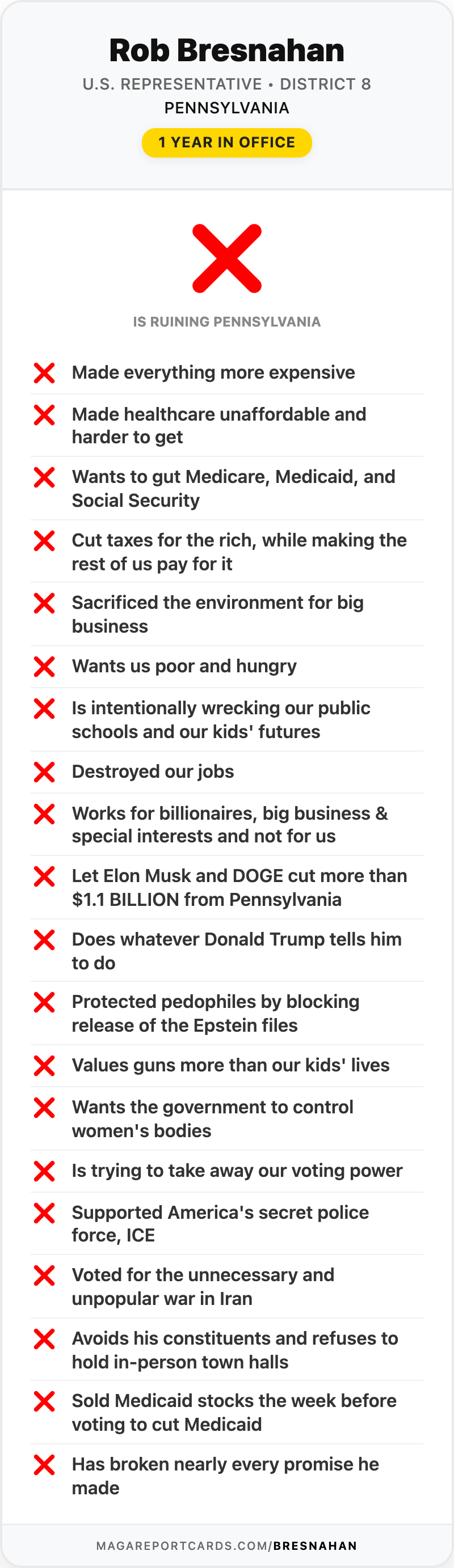
The pattern here — say the reassuring thing to a swing district, then vote the other way — is the throughline of Bresnahan's first term.
He campaigned on banning congressional stock trading, then became one of the most active traders in Congress and took a victory lap on a "ban" that wouldn't have touched his own conduct. In February 2025 he pledged that "if a bill is put in front of me that guts the benefits my neighbors rely on, I will not vote for it" — and his own office's numbers said more than 200,000 Medicaid recipients live in the 8th District, over a quarter of its population. He voted for the cuts in May and again in July.
He isn't the only Republican in a tough seat trying to put distance between himself and this record. In Michigan, Bill Huizenga deleted his campaign website's anti-abortion page the day after a poll showed him trailing. Bresnahan's version is to build a coalition instead.
What the coalition doesn't say
Read the "Women for Rob" announcement again. It lists hospital services, working families, "access to quality healthcare." It does not mention H.R. 21. It does not mention the vote that stopped Medicaid at the Wilkes-Barre clinic. It does not mention the debate stage where he promised he wouldn't legislate on this at all.
A campaign gets to choose what it puts in a press release. Voters get to choose what they weigh. A teenager in Waverly Township did the weighing in under 200 words and got it right.
We deserve better than a congressman who says one thing at King's College and votes the other way ninety-three days later.
Sources
This post draws on the "Women for Rob" coalition announcement as published by The River Reporter (July 7, 2026), Sarah Heine's letter in The Times-Tribune (August 2, 2026), and WVIA's coverage of the 2024 debate and of Planned Parenthood Keystone. Photo: Jordan Wilkie / WVIA.