The rule is simple and it is 14 years old. If you serve in Congress, and you, your spouse, or a dependent child buys or sells a stock, a bond, a Treasury bill, or a cryptocurrency, you have 45 days to tell the public. That's the STOCK Act, passed in 2012.
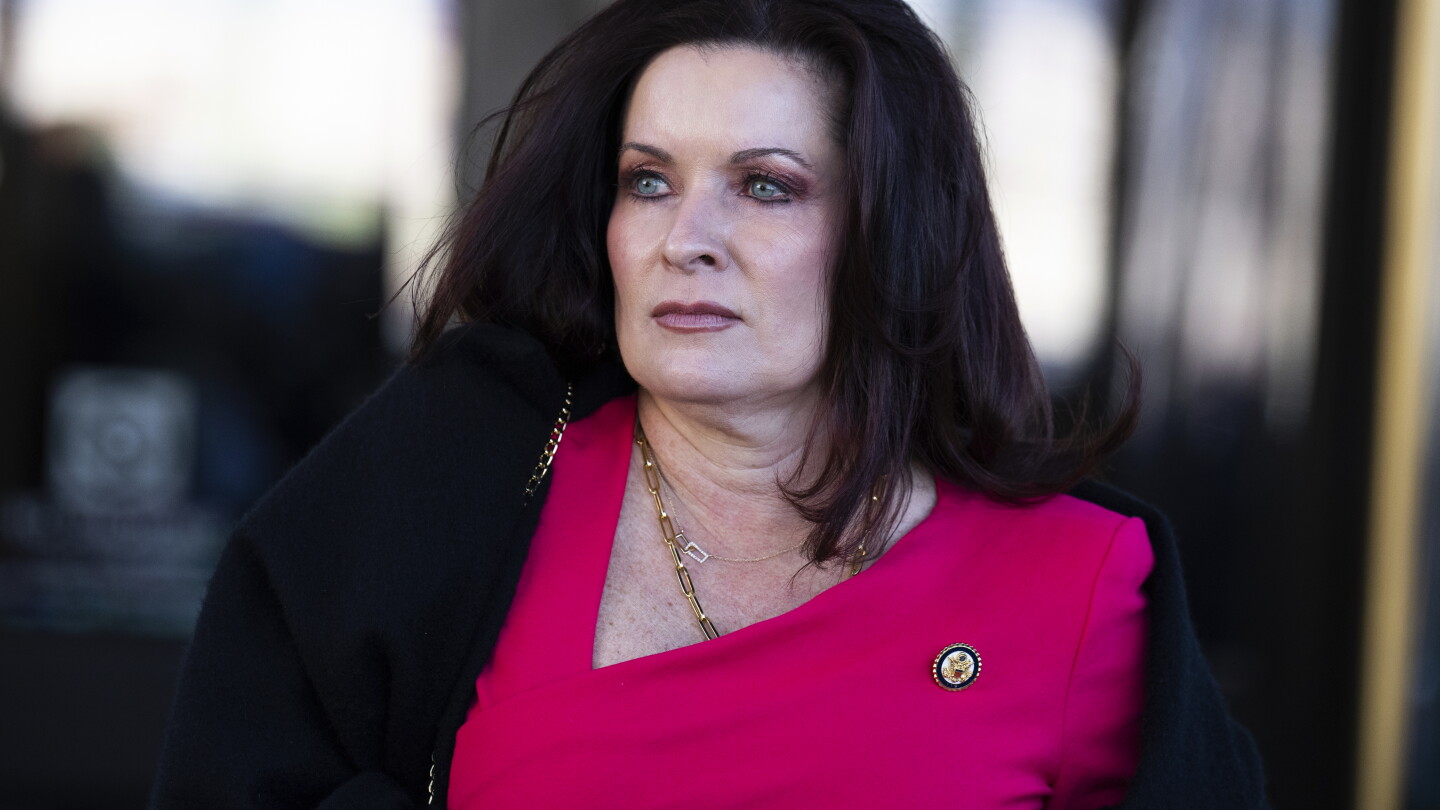
Sheri Biggs blew past that deadline on more than 170 trades.
NOTUS reporter Dave Levinthal documented it in October 2025. The trades were made by her husband, Bill Biggs. Their combined value: somewhere between $4.14 million and $13.62 million. The disclosures came in weeks or months late.
The March 18 problem
Most of the story is about paperwork. This part isn't.
Dozens of those undisclosed trades were stock sales executed on March 18, 2025 — the same day Treasury Secretary Scott Bessent was providing key details about President Trump's "Liberation Day" tariff announcement set for April 2.
When those tariffs landed on April 2, financial markets fell hard.
To be clear about what is and isn't established here: NOTUS did not report that Biggs had inside information, and there is no finding that she did. What is established is that a large batch of sales left her household's portfolio on that specific day, and that the public was not told about them within the window the law requires — which is precisely the window that exists so voters can check the timing for themselves.
Donald Sherman, executive director of Citizens for Responsibility and Ethics in Washington, told NOTUS:
"She chose to be a public servant, so it's perfectly reasonable for her constituents to question these trades, particularly since they were not disclosed consistent with existing federal law."
What was in the account
The holdings NOTUS listed are worth reading, because a few of them sit oddly next to Biggs's own committee seats and public positions.
Among them: Apple, Comcast, Johnson & Johnson, Microsoft, Norfolk Southern, Progressive Insurance, Starbucks, UPS — and:
- Northrop Grumman, a major defense contractor, with up to $50,000 sold on March 19, 2025.
- Altria Group and Philip Morris International, the tobacco companies. Biggs is a nurse practitioner.
- Alibaba Group, China Construction Bank, and China Merchants Bank — Chinese companies, held by a member of the House Foreign Affairs Committee who sits on its East Asia and the Pacific subcommittee.
- Up to $250,000 in the iShares Bitcoin Trust ETF, plus structured investment products from Morgan Stanley, JPMorgan Chase and the Bank of Nova Scotia.
Biggs described most of the trades in her disclosure as falling within a "professionally managed account."
That is a real thing, and it may well mean she did not personally pick the individual trades. But it is not a defense to the late filing. The House Committee on Ethics financial disclosure instruction guide says members are "personally responsible for incomplete and inaccurate information" regardless of who prepared the filing.
The penalty
The standard first-time penalty for a late STOCK Act disclosure is $200. The Ethics Committee can waive even that.
Two hundred dollars, against a portfolio reported at up to $13.6 million.
This is not unique to Biggs — it's the design of the law, and it's why the disclosure deadline gets missed so routinely. Utah's Blake Moore broke the same rule 70 times in his first six months and paid the same $200. Georgia's Mike Collins bought Ether nine days before voting on a bill that moved its price.
The fine is a rounding error. The disclosure is the whole enforcement mechanism — and Biggs didn't make it on time, 170 times.
Why her constituents in particular should care
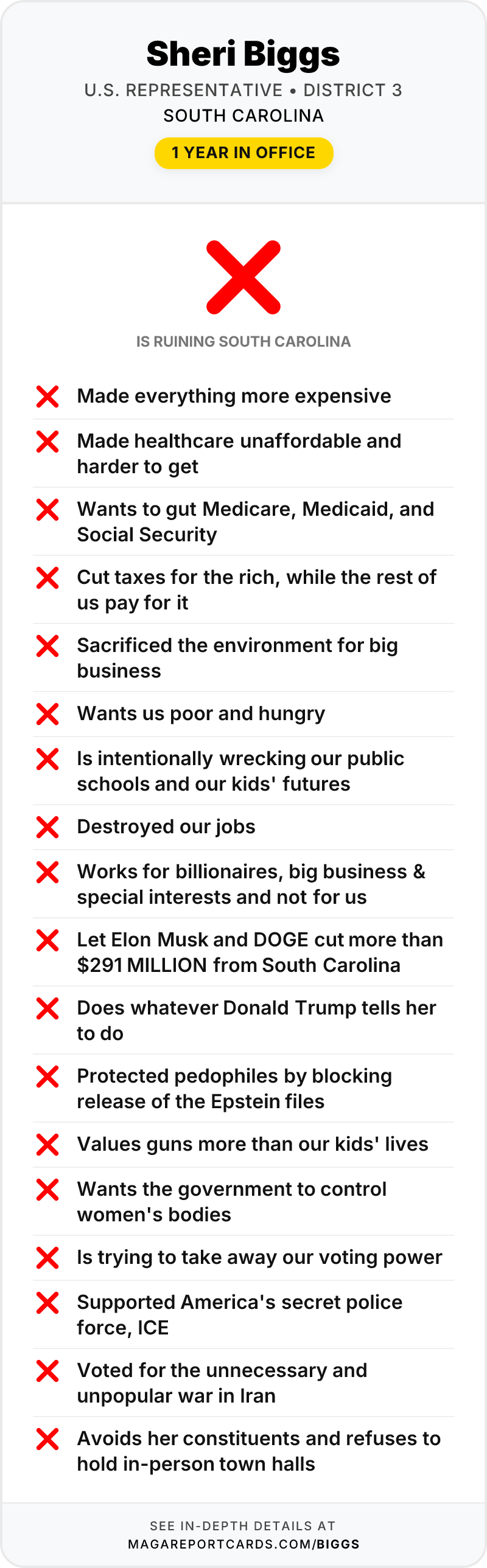
Almost none of Biggs's campaign money comes from small donors. Per FEC filings compiled by Who Bought My Rep, just 1% of her fundraising came from small grassroots donors, ranking her 416th out of 440 House members.
Meanwhile, in SC-03, 28,928 households — about 9% of all households in the district — rely on SNAP to buy groceries, including 15,213 households with children. An estimated 27,623 people in her district are projected to lose health coverage by 2034 — 2,723 of them from the Medicaid cuts in the budget law she voted for, and 24,900 from Affordable Care Act coverage.
At her April 2025 telephone town hall, an Anderson man on a fixed retirement income said rising food prices were making it harder for retirees like him to afford necessities. Biggs defended the tariffs, saying the long-term goal was to prioritize American interests and jobs, and expressed confidence they would lead to a stronger economy.
Roughly a month earlier, dozens of stock sales had gone out of her household's account on the day the Treasury secretary was briefing on those tariffs. Her constituents wouldn't learn about it for months.
Her office had nothing to say
NOTUS called and emailed Biggs's office repeatedly. Her office acknowledged the request for comment and then did not respond.
That is consistent. Biggs holds her town halls by telephone, a format she defended by saying virtual events allow better access and let more voices be heard.
So there is no town hall a constituent can walk into to ask about the March 18 trades, and no answer coming from the office if they call a reporter instead.
Source
Dave Levinthal, "Republican Congresswoman Failed to Properly Disclose 170 Trades Worth Up to $13.6M," NOTUS, October 8, 2025. Photo: Tom Williams/AP, via NOTUS.