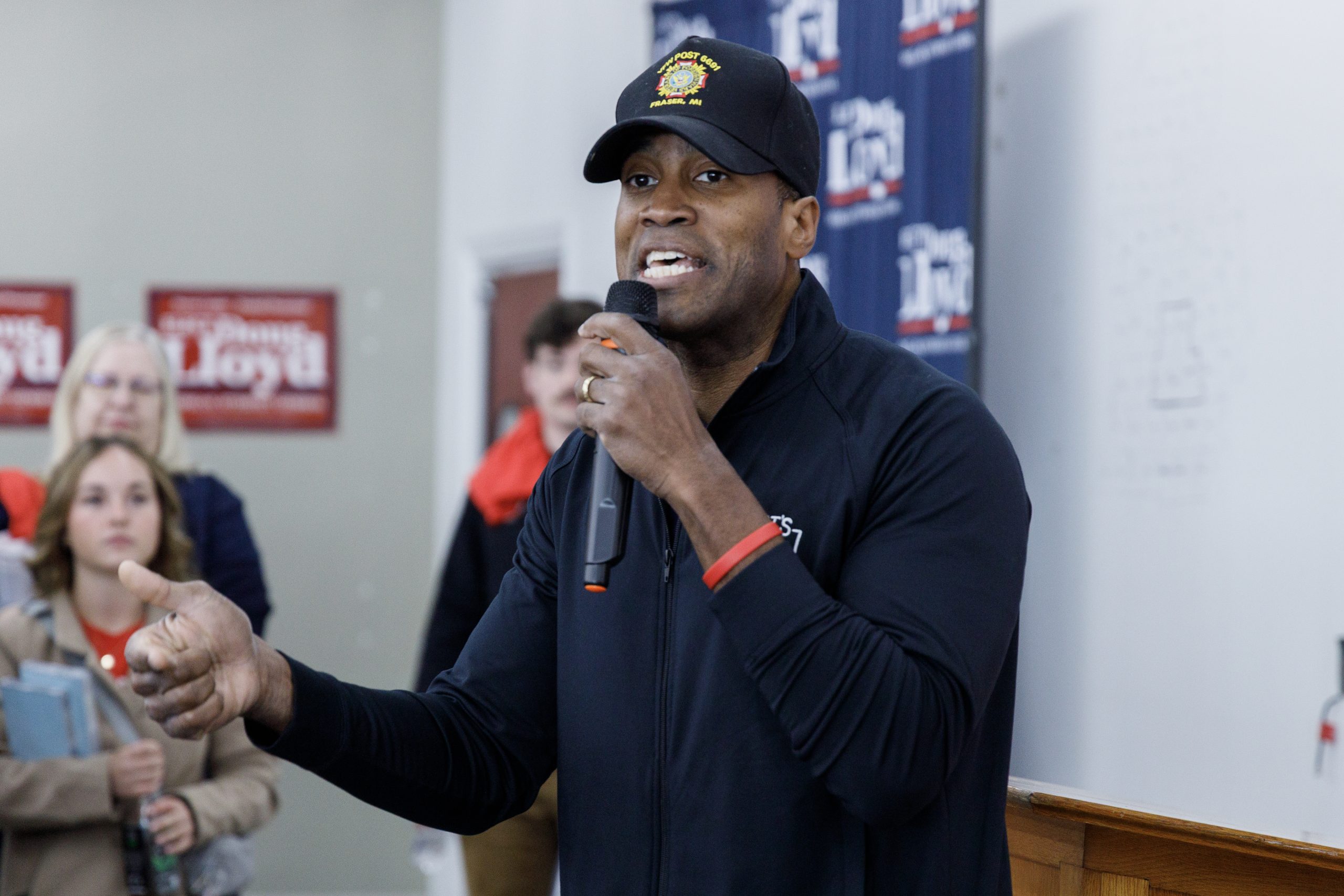
In early September, a super PAC funded by Elon Musk dropped more than a million dollars into Michigan's Senate race in a matter of days. The money went to digital ads and mailers boosting Republican Mike Rogers (MI), the former seven-term congressman trying to win the seat, and attacking his Democratic opponent Abdul El-Sayed. It was part of $28 million in outside spending on that one race since the August 4 primary, according to Detroit News reporting.
Michigan is not the exception. It is one stop on a national tour.
We pulled every independent expenditure that Musk's America PAC has reported to the Federal Election Commission for the 2026 cycle. The filings show $5.1 million spent so far, spread across Senate and House races in seventeen states. Eighteen of the Republicans that money is meant to elect have report cards on this site. About $4.95 million of the total is in races those eighteen are running in; the remaining $199,000 is spread across four other races.
How the spending breaks down
America PAC's reported spending divides in two. Some of it pays for ads and mail supporting a Republican. The rest pays for ads and mail attacking that Republican's Democratic opponent. Here is how the support side breaks down for the eighteen candidates we track:
| Candidate | Race | Reported in support |
|---|---|---|
| Mike Rogers (MI) | Michigan, Senate | $520,499 |
| Jon Husted | Ohio, Senate | $397,848 |
| Ken Paxton | Texas, Senate | $124,595 |
| Randy Fine | Florida, 6th District | $87,134 |
| Susan Collins | Maine, Senate | $78,306 |
| Dan Sullivan | Alaska, Senate | $58,004 |
| Ashley Hinson | Iowa, Senate | $27,300 |
| Gabe Evans | Colorado, 8th District | $12,220 |
| David Valadao | California, 22nd District | $12,220 |
| Juan Ciscomani | Arizona, 6th District | $12,220 |
| Jimmy Patronis | Florida, 1st District | $10,244 |
| Rob Bresnahan | Pennsylvania, 8th District | $6,690 |
| Scott Perry | Pennsylvania, 10th District | $6,431 |
| Ryan Mackenzie | Pennsylvania, 7th District | $6,388 |
| Tom Kean Jr. | New Jersey, 7th District | $5,908 |
| Mike Lawler | New York, 17th District | $5,563 |
| Derrick Van Orden | Wisconsin, 3rd District | $5,225 |
| Jen Kiggans | Virginia, 2nd District | $5,000 |
That adds up to about $1.38 million. The other $3.7 million went somewhere else.
Nearly three-quarters of the money is an attack
Of the $5.1 million America PAC has reported this cycle, $3.7 million — about 73 cents of every dollar — was spent opposing Democratic candidates rather than supporting Republican ones.
The biggest single target is not a Republican's ally. It is James Talarico, the Democrat running against Ken Paxton in Texas, with $1.49 million spent against him. Sherrod Brown in Ohio drew $941,000. Abdul El-Sayed in Michigan drew $527,000. Josh Turek in Iowa, Troy Jackson in Maine, Chris Pappas in New Hampshire and Mary Peltola in Alaska each drew six figures of opposition spending.
Put plainly: the single largest expense in Musk's entire 2026 portfolio is attacking one man in Texas. It is bigger than everything the PAC has spent supporting all eighteen Republicans on this list combined.
That is a choice about what the money is for. Ads that make a case for a candidate have to say something about the candidate. Ads that attack an opponent do not.
Four races got most of it. Eleven candidates got a rounding error.
The support money is not spread evenly either. Rogers, Husted, Paxton and Fine account for $1.13 million — 82% of everything America PAC has reported spending in support of the eighteen.
Eleven of the eighteen got less than $13,000 apiece. Five of them — Gabe Evans, David Valadao, Juan Ciscomani and two candidates without pages here — each show exactly $12,220, all of it billed to the same mail vendor on the same day — the signature of a single bundled buy split across districts rather than a campaign built for any one of them. Jen Kiggans shows $5,000 in support and $4,500 spent against her opponent Elaine Luria, which is to say Musk's PAC spent nearly as much attacking her opponent as backing her.
For most of this list, the money is not the point. Being on the list is.
What the man writing the checks wanted
Musk is not a stranger to these candidates. He ran the Department of Government Efficiency, the cost-cutting operation that took an axe to federal agencies, contracts and grants — and several of the Republicans his PAC is now paying to protect defended those cuts while their own constituents absorbed them.
Jen Kiggans called the DOGE cuts "so necessary" while her Hampton Roads district lost at least 70 contracts with veteran-owned businesses. In Arizona, 700 people in Casa Grande lost their jobs, and six weeks later Juan Ciscomani brought the Speaker of the House there to celebrate. Susan Collins is running for a sixth term, and Musk's money went to Maine to keep her in the seat.
Ken Paxton is the clearest case of what the money buys. Republican donors spent months keeping their distance from a nominee who dragged out three felony counts including securities fraud for nearly nine years before settling them, and whose own party's Texas House impeached him 121 to 23. Trump and Musk are trying to buy him the seat anyway.
And America PAC's spending is not only ads. On August 29, the PAC's voter registration site gave itself the right to sell the personal information people type into it — the same registration push the PAC is running alongside these ads in Michigan.
Why this matters where you live
Every one of these eighteen races is a race for a seat that votes on your health care, your grocery bill and your taxes. None of the eighteen candidates raised this money. They do not have to disclose it, coordinate it, or answer for it, because independent expenditures are legally supposed to be independent.
But the money is not neutral about outcomes. One man with one fortune has picked eighteen Republicans on this site, and one Democrat to spend seven figures against, and he is doing it in seventeen states at once. When those eighteen get to Washington, the person who spent $5.1 million to put them there will have interests before the government they run — and every one of them will know exactly who it was.
What the filings show
Elon Musk's America PAC has reported $5.1 million in independent spending for the 2026 cycle, almost all of it in races with eighteen Republicans who have report cards on this site. Only $1.38 million of it — 27% — paid for anything supporting those candidates. The other $3.7 million paid to attack Democratic candidates, with $1.49 million aimed at Ken Paxton's opponent alone. Four races collected 82% of the support money; eleven of the eighteen candidates got less than $13,000 each.
Source
Detroit News, Elon Musk group wades into Michigan Senate race, boosting Mike Rogers. Spending figures are from America PAC's independent expenditure filings with the Federal Election Commission for the 2026 cycle, committee C00879510, retrieved September 10, 2026, with duplicate 24-hour-notice filings removed.