On Friday, July 31, 2026, a whole shelf of products that Texans had been buying legally for seven years became felony drugs.
Delta-8. Delta-10. THCP. THCA flower. As of that morning, Texas classifies them as Schedule I controlled substances — the same legal tier as heroin, LSD, and psilocybin mushrooms. Getting caught with one is now a state jail felony: 180 days to two years behind bars and a fine up to $10,000. Austin police confirmed they'll charge it that way.
Roughly 14,000 licensed hemp retailers operate in Texas. Experts told the Texas Tribune that somewhere between 60% and 90% of what those stores sell just had to come off the shelves.
Now here's the part worth sitting with.
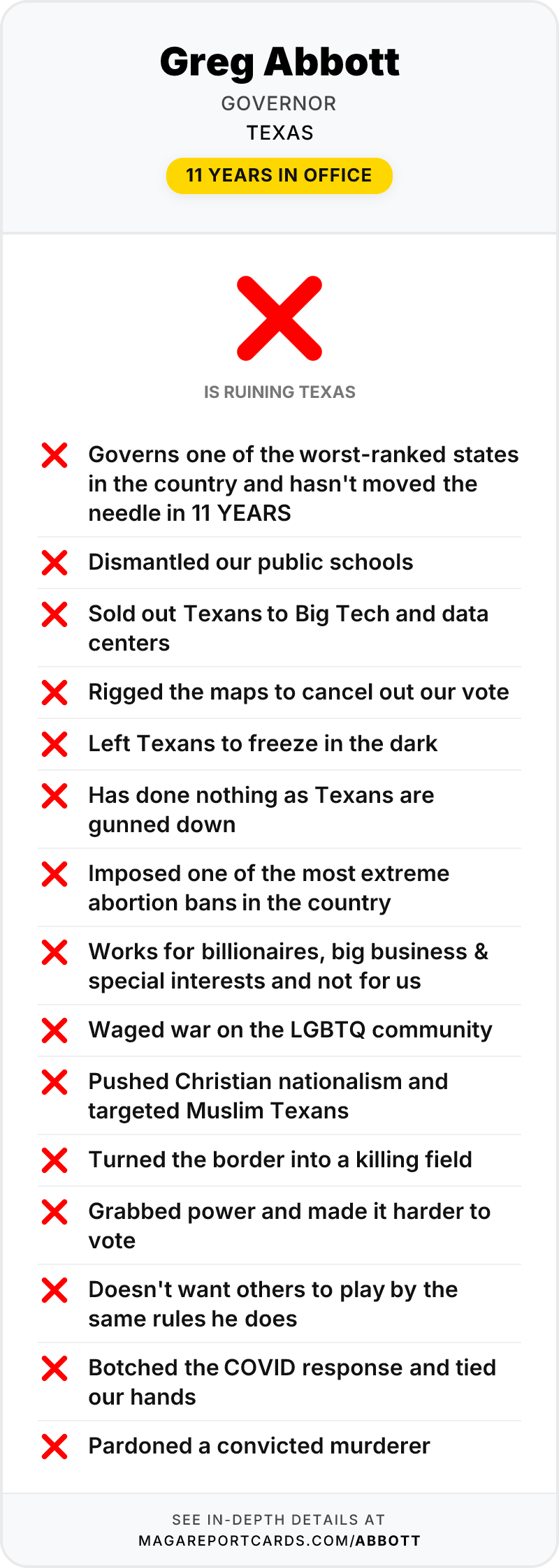
The man who legalized these products is Greg Abbott. And a month before they became felonies, the owner of the largest Anheuser-Busch beer distributor in the country wrote him a check for half a million dollars.
First, One Thing Straight
Marijuana itself didn't change status. It was already illegal in Texas and it still is.
What changed is hemp-derived THC — the gummies, drinks, vapes, and flower sold at gas stations and smoke shops across the state. That's the market that got criminalized overnight.
Abbott Built This Industry. On Purpose.
In 2019, Greg Abbott signed House Bill 1325, which legalized hemp products containing less than 0.3% delta-9 THC. Lawmakers were trying to help Texas farmers.
Texans took him at his word. They signed commercial leases. They took out loans. They hired people. By the time the Legislature turned on them, the industry had grown to more than 8,000 retailers, and an economic study put it at 50,000 workers and over $8 billion in annual revenue. That study was commissioned by a hemp company, so treat the exact figures as the industry's own estimate — but it's the number the Texas Tribune cited, and nobody in the Legislature offered a smaller one.
Even discounted, that's tens of thousands of Texans who went to work every day in a business the Governor's own signature made legal.
Then He Played the Reasonable One
In 2025, Lt. Gov. Dan Patrick made killing that industry his signature project. He called THC products "poison in our public." He said the ban ranked among his "top five" bills in seventeen years in the Legislature. He filmed himself walking through smoke shops making amateur investigative videos.
Senate Bill 3 passed. And on a Sunday night in June 2025, minutes before the deadline, Abbott vetoed it.
His stated reason was that a total ban wouldn't survive court:
"Allowing Senate Bill 3 to become law — knowing that it faces a lengthy battle that will render it dead on arrival in court — would hinder rather than help us solve the public safety issues this bill seeks to contain."
He asked lawmakers instead for something modeled on how Texas regulates alcohol: no sales to minors, mandatory testing, local opt-outs, more money for enforcement.
Hemp business owners cheered. The Texas Hemp Business Council posted that Abbott "has shown the people of Texas who he works for." Conservatives cheered too — Dana Loesch, the former National Rifle Association spokesperson, called Patrick's ban "stupid" and told him to "do your job as a parent and parent instead of idiotically expanding government."
Abbott got to be the sensible one. He got the credit for saving 50,000 jobs.
And Then His Own Agency Did It Anyway
Here's how the ban happened without a single legislator voting for it.
Back in 2021, the Texas Department of State Health Services quietly rewrote its definitions of "tetrahydrocannabinols" and "marihuana extract" to sweep in delta-8 and its cousins. Hemp companies sued and won an injunction, and for five years the rule sat frozen.
In May 2026, the Texas Supreme Court lifted that injunction. DSHS then published notice in the July 10 Texas Register that the old definitions would take effect July 31.
DSHS is a state health agency. It answers up through the Health and Human Services Commission, whose executive commissioner, Stephanie Muth, Abbott appointed on December 3, 2025.
To be clear about what we can and can't show: nobody has produced an order from Abbott telling DSHS to do this. That's rather the point. The Governor who publicly vetoed the ban ended up with the ban anyway — carried out by an agency inside his own executive branch, with no roll call to point at and no veto pen required.
He never had to cast a vote. He never had to give a speech. He never had to explain it to the 50,000 people whose jobs he'd taken credit for saving. And he has not, in the days since, lifted a finger to stop it or asked the Legislature for the regulatory framework he said he wanted instead.
Follow the Beer Money
Now the part every Texan deserves to know, however you feel about weed.
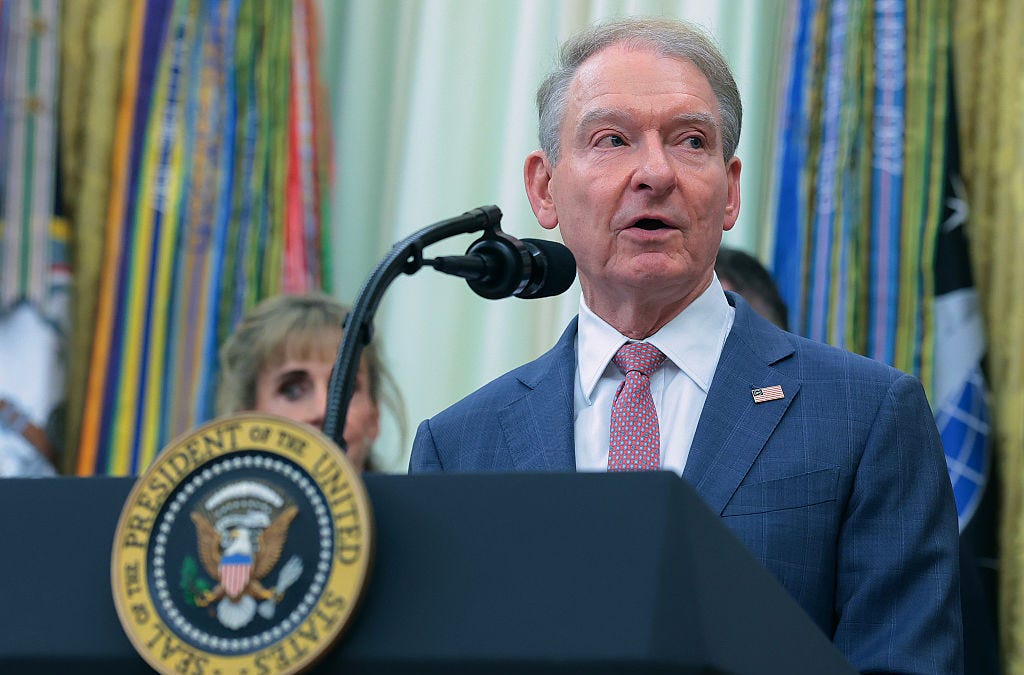
John L. Nau III is the president and CEO of Silver Eagle Distributors — the largest distributor of Anheuser-Busch products in the United States. Beer is his business.
THC drinks are beer's competition. Cynthia Cabrera of the Texas hemp company Hometown Hero described the industry's motive this way: "Beer companies would prefer a ban because they're losing market share to THC drinks. Rather than just participate in the market, they would rather do what they've done for 100 years and make sure that there is no competition in the beer market."
Here's what Nau has given Texas's two most powerful Republicans this election cycle, straight from state campaign finance filings:
To Greg Abbott:
- $250,000 — June 26, 2025
- $24,811.27 — October 21, 2025
- $500,000 — June 29, 2026
That's $774,811 to the Governor.
To Dan Patrick:
- $150,000 — July 7, 2025
- $275,000 — June 29, 2026
That's $425,000 to the Lieutenant Governor.
Look at the dates on those two biggest checks. June 29, 2026. The same day. To both men. Thirty-two days before the state made their donor's chief competitor a Schedule I felony drug.
Nau has put more than $4 million into Texas politics this cycle. Abbott is among his biggest beneficiaries.
There's no evidence of an explicit deal, and both men frame the crackdown as protecting children. But Texans are allowed to notice the pattern: the head of the country's largest Anheuser-Busch distributor writes seven-figure checks to the two men with the most power over his competition, and his competition gets criminalized.
If a Democrat took three-quarters of a million dollars from an industry and then regulated that industry's rival out of existence, every Republican in Texas would call it what it is.
Real Texans Are Closing Their Doors
This isn't abstract. KERA talked to the people losing everything.
Molly Mathias ran Go Easy in Dallas for six years. Smokable products were about half her sales. She's closing permanently.
"One week you're doing good, you're successful, the next week, your business could completely get shut down."
Mike Williams cofounded Wild Revival in Denton, making cannabis-infused cocktails. Seven of his customers — seven shops — closed.
Craig Katz runs government relations for a company with 55 cannabis locations across five states, including a dozen in Texas. His point should end this debate:
"We're not against regulation. We're absolutely for regulation. We've been asking for regulation for years."
That's the whole thing right there. The industry asked to be regulated. It asked for age limits, testing, and labeling — the exact framework Abbott said he wanted in his veto message. Texas gave it prohibition instead, through the back door, and never delivered the regulation Abbott promised in its place.
For the shops still standing, the state raised annual retail licensing fees from $150 to $5,000 per location, and put manufacturers on the hook for $10,000 a year. Small operators can't carry that. The big ones can.
Who Actually Pays
Veterans. When the Legislature was debating SB 3, veterans and Texans with chronic pain testified that these products let them manage without opioids. Nobody has offered them a replacement.
Working people. Tens of thousands of jobs, in an industry the state invited them into.
Small business owners. The ones who read the 2019 law, believed the Governor of Texas, and built something.
And every Texan who now faces up to two years in a state jail for a gummy that was sitting legally on a shelf the day before.
The Freedom Part
Texas Republicans campaign on personal liberty and getting government off your back. Abbott has run this state for eleven years on that promise.
Under that promise, Texas made an intoxicant legal, watched tens of thousands of people build careers on it, and then made possessing it a felony without a single vote in the Legislature — while the two officials in charge collected $1.2 million from the country's biggest Anheuser-Busch distributor.
You can believe THC should be regulated. Plenty of reasonable Texans do, and so does the hemp industry itself. But regulation is not what happened here. What happened is that a competitor got removed from the market, and the man who profits most from its removal was writing the Governor the biggest checks of the cycle while it happened.
Greg Abbott opened this industry in 2019 and watched his own executive branch shut it down in 2026 — after telling Texans he'd saved it. In between, he took $774,811 from the man who sells the beer.
We deserve better.
Source
What is still legal under Texas' latest THC ban — The Texas Tribune, July 30, 2026. Photo: Kaylee Greenlee for The Texas Tribune.