On April 14, 2025, twelve House Republicans sent a letter to their own leadership. Rob Wittman was one of them.
The letter was not vague. As the American Hospital Association reported it, the signers said they supported "targeted reforms" — and then, in the letter itself, drew a line:
"However, we cannot and will not support a final reconciliation bill that includes any reduction in Medicaid coverage for vulnerable populations."
They spelled out why, in terms anyone in a rural district understands:
"Many hospitals — particularly in rural and underserved areas — rely heavily on Medicaid funding, with some receiving over half their revenue from the program alone. Providers in these areas are especially at risk of closure, with many unable to recover. When hospitals close, it affects all constituents, regardless of healthcare coverage."
That is a promise, in writing, with his name on it.
Then he told a columnist everything was fine
A month later, Virginia Mercury columnist Roger Chesley emailed Wittman about the budget bill and Medicaid. Wittman's written answer:
"I am pleased to see Virginia's vulnerable populations protected in the Medicaid portion of the reconciliation bill. There will be no change to the federal match rate."
Chesley's response, a couple of sentences later, was flat: "We'll see if all that happens."
It did not happen.
Then he voted yes
Wittman voted for the bill. Every Republican in Virginia's congressional delegation did.
Virginia Mercury summed up the sequence plainly in September 2025: Wittman and fellow Virginia Rep. Jen Kiggans "had urged Congress to reconsider those portions of the bill, before ultimately voting for it anyway."
The letter said he would not support a final bill with any reduction in Medicaid coverage for vulnerable populations. The final bill reduced Medicaid coverage. He supported it.
There is no third reading of those facts.
What it costs in his own district
The Joint Economic Committee's House minority staff ran the numbers district by district, allocating the Congressional Budget Office's national coverage-loss estimate for 2034. For Virginia's 1st Congressional District — Wittman's district — the projection is 20,859 people losing health coverage: 12,459 losing Medicaid and 8,400 losing Affordable Care Act coverage.
Twenty thousand people is not a rounding error. It's a mid-sized town.
And the effect doesn't stop at the people who lose a card. That's the point the letter Wittman signed made better than we could: when Medicaid money dries up, the hospital doesn't just serve fewer Medicaid patients. It serves fewer patients, period, or it closes a location.
Which is exactly what started happening in Virginia. In September 2025, Augusta Medical Group announced it was closing an urgent care clinic and two primary care clinics in the Shenandoah Valley, and said the decision was part of its "ongoing response" to the budget law "and the resulting realities for healthcare delivery." The three sites — Buena Vista Primary Care, Churchville Primary Care and Weyers Cave Urgent Care — are in Virginia's 6th District, represented by Rep. Ben Cline, who also voted yes. Augusta Health serves about 200,000 people and is the largest private employer in its area.
That is what the letter warned about. It took about two months from the president's signature to these closures.
He knew what he was doing
The most damning thing about this is that Wittman cannot claim he was surprised.
He signed a letter that predicted this outcome in detail — rural hospitals, half their revenue from Medicaid, closures, communities unable to recover. He then reassured a Virginia newspaper that his constituents were protected. Then he voted for it.
The letter's exact wording gave him an escape hatch, and he used it. It said "any reduction in Medicaid coverage for vulnerable populations" — which leaves room to argue that the bill's changes reached people who shouldn't have been on the rolls, not the vulnerable. Chesley recorded Wittman's own version of that: he said illegal beneficiaries would be removed from the rolls.
But that projection isn't a count of ineligible people. It's a count of people in his district losing coverage. Paperwork requirements don't check whether you deserve care. They check whether you filed on time.
The pattern
This is the same move Wittman made on federal jobs, where he wrote an op-ed calling for "a scalpel, not a sledgehammer" and then voted to write the cuts into law. It's the same instinct that had him faking a phone call on a Capitol sidewalk rather than answer a question about Social Security.
State the concern. Get the headline. Vote with leadership. Hope nobody keeps the receipt.
We kept the receipt. It's the letter from April 14, 2025, with twelve names on it, and one of them is his.
Source
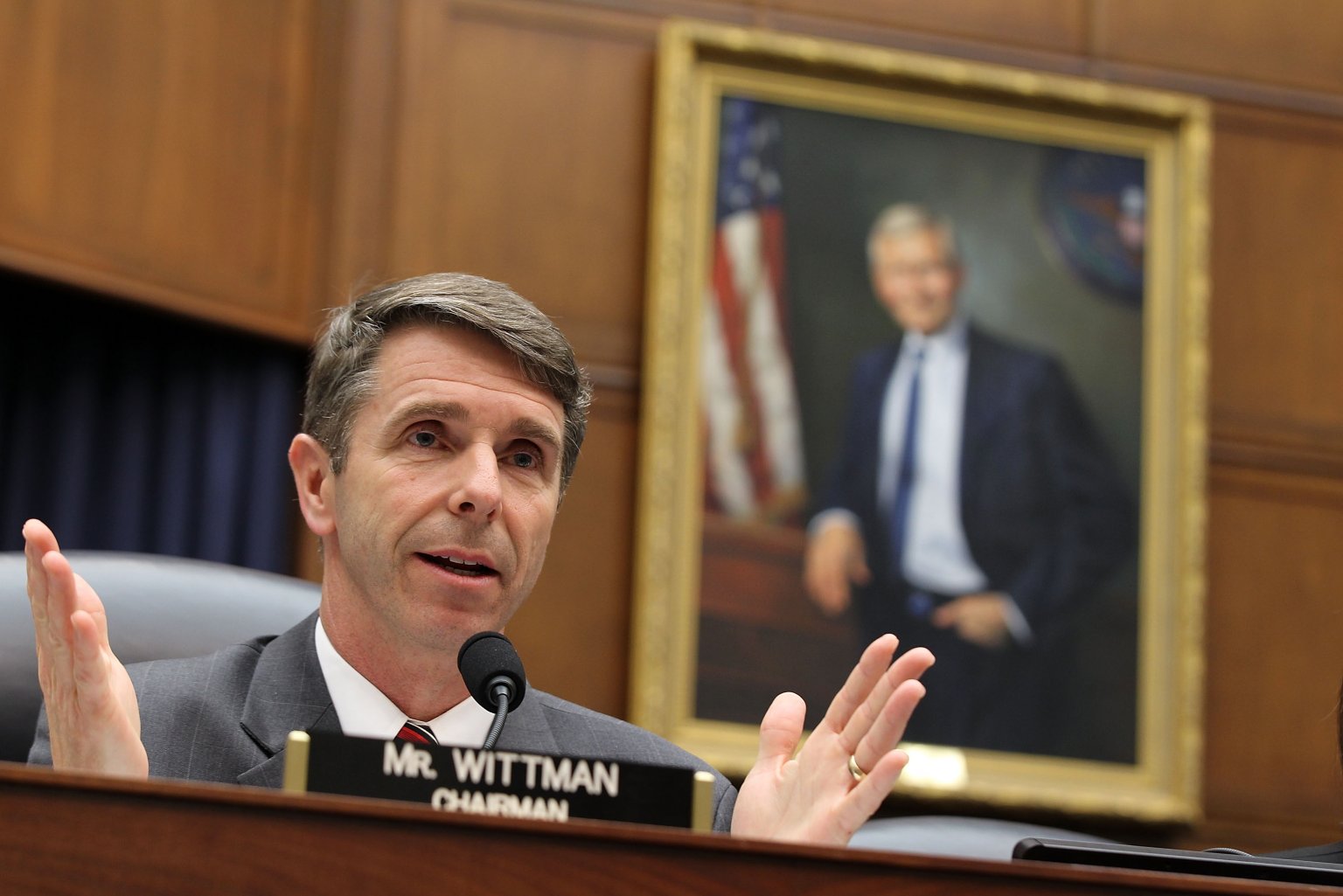
The American Hospital Association's April 16, 2025 report on the letter, A dozen House Republicans send letter opposing Medicaid cuts. Photo: Alex Wong/Getty Images, via Virginia Mercury.