Someone in the House Republican leadership looked at the calendar and decided that the right day to vote on rewriting the Endangered Species Act was Earth Day.
The bill was H.R. 1897. Its author is Bruce Westerman, the Arkansas Republican who chairs the House Natural Resources Committee — the committee with jurisdiction over America's public lands, wildlife, forests, minerals and waters.
On April 22, 2026, the vote didn't happen. Leadership pulled the bill off the floor without giving a reason.
Not because Democrats blocked it. Democrats couldn't have. Republicans control the House. The Sierra Club said the bill came off the calendar after outcry from Republicans and Democrats — the Washington Examiner's account of the day noted Politico's reporting that some Florida Republicans had problems with the text — and the Endangered Species Coalition pointed to more than 58,000 emails sent to elected officials, along with "hundreds—if not thousands—of calls," in the days before.
Stephanie Kurose of the Center for Biological Diversity, the group that has taken to calling H.R. 1897 the "Extinction Act," said it plainly: "This should be a wake-up call to Rep. Westerman that not even his own colleagues support his extreme attacks on wildlife."
Westerman's response was that the bill just needed a little more work. "We just have a few provisions we've got to work through on it," he said, "and hopefully in the next couple of weeks, we'll be able to vote on it."
What's actually in it
Westerman calls the bill a reform. Here is what the Washington Examiner listed as its contents:
- Eliminate the 12-month deadline for federal agencies to act on a proposal to list a species as endangered, replacing it with a five-year schedule.
- Limit which land can be designated as critical habitat, and weaken protections for species listed as threatened.
- Hand states more authority over species recovery plans.
- Loosen the environmental review required for permits that allow a business to "take" — that is, kill or harm — protected animals.
- Bar courts from reviewing a decision to delist a species during a five-year monitoring period.
- Rename the statute the "Endangered Species Recovery Act."
That fifth item deserves a second look, because it sits oddly next to Westerman's own case for the bill.
His argument is that there's too much litigation. His fix is to ban the lawsuit.
In an op-ed published June 30, 2026 under the headline "Republicans are restoring the Endangered Species Act," Westerman laid out his complaint. The law, he argues, has been captured by litigation. He cites a Government Accountability Office study finding 141 lawsuits involving 1,441 species filed against the federal government between 2005 and 2015, with two advocacy groups responsible for nearly a third of all Endangered Species Act litigation.
He has made the harsher version of the point too: the ESA "has consistently failed to achieve its intended goals and has been warped by decades of radical environmental litigation into a weapon instead of a tool."
Set aside whether that's a fair reading of the case law. Look at what his solution does.
If the Fish and Wildlife Service decides tomorrow that a species no longer needs protection and strips it, Westerman's bill would make that decision unreviewable by a court for five years. Not harder to challenge. Not subject to a higher standard. Off-limits.
That is not a reform aimed at frivolous suits. It's a rule that a citizen who believes the government broke the law cannot ask a judge to look at it — even if the government did break the law, and even if the species goes extinct in the meantime. The complaint is "people sue too much." The remedy is "you may not sue."
He's measuring the law by the wrong number
The other pillar of Westerman's argument is a statistic: only about 3% of listed species have ever been delisted because they recovered. He offers that as proof the law doesn't work.
Here is the number he leaves out. Since 1973, the Endangered Species Act has kept 99% of the species it protects from going extinct.
Both numbers are true, and they describe the same law. Bringing a species all the way back from the brink takes decades, so a low delisting rate over fifty years tells you the work is slow — not that it failed. The 99% figure tells you what would have happened without it.
Judging the ESA by delistings is like judging a hospital by how many patients get discharged fully cured and ignoring how many are alive.
Susan Holmes of the Endangered Species Coalition put the stakes in one sentence: "Once a species is gone, it is gone forever." And the public isn't confused about this — 84% of Americans say they support the law's measures to prevent extinction.
Who benefits
Westerman chairs the committee that decides who gets to log, mine and drill on public land. The industries that do those things are among his largest donors.
Since 2020, according to Who Bought My Rep, the PACs of the National Stone, Sand & Gravel Association ($40,000 from the mining industry his committee regulates), the timber giant Weyerhaeuser ($37,500) and the National Alliance of Forest Owners ($33,750) have given to his campaigns, and OpenSecrets lists oil and gas money from Mewbourne Oil, Arena Energy and Flywheel Energy among his top contributors this cycle.
As chairman, he takes nearly nine times what the average House member takes from energy and natural resources — $392,000 against an average of $45,647. Just 2% of his money comes from small grassroots donors.
Every provision on that list above — narrower critical habitat, easier "take" permits, looser environmental review, faster delisting with no court to check it — makes it cheaper and quicker to put a mine, a well pad, or a clear-cut somewhere a protected animal lives.
He also has a 0% score from the League of Conservation Voters for 2025, and a 3% lifetime score across his entire career.
The other half of the pincer
Westerman's bill is one of two tracks running at the same time.
While Congress considered H.R. 1897, the Trump administration was rewriting the Endangered Species Act by regulation. It changed the definition of "harm" so that destroying the place a species lives no longer counts as harming it — the single idea the whole law rests on. That one change opened forests, wetlands and streams to logging, mining and drilling.
Those regulatory changes can be undone by a future administration or struck down in court. A statute can't. That is what makes Westerman's bill the more permanent threat — and it's why he keeps bringing it back.
He'll try again
Westerman said he'd return with the bill after working through "a few provisions." He is the chairman. He controls the committee, the hearings and the markup calendar. He does not need to persuade the public; he needs to find more Republicans.
The people of Arkansas's 4th District did not send him to Washington to make it legal to bulldoze the last places on earth where certain animals live. Most of them, if the polling holds, are part of the 84%.
He has never, as far as we can find, held an in-person town hall where anyone could ask him about it.
We deserve better.
Sources
In 'Major Earth Day Win,' House GOP Cancels Vote on Gutting Endangered Species Act — Common Dreams, April 22, 2026.
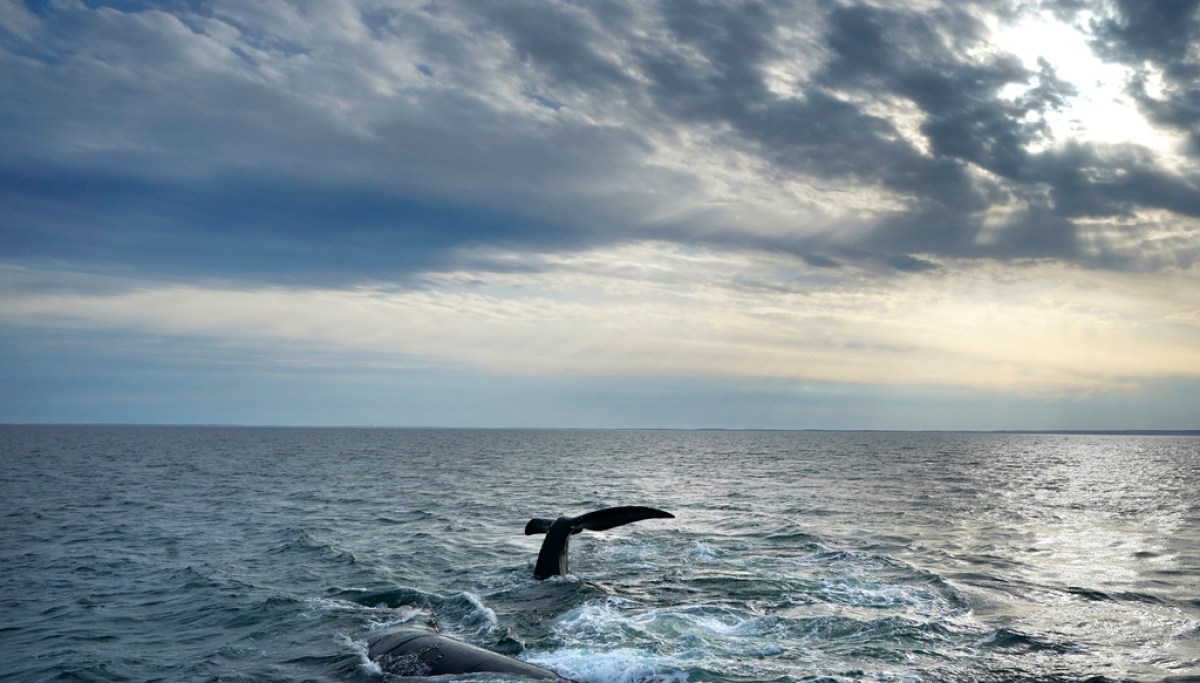
House of Representatives Pulls Bill To Gut Endangered Species Act — Sierra Club, April 22, 2026. Photo: AP.