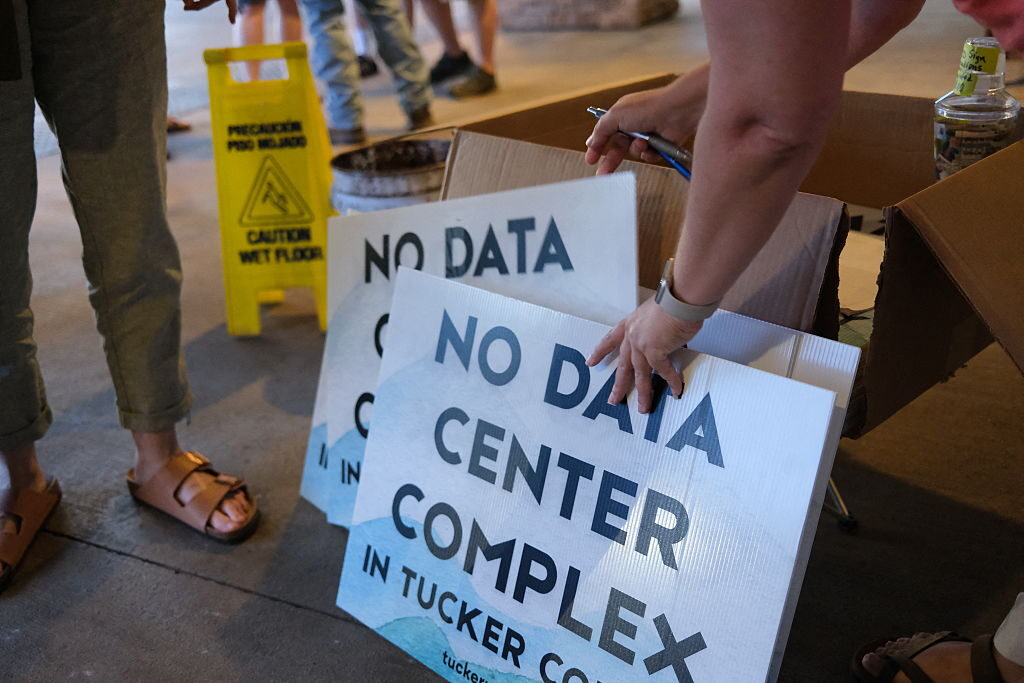
A Gallup poll found that 71% of Americans somewhat or strongly oppose building data centers in their communities.
That is not a fringe. That is roughly seven out of every ten of your neighbors.
Two Republicans in Congress have landed on an explanation for it: China.
What they actually said
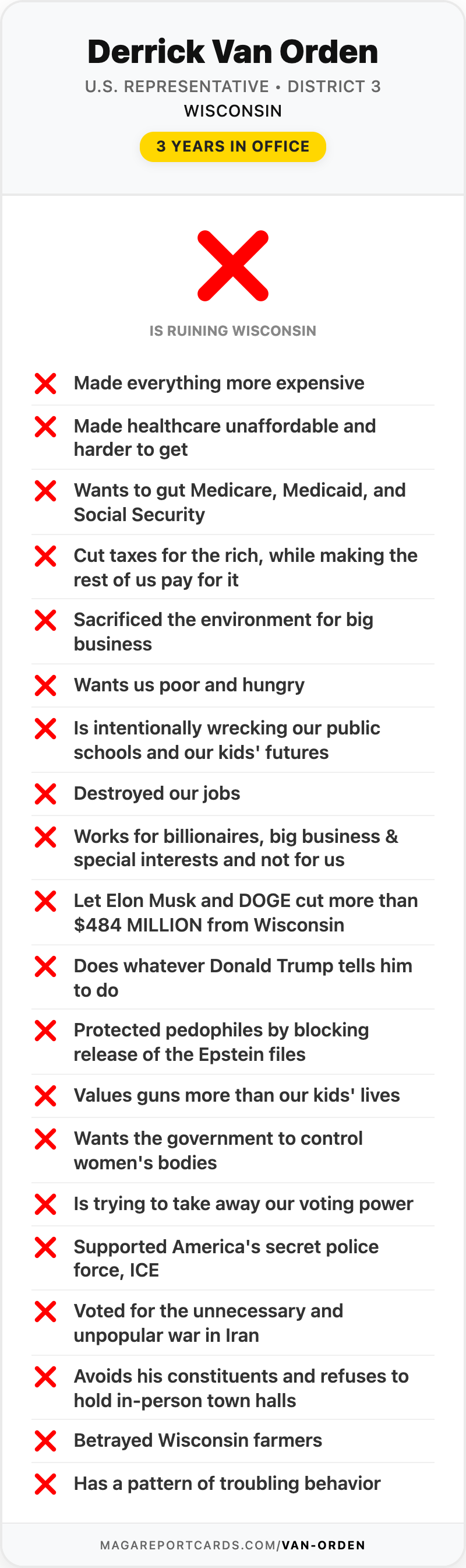
Derrick Van Orden represents Wisconsin's 3rd District, a sprawling seat where a data center is planned in Wisconsin Rapids. He told Roll Call that a lot of the information opposing the project is "from the Chinese companies" who are "paying people to say this stuff."
He is in a toss-up race this fall against Democrat Rebecca Cooke, who has released an ad accusing him of "selling out" to AI companies and who has separately backed a data center moratorium. Van Orden called the ad a lie.
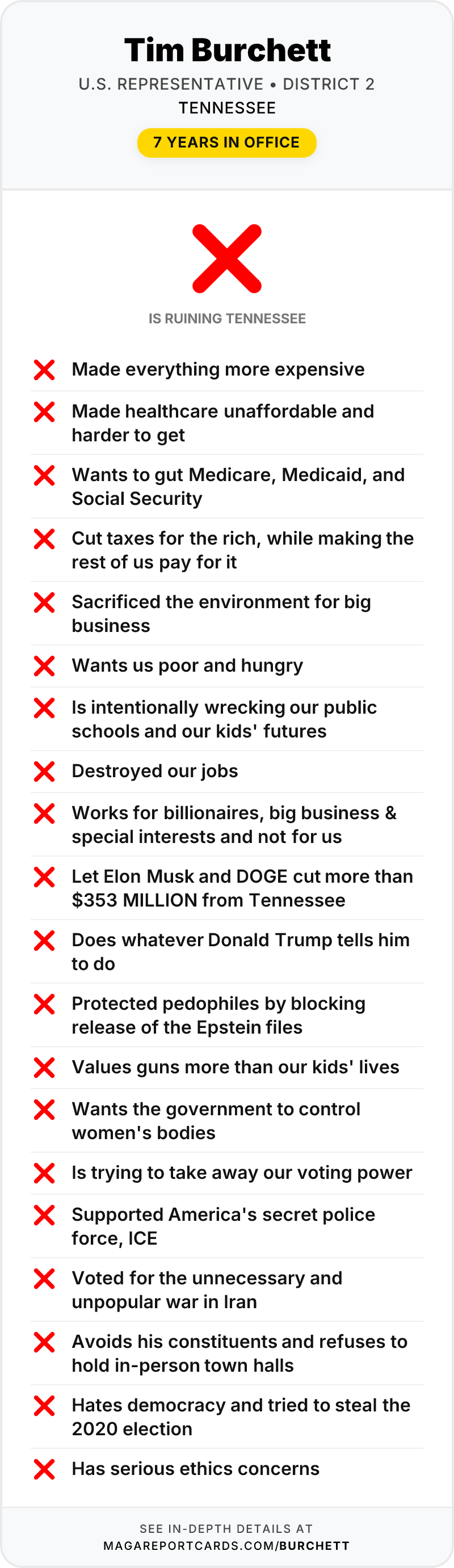
Tim Burchett of Tennessee reached for a version of the same idea. The data center companies are "totally off their game," he told Roll Call, pointing to "a lot of misinformation out there" — and adding that "there's talk that the Chinese are putting it out because they're the ones that want to be in the business of it."
So: the constituents showing up at county meetings, signing petitions and asking about their electric bills are, in Van Orden's telling, on a foreign payroll.
Somebody actually checked
This theory did not start in Congress. It started with people who own data centers.
Interior Secretary Doug Burgum told an audience at an event called "Harnessing American Power" that local opposition "is not organic and local, some of this is foreign-sourced dark money." On the tech podcast All-In, fund manager Gavin Baker said "it is starting to feel or seem like there might be a CCP-funded campaign."
NPR went looking for the evidence. Here is what it found.
Darren Linvill, co-lead of the Media Forensics Hub at Clemson University, which tracks foreign influence campaigns online:
"We haven't found much."
Linvill's point is not just that the evidence is thin — it's that the premise doesn't make sense. China runs armies of social media bots, but they aren't talking much about this. Chinese state media is far more interested in promoting Chinese data centers. As he put it:
"China tends to care a lot more about what you think about China and China's economy than they tend to do about what you think about your neighbor and what's happening in your own backyard here in the United States."
And on the people actually organizing against these projects:
"I think in this case, the people talking about data centers are real people with real passions and real perspectives and real opinions."
What the one real case actually showed
There is a grain of something. OpenAI banned a cluster of likely Chinese accounts that used ChatGPT to generate anti-data-center content over the winter — probably a private Chinese tech firm working for "provincial-level government clients," posing as Americans on social media.
But read what OpenAI itself said about the effect. Ben Nimmo, who leads threat investigations there:
"This was not a case of an influence operation creating a debate. The debate existed already. This was an influence operation from China trying to interfere in it. We didn't see any signs that they succeeded."
The debate existed already. Seventy-one percent.
What happens when someone names names
The clearest look at where this theory leads comes from Utah, where Shark Tank investor Kevin O'Leary is behind a data center called Stratos — originally about twice the size of Manhattan.
After local opposition slowed the project, O'Leary said on Fox News that he'd had "my guys" dig into IP addresses and found "two cells inside of Utah." He named a nonprofit, Alliance for a Better Utah, and a consultancy, Elevate Strategies, as operating on behalf of the Chinese government — and named individual current and former employees.
Those are real people, publicly accused of working for a foreign government by a man on national television.
Gabi Finlayson of Elevate Strategies told NPR: "We are certainly not a Chinese cell. Nobody pays us to make any content, let alone any foreign government."
Elizabeth Hutchings of Alliance for a Better Utah said O'Leary named people who don't even work there anymore, and claimed millions were being funneled from the Chinese Communist Party. NPR checked the group's tax filings: revenue of about $200,000 in 2024, in line with its last decade.
"You know, it was such an outrageous claim we laughed."
O'Leary did not respond to NPR's requests for comment. He has since agreed to shrink the project to a quarter of its original size, after the president of the Utah Senate raised concerns.
The Bitcoin Policy Institute published a report claiming "three vectors of influence" behind the anti-AI campaign, offering little direct evidence; groups named in it denied any Chinese involvement to the Washington Post.
Why this particular smear is useful
Notice what the China explanation accomplishes for a member of Congress.
If your constituents oppose a project and you agree with them, you have to fight the developer. If you oppose them, you have to explain to voters why their electric bill and their farmland matter less than a data center.
But if their opposition isn't real — if it's a foreign operation wearing their neighbors' faces — you don't have to answer any of it. You get to be tough on China instead of accountable to Wisconsin.
That's the trade. Van Orden made it in the middle of a competitive race.
It's spreading in Washington, too. Brett Guthrie, who chairs the House Energy and Commerce Committee, wrote to FBI Director Kash Patel asking for a briefing on whether the government sees any evidence of Chinese influence in the data center debate — while three counties in his own district were voting to slow projects down, one of them after 3,000 people signed a petition.
The people they're talking about
The residents of Box Elder County, Utah who sued saying they weren't adequately consulted. The 3,000 Kentuckians who signed that petition. The Wisconsinites asking what a data center does to their power bill and their farmland.
Van Orden has said he won't back data centers without local community input and protections for agricultural land. That's a reasonable position. It is also flatly incompatible with telling voters that the local community input is a Chinese operation.
You cannot promise to listen to people and simultaneously insist they're being paid to talk.
Source
"The data centers are coming. Is Congress ready?" Roll Call, Aug. 12, 2026; and Geoff Brumfiel, "The theory taking the rich by storm: China funds data center haters," NPR, June 10, 2026.