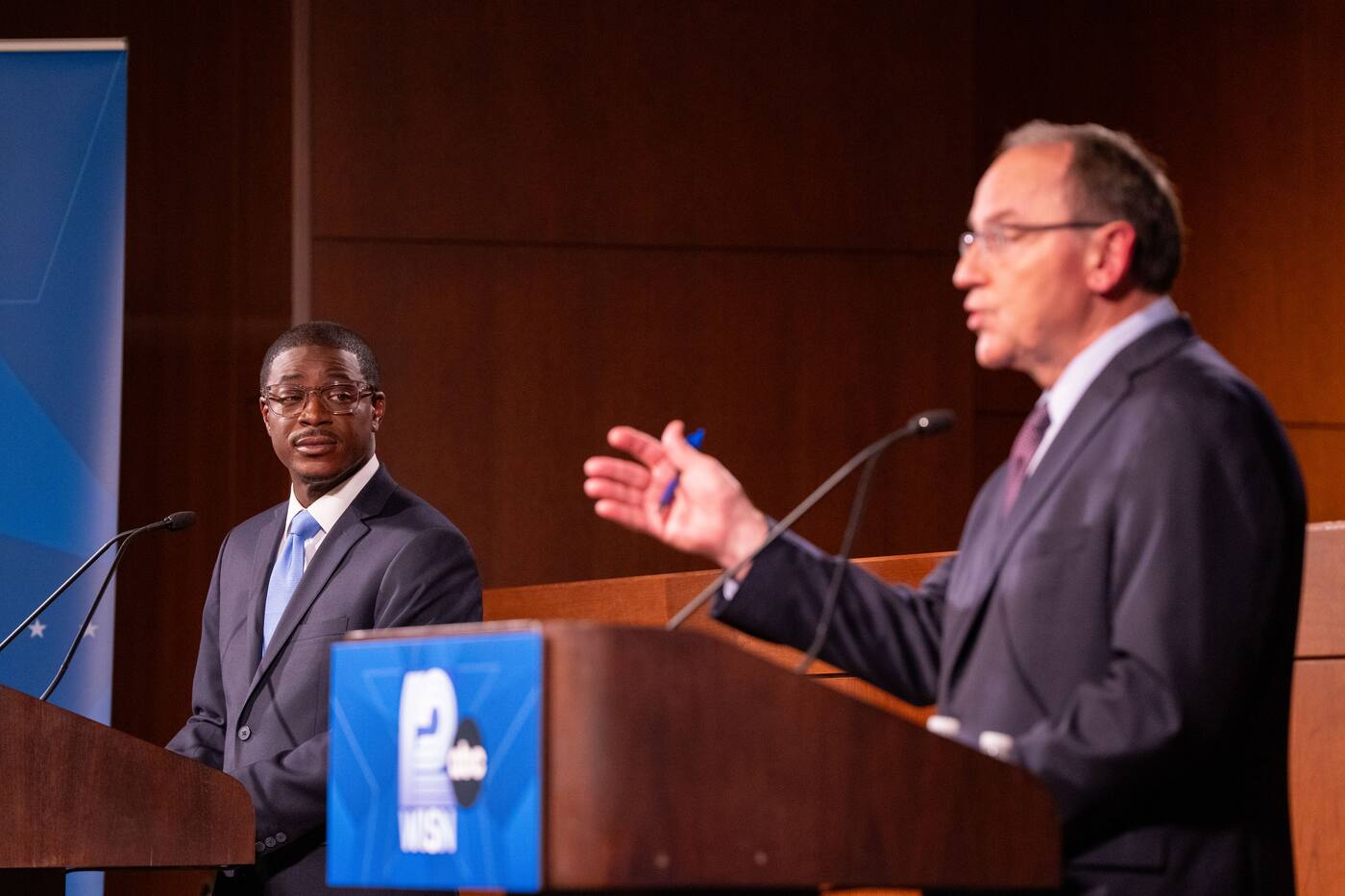
Tom Tiffany wants to run Wisconsin's elections as governor. On Wednesday night, at the only debate of the race, he was asked about the time he tried to throw out Wisconsin's 2020 election result. He gave a new reason.
"One of the reasons that I did that is 'Zuckerbucks,'" Tiffany said, according to the Associated Press.
He also pointed to county clerks in Milwaukee and Dane counties who told voters during COVID that they could call themselves "indefinitely confined" and get an absentee ballot without showing photo ID. "That's why I objected, because the people of the state of Wisconsin, they did not want that," he said.
Then he promised: "I will certify the election in 2028 regardless of who the winner is."
His Democratic opponent, David Crowley, put his finger on what was missing. "He didn't say anything nefarious was going on with our elections," Crowley said. "He just didn't like the fact of how money was being spent."
"Zuckerbucks" were legal
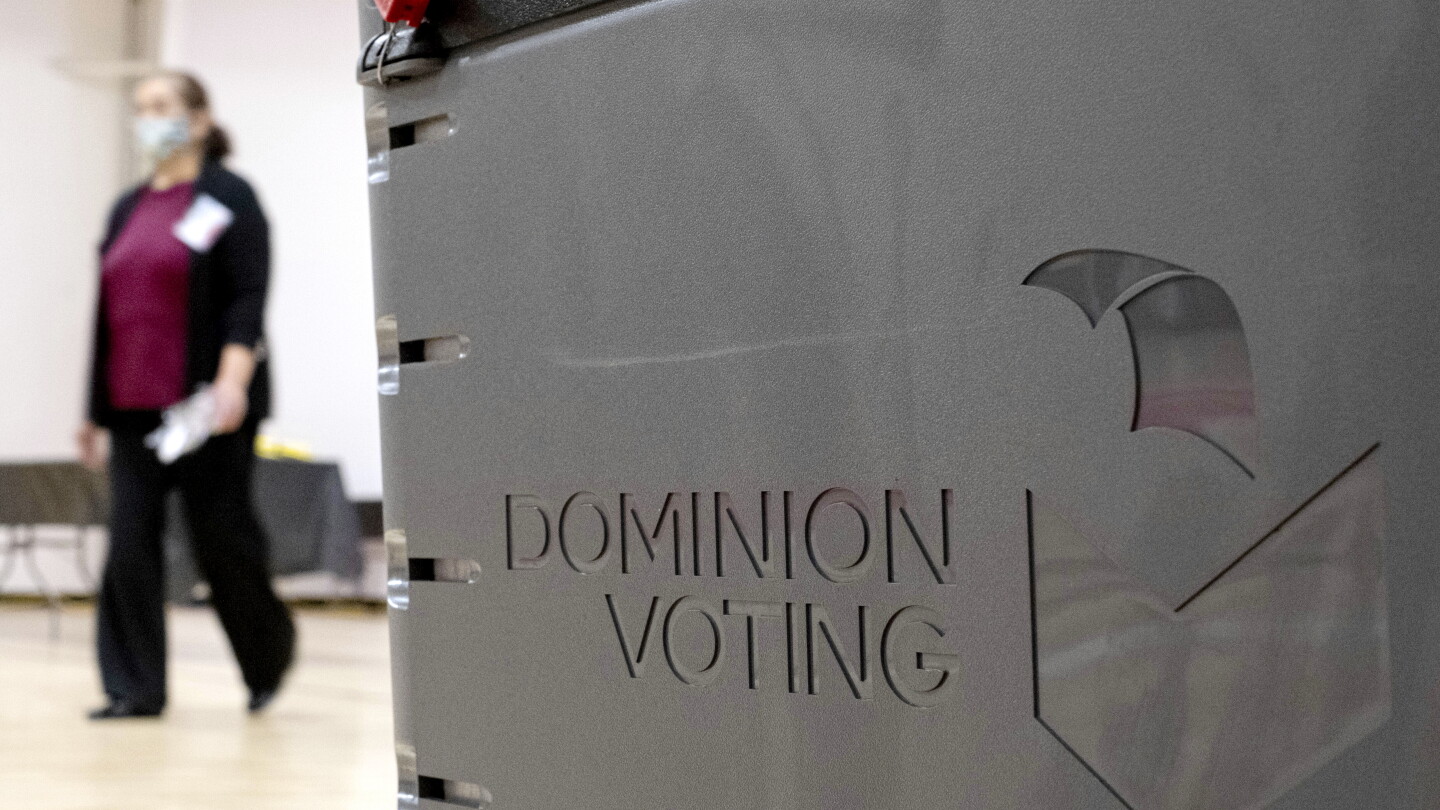
"Zuckerbucks" is what opponents call the grants that the Center for Tech and Civic Life, funded by Mark Zuckerberg and Priscilla Chan, gave to election offices during the pandemic. More than 200 Wisconsin communities got about $10 million to help run the 2020 election, the AP reported.
An AP fact-check explained what the money was: grants to local governments for things like equipment to process mail ballots, protective gear against COVID, and drive-thru voting. A Zuckerberg spokesperson told the AP that nearly 2,500 election offices in 49 states got funds, including rural and suburban counties. Election officials said there was no sign of favoritism, and Republican election officials vouched for the program. The grants were not campaign donations and did not break campaign finance law.
Wisconsin didn't ban private grants for elections until voters approved a constitutional amendment in 2024 — four years after the election Tiffany tried to overturn.
So Tiffany's stated reason for trying to throw out millions of votes is that he disliked a legal grant program that took no one's vote away. Not liking how an election was paid for is a reason to change the law. It's not a reason to overturn the result.
The "indefinitely confined" ballots got their day in court
The other complaint — the "indefinitely confined" absentee voters — wasn't new either. Trump's campaign tried to disqualify about 220,000 absentee ballots from Milwaukee and Dane counties — more than 28,000 of them cast by voters who said they were indefinitely confined — and Tiffany backed the effort. The challenge failed, and Biden's margin withstood a Trump-requested recount in those two counties.
That's not what he said in 2020
Here's the problem with the new explanation: it isn't what Tiffany told people at the time.
Back then, Tiffany claimed that "unscrupulous" officials in Dane and Milwaukee counties had allowed "hundreds of thousands of illegal votes to be cast and counted," Urban Milwaukee reported. That isn't a complaint about grant money. It's an accusation of mass fraud.
It didn't hold up. A 168-page review of the election by the nonpartisan Legislative Audit Bureau turned up no evidence of widespread voter fraud, Urban Milwaukee noted. Neither did a 10-month investigation by the conservative Wisconsin Institute for Law and Liberty. Tiffany didn't answer when Urban Milwaukee asked him for his evidence.
Now, two weeks before an election for the office that signs off on Wisconsin's results, the "illegal votes" are gone from his story. What's left is "Zuckerbucks" and a dispute over absentee rules — the version that sounds reasonable on a debate stage.
What he actually did
The new explanation also leaves out what Tiffany did about it:
- He was the only member of Wisconsin's congressional delegation to sign a brief supporting Texas's lawsuit asking the U.S. Supreme Court to throw out the results in four states Joe Biden won, including Wisconsin. The court rejected it.
- Just hours after the January 6 attack on the Capitol, he voted to reject Arizona's and Pennsylvania's electoral votes.
Neither of those was about grant money in Wisconsin. Both were attempts to cancel the votes of millions of people in other states, too.
We've seen this pattern before. Last month Tiffany called it "good news" that Trump's Justice Department is "coming to Wisconsin" for this year's election.
Why it matters
Under federal law, each state's governor issues the certificate that sends its presidential electors to Congress. Tiffany is now promising he'll certify 2028 "regardless of who the winner is." But the last time he didn't like a result, he backed a lawsuit to throw out Wisconsin's votes, voted to reject other states' electors on January 6, and told voters about hundreds of thousands of illegal votes that two reviews — one of them by conservatives — never found. Now he's changed the reason.
What the record shows
At Wednesday's debate, Tom Tiffany said "Zuckerbucks" — legal election grants that Wisconsin didn't ban until 2024 — were one reason he tried to overturn the 2020 election. In 2020 he instead claimed "hundreds of thousands of illegal votes," a claim the nonpartisan Legislative Audit Bureau and a conservative legal group both found no evidence for. He signed onto a Supreme Court bid to throw out Wisconsin's result and voted to reject Arizona's and Pennsylvania's electors hours after the January 6 attack.