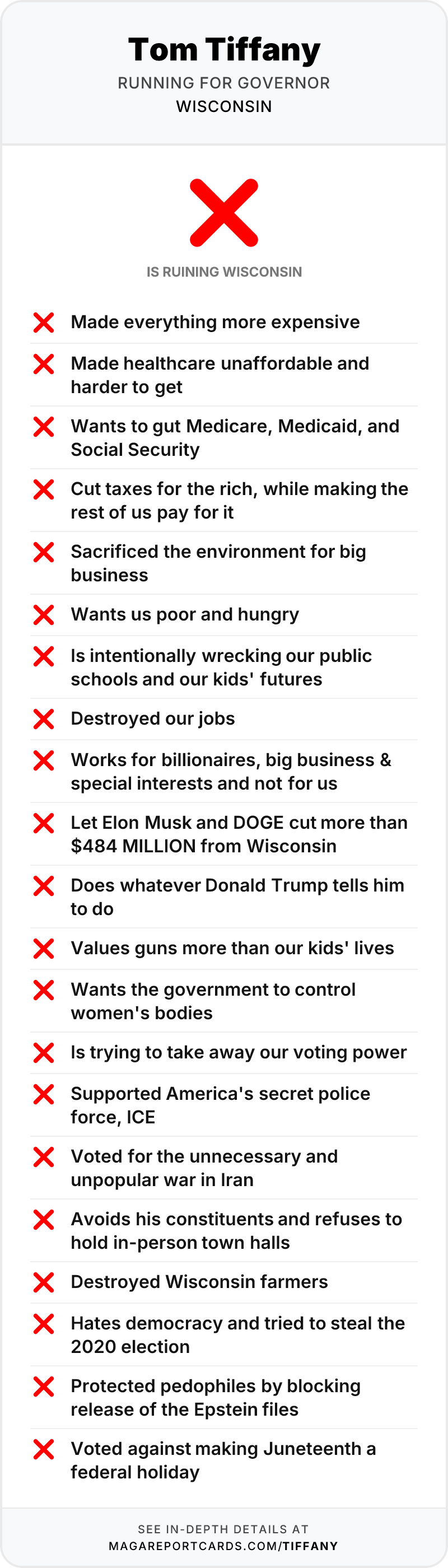
On Tuesday, September 22, 2026, Tom Tiffany stood in front of reporters at the Wisconsin Counties Association conference and was asked about press access. President Trump had just pulled White House press passes from CNN, Politico and MS NOW.
Tiffany, the Republican nominee for governor, said he wasn't going to do anything like that.
"I believe in open, free press, that they be able to ask us questions," he said, the Wisconsin Examiner reported. He even singled out a Milwaukee Journal Sentinel reporter in the room: "I'm going to continue to allow you here."
Two days later, his campaign did the opposite.
Two reporters turned away
On Thursday, September 24, Tiffany's campaign blocked two Journal Sentinel reporters, Mary Spicuzza and David Clarey, from covering a campaign event in Milwaukee — a roundtable with military veterans. The campaign let a Journal Sentinel photographer in and said other staff from the paper were welcome — just not those two reporters.
Then the campaign went after Spicuzza by name. "Liberal activist [Spicuzza] was notified yesterday that she would not be permitted to attend," it posted on X. It said it welcomes "all balanced journalists."
The Journal Sentinel reported that a Tiffany staffer, Eric Brooks, was the one who turned Spicuzza away, according to the Washington Sun. The campaign's complaint was the paper's coverage of the race: "We expect journalists to be balanced, and when you write multiple negative headlines about our campaign and not a single negative..."
So the rule is not "open, free press." It's: you can cover Tom Tiffany if Tom Tiffany likes what you write.
Journal Sentinel editor Greg Borowski put it plainly: "When our reporters cover campaigns and attend political events, they are there on behalf of the public. Blocking them blocks the public from vital information."
What Spicuzza had just reported
The campaign didn't say which stories it objected to. But the timing is hard to miss.
That same week, Spicuzza and a colleague reported that three billionaires — Diane Hendricks and Richard and Elizabeth Uihlein, two of whom live in Illinois — account for about two-thirds of the money Tiffany has raised, close to $10 million between them, as the Wisconsin Examiner summarized the reporting. Richard Uihlein's super PAC has spent another $11.3 million to help him.
That is exactly the kind of story voters need to see: who is paying for a candidate, and who he'd answer to as governor. It's also the kind of story a candidate would rather keep out of the paper.
It wasn't the only time this week
The Wisconsin Examiner's own reporters got similar treatment. They had been reporting on Leonard Boltz, the Langlade County GOP chair who flies Tiffany around the state in his private plane — and who crashed with Tiffany aboard earlier this month. Boltz pushes election conspiracy theories and has said that if Tiffany loses, it will be because Democrats cheated.
When the reporters went to a Tiffany event to ask him about Boltz, a campaign staffer physically stepped in to block the question, the Examiner wrote in a commentary.
And this comes on top of Tiffany ducking debates. He turned down the Wisconsin Broadcasters Association debate that has been held every governor's race since 1990, and it was canceled. The next week a second debate was canceled after he declined it, and he was one of four Republicans on this site who said no to a debate.
Straight out of Trump's playbook
Tiffany has spent the fall trying to sound like a moderate. He's started saying the Iran war should end after voting against ending it every time he was present for the vote in the House. His campaign texts talk about lowering property taxes and fixing problems.
But on the question of the press, he did what Trump did the same week: shut out a news outlet whose coverage he didn't like, and attacked the reporter. A federal judge ordered the White House to temporarily restore the banned outlets' press access, citing the First Amendment. Tiffany's campaign isn't the government yet — but he's asking to run one.
What we know
On September 22, Tom Tiffany told reporters he believes in an "open, free press" and wouldn't restrict access. On September 24 his campaign barred Journal Sentinel reporters Mary Spicuzza and David Clarey from a campaign event and called Spicuzza a "liberal activist" — days after she reported that three billionaires supplied about two-thirds of his campaign money.
Sources
- Tiffany campaign blocks Milwaukee Journal Sentinel reporters from event — Wisconsin Examiner, September 24, 2026
- Tom Tiffany blocks reporters, taking a page from Donald Trump — Ruth Conniff, Wisconsin Examiner (commentary), September 25, 2026
- Tom Tiffany's Campaign Bars a Reporter From Entering Campaign Event — The Washington Sun, September 24, 2026
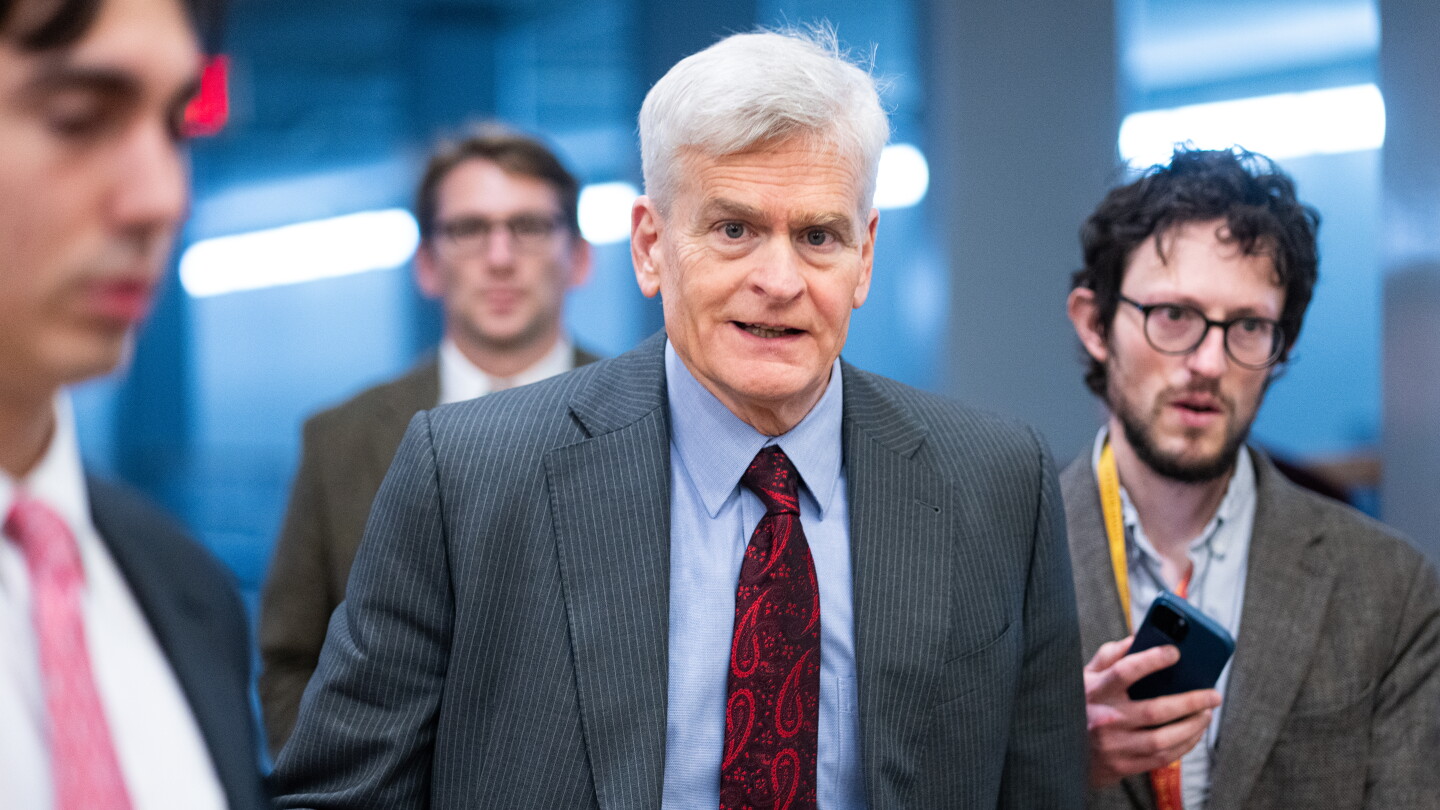
Photo: Tom Tiffany takes reporters' questions at the Wisconsin Counties Association conference, Sept. 22, 2026. Screenshot via WisEye / Wisconsin Examiner.