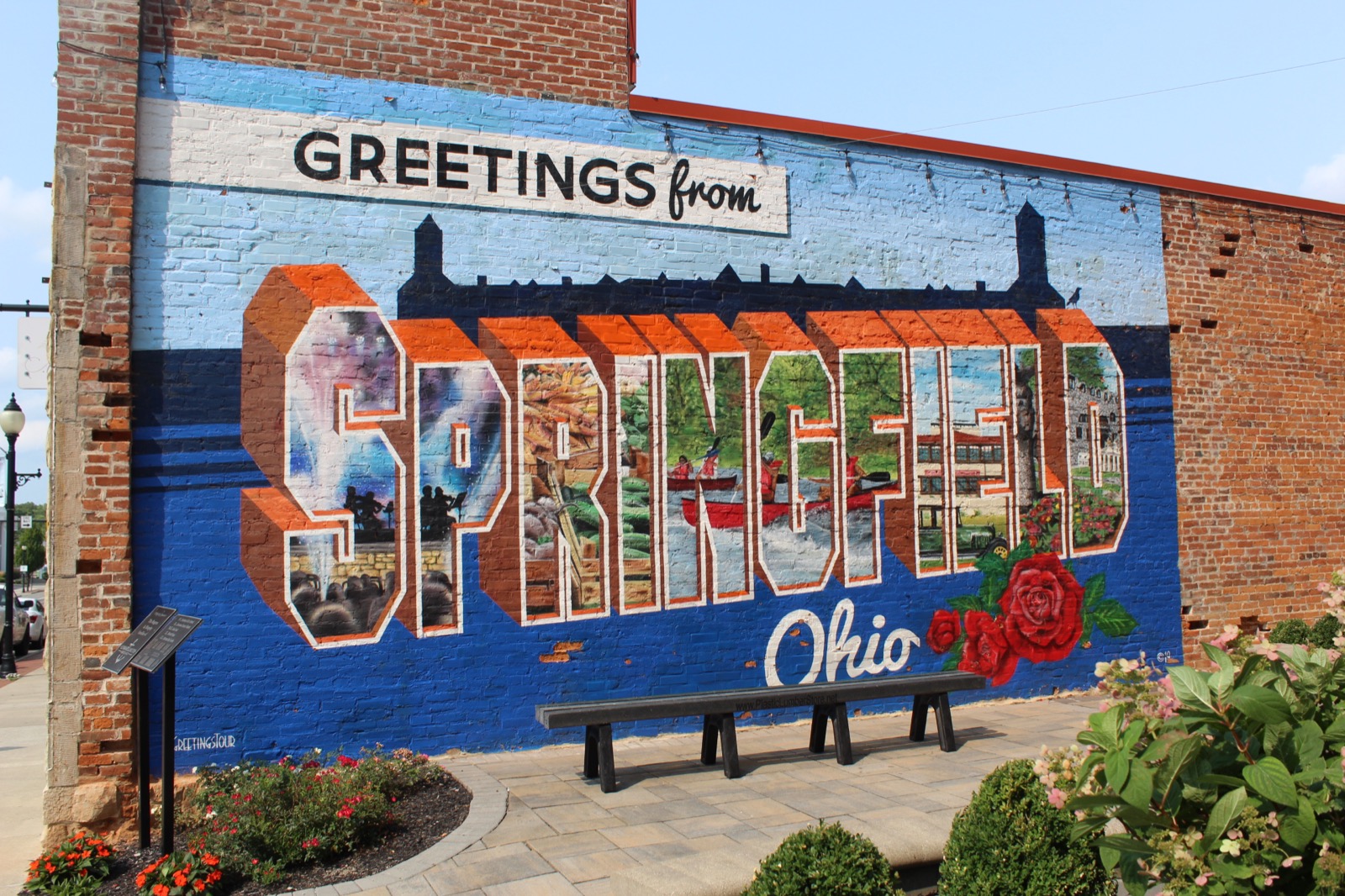
One morning, a woman in Springfield, Ohio asked the Haitian community center a question.
Was it safe to run out to Walmart and get food?
That is what has changed in Springfield. At least 29 Haitian residents have been detained by ICE as of last Friday, according to Theresa Hice-Fromille, a board member of the Haitian Community Help and Support Center. Agents are picking people up in shopping plazas, at apartment complexes, and — in a video circulating online — at a car wash.
On Thursday morning, they took Pastor Gilbert Joubert Adrien and another Haitian man at a gas station.
"Pastor Joubert Adrien left Haiti because his life was in danger, served Christ and his congregation faithfully and his arrest shows how far ICE will stoop to incite panic among people who came here peacefully, came here legally and offered nothing but good to our community," said Carl Ruby, pastor of Springfield's Central Christian Church.
He has a wife and children. Hice-Fromille said they are "all extremely scared."
How this became legal
Nothing about these people changed. The paperwork did.
About 15,000 Haitians live in Springfield, a mix of temporary protected status, citizenship and other legal status. Temporary protected status is what the U.S. grants people who cannot safely be sent home. Haiti qualified because of the violence there — the State Department currently has Haiti at Level 4, "Do Not Travel," citing crime, kidnapping, terrorism, unrest and limited health care. In June, a top security official and chief of staff to Haiti's defense minister was kidnapped.
At the end of June, the Supreme Court ruled that Trump could end that protection for roughly 330,000 Haitians. Sonia Sotomayor, Elena Kagan and Ketanji Brown Jackson dissented, arguing that the president had made "clear racial comments about Haitians for the purpose of terminating protections." Alito, writing for the majority, said none of the cited statements "was overtly racial."
The protection officially ended on July 27.
The arrests started after that. Same people, same jobs, same churches, same town — one expired designation.
The jail is already over capacity
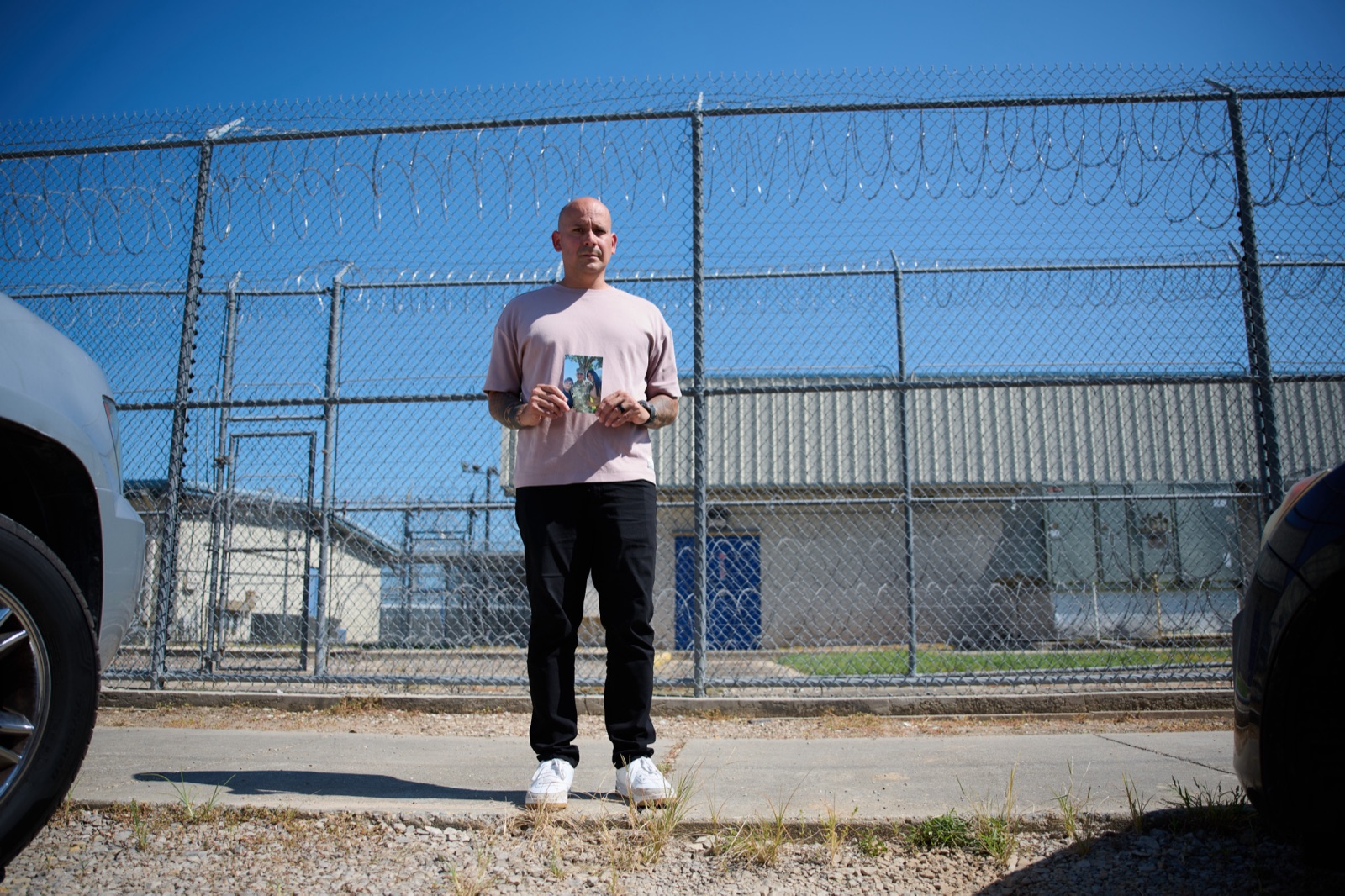
Haitians detained in Springfield are being sent to the Butler County Jail in Hamilton, Ohio.
As of Friday morning, that jail held 1,105 people.
Its general housing capacity is 844. The Ohio Department of Rehabilitation and Correction's own 2025 inspection report recommends 756.
So the jail is holding 261 more people than its own capacity, and 349 more than the state recommends — and Springfield's detainees are being added to it.
Ohio has six facilities under contract with ICE: Butler County Jail in Hamilton, Seneca County Jail in Tiffin, the Geauga County Safety Center in Chardon, the Corrections Center of Northwest Ohio in Stryker, the Northeast Ohio Correctional Center in Youngstown, and the Mahoning County Justice Center in Youngstown.
Richard Herman, a Cleveland immigration lawyer, described what the contracts do to the incentives.
"This becomes an economic driver for these local communities and these jails because they get paid by the feds."
And he described what he believes the crowding is for:
"The goal of the policy is to inflict maximum pain, on the immigrant and people that love them and employ them, and inflict pain and try to crank up the numbers for deportations. … The system is trying to encourage them to sign the deportation order yourself."
The ankle monitors came first
This is not the beginning. It is the second phase.
Earlier this summer, Haitians in Springfield were ordered to report to ICE offices and put in ankle monitors — about 50 of them had check-in appointments at the Cincinnati field office on July 31 and were pressured to accept $2,600 to self-deport. All of them rejected the money.
Those check-ins are still running, at ICE offices in Blue Ash and Westerville. And they now reach beyond Ohio.
"We've even had people who had to come in out of state because they no longer live in Ohio, but they had lived in Springfield at some point," Hice-Fromille said.
She has not confirmed that people wearing monitors are being detained. What she has seen is the reverse order: "somebody being detained off of the street, given an ankle monitor, and released."
Either way, the effect on the town is the same one.
"There's a lot of anxiety over what the ankle monitors could be leading to," she said. "When [the ankle monitors] started happening, people really started retreating and isolating."
The city says it can't stop it, and ICE says there's more coming
Springfield Mayor Rob Rue confirmed the enforcement in a statement.
"The City is aware of federal immigration enforcement activity occurring in Springfield, including arrests made by U.S. Immigration and Customs Enforcement," Rue said. "The City does not direct or control ICE enforcement activity. We are focused on the safety and well-being of everyone in our community."
He also passed along what ICE told him: "ICE has also indicated that targeted enforcement activity will continue throughout Ohio."
An Ohio Republican asked for this by name
When the deportations became real, an Ohio congressman went on television to celebrate them. On July 27 — the day the protection expired — Michael Rulli told a Fox News audience "let's get 'em all out of here". That was months after a federal judge found that ending the protection was motivated by racial animus rather than by conditions in Haiti — a finding the Supreme Court set aside in June, sending the question back to the lower court.
That's the part worth holding onto as the arrest count climbs. Nobody was tricked. The people who pushed for this said out loud what they wanted, and they are getting it: a pastor in a gas station parking lot, a jail 261 people over capacity, and a woman afraid to drive to Walmart.
Viles Dorsainvil, executive director of the Haitian Support Center, put out a statement on the surge in ICE activity in the city.
"Behind every number is a human being. Behind every detention is a family. Behind every deportation is a mother, a father, a husband, a wife, a child, a friend, a church member, a coworker, or a neighbor whose life may be changed forever."
What we know
Nothing about these 29 people changed except a federal designation that expired on July 27. They are being held in a county jail 261 people over its own listed capacity, in a state where six facilities are paid by ICE to take them — and the Ohio congressman who went on Fox News asking for exactly this is getting it.
Source
Megan Henry, "ICE has begun targeting and detaining Haitians living in Springfield, Ohio", Ohio Capital Journal, August 24, 2026. Photo by Megan Henry / Ohio Capital Journal.