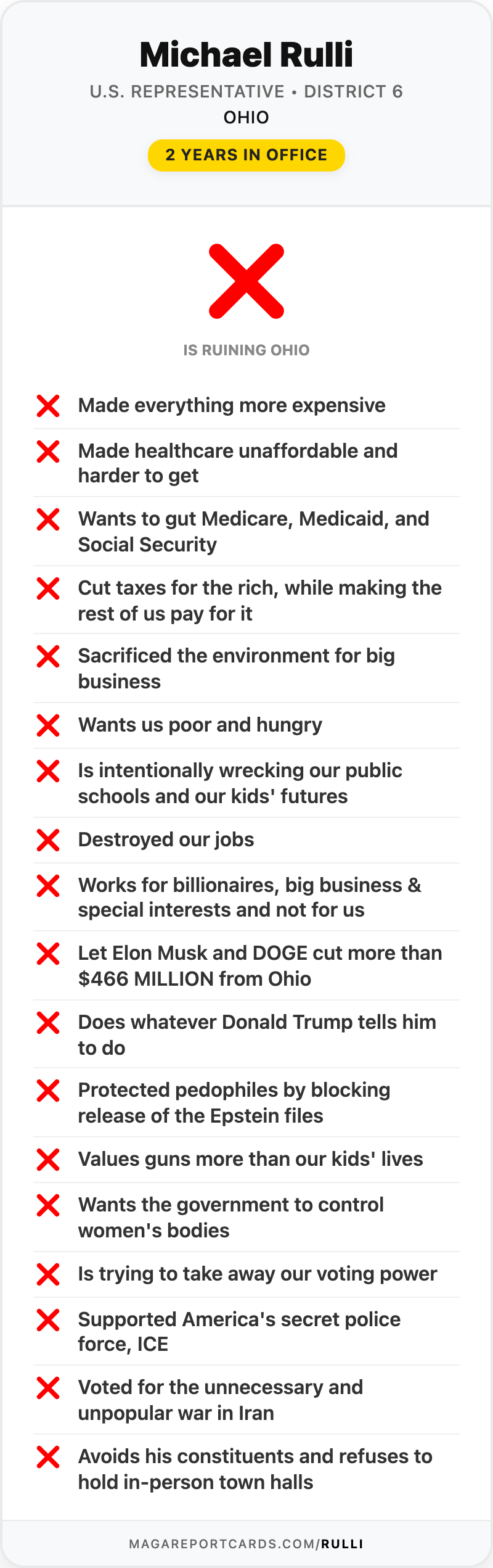
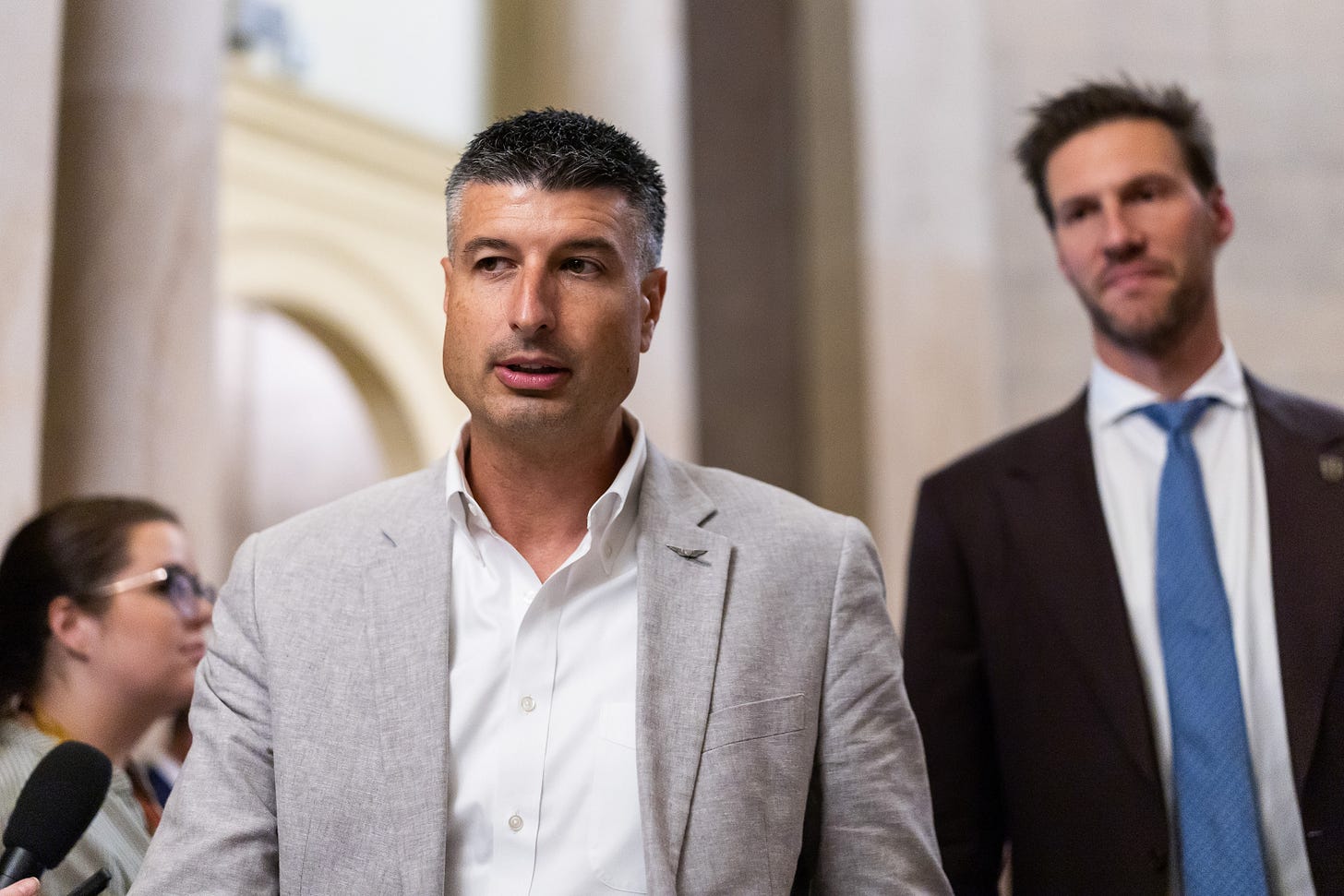
Michael Rulli has represented Ohio's 6th District — the eastern edge of the state, from Youngstown down the Ohio River — since winning a special election in June 2024. Two years in, he sits on the House Energy and Commerce Committee, one of the most powerful committees in Congress, including its Energy and Health subcommittees. That's real power over the air you breathe and the doctor's bill you pay. Here are three things to know about how he uses it.
1. He represents East Palestine — and votes with the polluters anyway
East Palestine sits in Ohio's 6th District. Rulli's own office confirmed it when he hosted Vice President JD Vance and EPA Administrator Lee Zeldin there in February 2025 to mark two years since a Norfolk Southern train carrying hazardous chemicals derailed and a controlled burn sent fumes over the town.
So you'd expect the congressman for the most famous chemical disaster site in America to be tough on pollution. He isn't. The League of Conservation Voters scores every member of Congress on votes affecting clean air, clean water and climate. Rulli's score is 0% for 2025 and 2% for his career. Zero percent means that on last year's scorecard — votes on clean air rules, truck pollution limits, endangered species, opening public lands to mining — he did not cast a single pro-environment vote.
His own signature energy bill goes the other way, too. In April 2025 he introduced the National Coal Council Reestablishment Act, which puts the coal industry's advisory council to the Energy Department back in business — and strips out the rule requiring it to be re-approved every two years. It passed the House in September 2025.
Meanwhile the EPA he praised in East Palestine has moved to stop counting the lives saved when it writes air pollution rules, and analysts warn the rollbacks will increase cancer-causing pollution. Trump's budget bill cut through the country's clean energy programs.
Showing up for a photo at the derailment site is easy. Voting like it mattered is the part he skipped.
2. He voted to keep us in the war with Iran
The war with Iran has killed American service members, pushed oil prices to levels not seen in years, and a majority of Americans oppose it.
Congress had a chance to end it. H.Con.Res. 38, the Iran War Powers Resolution, would have directed the president to pull U.S. forces out of hostilities Congress never authorized. Rulli voted no. The resolution failed. He voted no on the next four Iran war powers resolutions too — including the two the House passed in June and in July over his objection.
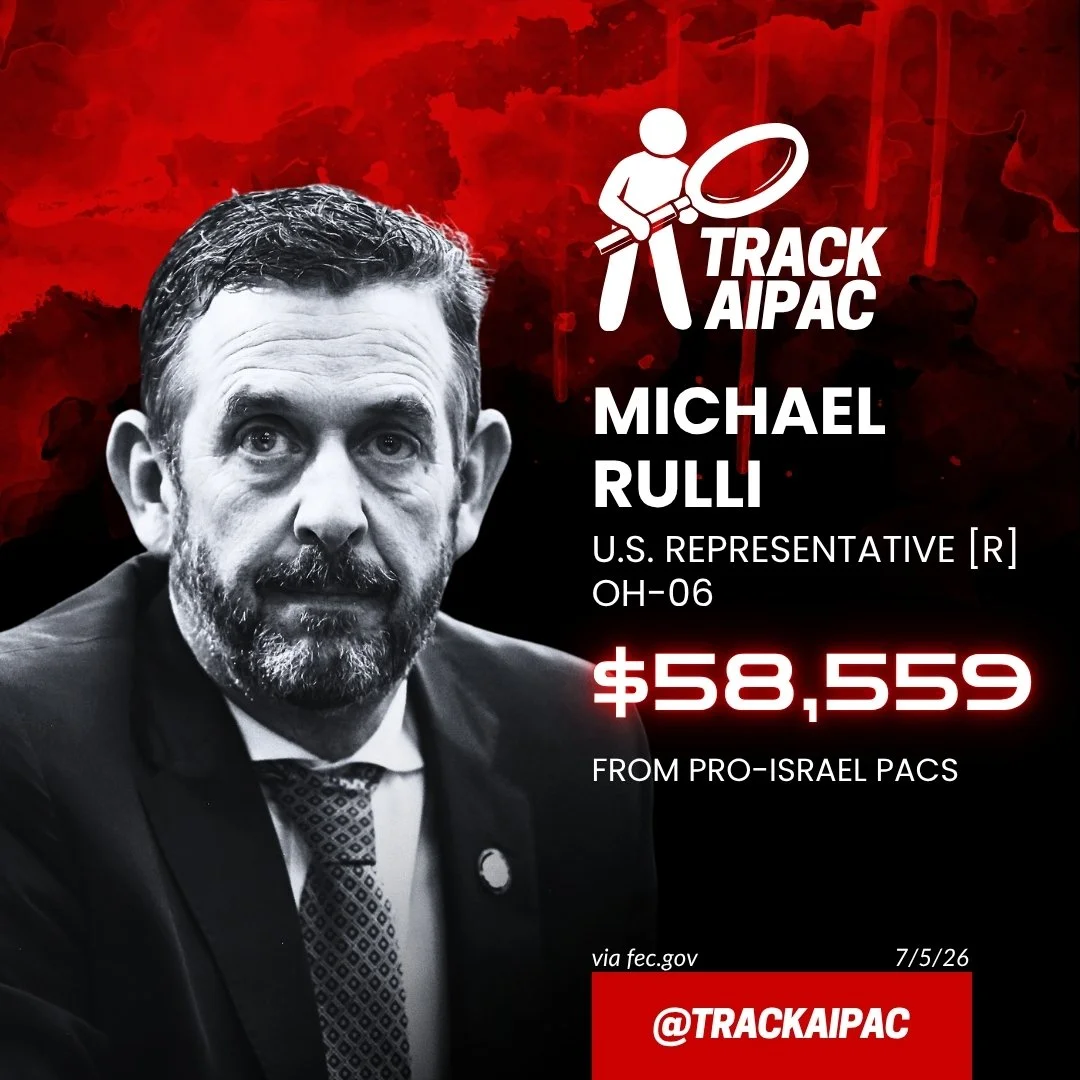
He has taken $58,559 from pro-Israel PACs over his career, according to FEC data compiled by TrackAIPAC. That is not the biggest number in Congress. But when the vote came down to what the people of Mahoning and Columbiana counties wanted versus what the war lobby wanted, we know which way he went.
3. His biggest donor is a crypto billionaire family. The rest is healthcare money.
Rulli has raised $1,092,792 for this cycle. Here is where the top of that list comes from, according to OpenSecrets:
- Winklevoss Capital Management — $24,000. That's Tyler and Cameron Winklevoss, the crypto billionaire twins who run the firm, giving $12,000 each. It's the top organization on his list.
- Memorial Health System — $15,000, Communicare Health Services — $14,000, Blue Cross/Blue Shield — $11,500, and the American Hospital Association — $9,000. That's four of the twenty organizations at the top of his list, all in healthcare — for a man who sits on the Energy and Commerce Health Subcommittee, which writes the rules those companies live under.
- SpaceX — $11,600 and Koch Inc — $10,000, two names that show up on the donor lists of Republicans who vote to gut environmental rules.
You can look up the whole list yourself at Who Bought My Rep. Nobody on it lives on your street.
What the three have in common
A 0% environmental score in the district that lived through East Palestine. A no vote on ending a war most Americans never wanted. A donor list topped by a crypto firm and stocked with the hospital and insurance companies his own subcommittee regulates.
These aren't three separate stories. They're the same story told three times: when the interests that fund Michael Rulli want one thing and eastern Ohio wants another, eastern Ohio loses. Two years is a short record, but it is a remarkably consistent one. Ohio's 6th gets to decide in 2026 whether consistency is what it wants.