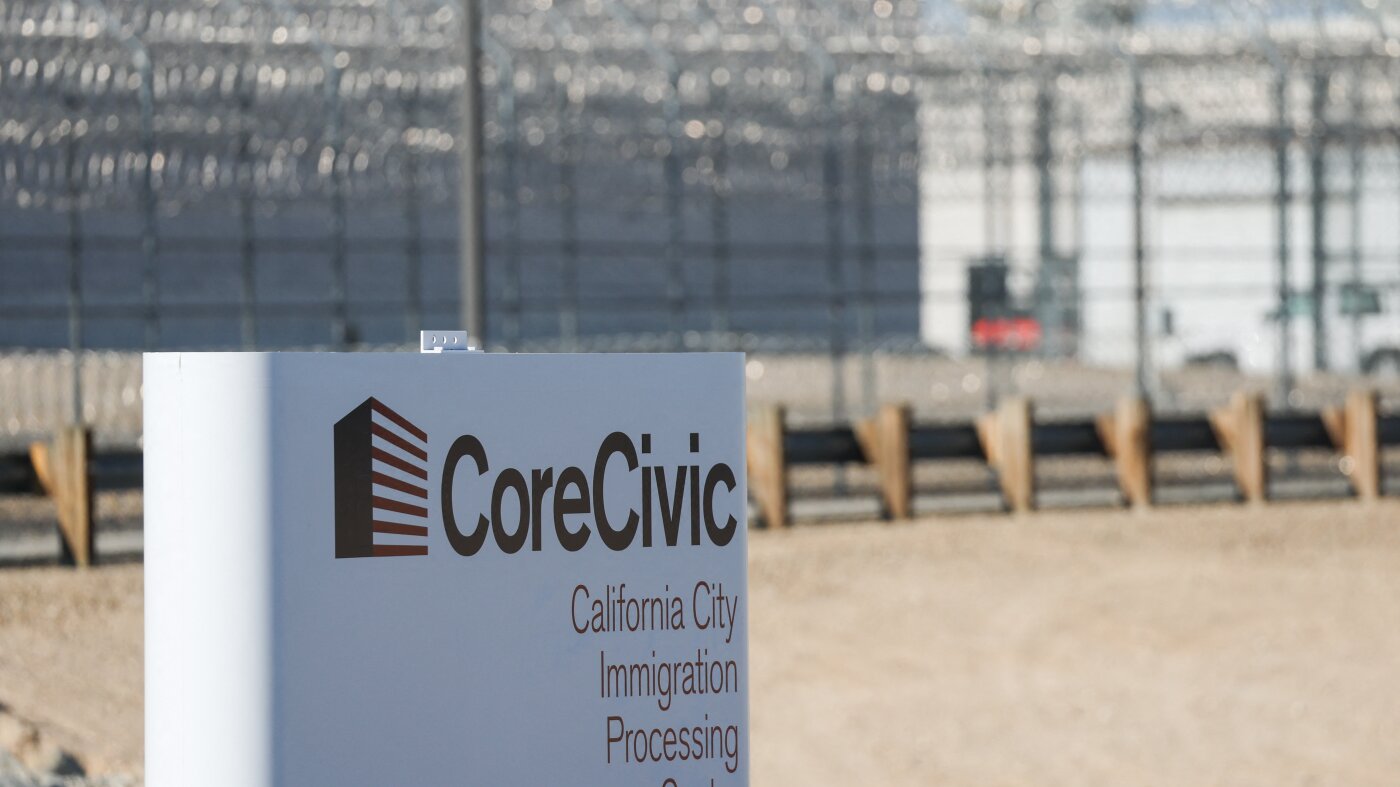
On Thursday, August 6, America's two biggest private prison companies told their investors how the spring went.
It went great.
CoreCivic and GEO Group reported a combined $1.4 billion in revenue for April through June. CoreCivic's revenue jumped just over 27% from the same three months last year. GEO Group's climbed about 15%, or roughly $96 million.
And that $1.4 billion doesn't even count the biggest payday. CoreCivic separately sold four of its facilities to the Department of Homeland Security for $1.6 billion in net proceeds. CoreCivic President and CEO Patrick Swindle did the math for investors on the call: that works out to an average of $307,000 per bed.
Three hundred seven thousand dollars. Per bed. Paid by us.
Then CoreCivic made a deal to keep operating the facilities it just sold to the government. So we bought the buildings, and we're still paying them to run the buildings.
This didn't happen by accident. It was appropriated.
Private prison companies don't have customers who walk in off the street. They have one customer: the federal government. Their revenue goes up when the government decides to lock more people up, and it goes up by exactly as much as Congress decides to spend.
Congress decided to spend a lot.
Trump's 2025 budget bill set aside $45 billion for ICE to pay private contractors to detain immigrants, according to Citizens for Responsibility and Ethics in Washington. That was not a rounding error buried in a big bill. That was the plan.
Then, this June, Republicans did it again. At 4:42 in the morning on June 5, the Senate voted 52-47 to hand nearly $70 billion more to ICE and the Border Patrol — with the oversight rules, transparency requirements, and civil-rights protections that normally come with funding bills deliberately stripped out.
Put those two laws together and Congress has committed close to a quarter of a trillion dollars — about $240 billion in total immigration-enforcement money — to arrests, detention, and deportation. Thursday's earnings calls are what that money sounds like when it lands.
The people handing out the contracts used to work for the companies getting them
Here is where it stops being a story about business and starts being a story about corruption.
The acting director of ICE is a former GEO Group executive. David Venturella spent 22 years at ICE, left in 2012, then spent the next eleven years climbing the ranks at GEO Group — managing the company's federal immigration detention contracts. He stayed on as a paid GEO consultant through January 31, 2025.
Less than two weeks later, in February 2025, he was hired as a senior adviser at ICE.
Federal ethics law has a "cooling off" period that generally bars government employees from working on contracts involving their former employer for a year. Sen. Elizabeth Warren's letter to Venturella lays out what happened next: he reportedly got a waiver to work on GEO Group matters anyway. Warren's letter also notes he was paid $6 million by GEO Group to run detention centers — before being promoted, in May 2026, to oversee those same detention centers for the government.
GEO Group houses roughly one-third of all ICE detainees. Since Trump took office, it has expanded its available bed space from 15,000 to 32,000.
Venturella has since told lawmakers he sold his GEO Group stock. Warren had asked him to do more than that — to recuse himself from every matter that could directly or indirectly benefit GEO Group, and to make his ethics waivers, recusals, and financial disclosures public.
He is not the only one:
- Border czar Tom Homan was a paid consultant for GEO Group before joining the government. He has also called for expanding ICE detention to "at least 100,000 beds." Separately, MSNBC reported — and ProPublica confirmed the investigation's existence — that an FBI sting allegedly caught Homan on tape accepting $50,000 in cash from undercover agents posing as would-be contractors. ProPublica reports the investigation was opened after the subject of a different inquiry claimed Homan was soliciting payments in exchange for the promise of future contracts. The Justice Department closed that investigation, saying it "found no credible evidence of any criminal wrongdoing." The White House press secretary denied that Homan received the money; Homan says he has done nothing illegal, and he has not been charged.
- Former Attorney General Pam Bondi lobbied for GEO Group before she was appointed.
- At least six former ICE officials who left government over the past decade went to work for GEO Group.
The president has been trading the stock
While all of this was happening, President Trump's brokers were buying and selling shares of the two companies.
CREW's analysis of his most recent financial disclosure found 29 trades of private prison stock since he returned to office. The first purchases came on the tenth day of his second term. He traded them every month of 2025 except August and December. The total bought and sold was between $281,029 and $990,000, split between GEO Group and CoreCivic.
The man setting the detention policy has been trading the stock of the companies that profit from it.
It has worked out for them. GEO Group cleared more than $250 million in profit in 2025 — a nearly 700% increase over 2024. CoreCivic's net income rose almost 70%, to $116.5 million.
It has worked out for the companies' political giving, too. CoreCivic and GEO Group, their subsidiaries, and their executives gave a combined $2,779,000 to Trump's political operations. Each company put $500,000 into his 2025 inaugural committee. They also spent heavily to keep the money flowing: NOTUS reported that CoreCivic spent nearly $2 million on lobbying in 2025 — its biggest year since 2007 — while GEO Group spent nearly $1.4 million.
The return on that investment: OpenSecrets found GEO Group received $2.1 billion and CoreCivic $653.5 million in ICE contract obligations in 2025. As of early 2025, about 86% of immigrant detainees were held in privately run facilities — compared with under 10% of the overall U.S. incarcerated population, according to Migration Policy Institute figures cited in the same report.
The new growth product: ankle monitors on people who did nothing wrong
On the earnings call, GEO Group CEO George Zoley told investors about a business line that's picking up: GPS ankle monitors, smartwatches, and a phone app the company sells ICE for tracking immigrants who aren't locked up.
He was direct about why sales will climb. With Temporary Protected Status ending for Haitian immigrants, he said:
"Because of this new policy shift as to who will be subject to this immigration enforcement like … the Haitians, we could see a significant increase in the number of people in the ISAP program."
Most of them, he added, "we believe, would be placed under the ankle monitoring supervision."
We have already reported what that looks like from the other side. In Springfield, Ohio, ICE has been fitting Haitians with ankle monitors — people with no criminal record, who held legal status, passed background checks, paid their renewal fees, and showed up to the appointment the government told them to attend. The monitors have a 75-mile range. Ohio's only immigration court is 188 miles away.
The Supreme Court cleared the way for this in June, when it let the administration strip protections from 350,000 Haitians — over a dissent that laid out, quote by quote, the racial animus behind the policy.
Days later, a CEO explained to shareholders that the policy behind it would push his sales up.
What $307,000 a bed actually buys
Almost 66,000 people are now in immigration detention, close to record levels. According to the Transactional Records Access Clearinghouse, as of July 11 there were 65,765 people held — and 46,436 of them, or 70.6%, had no criminal conviction.
Seven out of ten. No conviction.
And the conditions inside the facilities we're paying for are documented. Staff for Senate Judiciary's ranking Democrat, Dick Durbin, visited the CoreCivic-run family detention center in Dilley, Texas, and described a "top-down culture of cruelty" — worms in the food, coloring books passed off as school, guards scolded for being too nice to detainees.
That's the product. That's what $307,000 a bed is buying.
Follow the money, because it's not hidden
Nothing here is a leak or a conspiracy. The revenue numbers came from earnings calls the companies held on purpose. The $45 billion and the $70 billion are in laws Republicans voted for and published. The stock trades are in a financial disclosure. The lobbying totals are in public filings.
The people who wrote these checks and defended the agency spending them will tell you this is about public safety. Then read the numbers again: seven in ten of the people in those beds have no criminal conviction, and the executives on the call describe the whole thing as a growth opportunity.
Congress had a choice about where to put a quarter of a trillion dollars. Families in every state are struggling to pay for health care, food, and rent. This is where it went instead — into two companies' quarterly revenue, and into the pockets of the people who used to run them.
Source
- Private prisons announce $1.4 billion in revenue as immigration detentions climb — Vanessa Romo, NPR, August 8, 2026. Photo of the CoreCivic California City Immigration Processing Center by Patrick T. Fallon/AFP via Getty Images.


