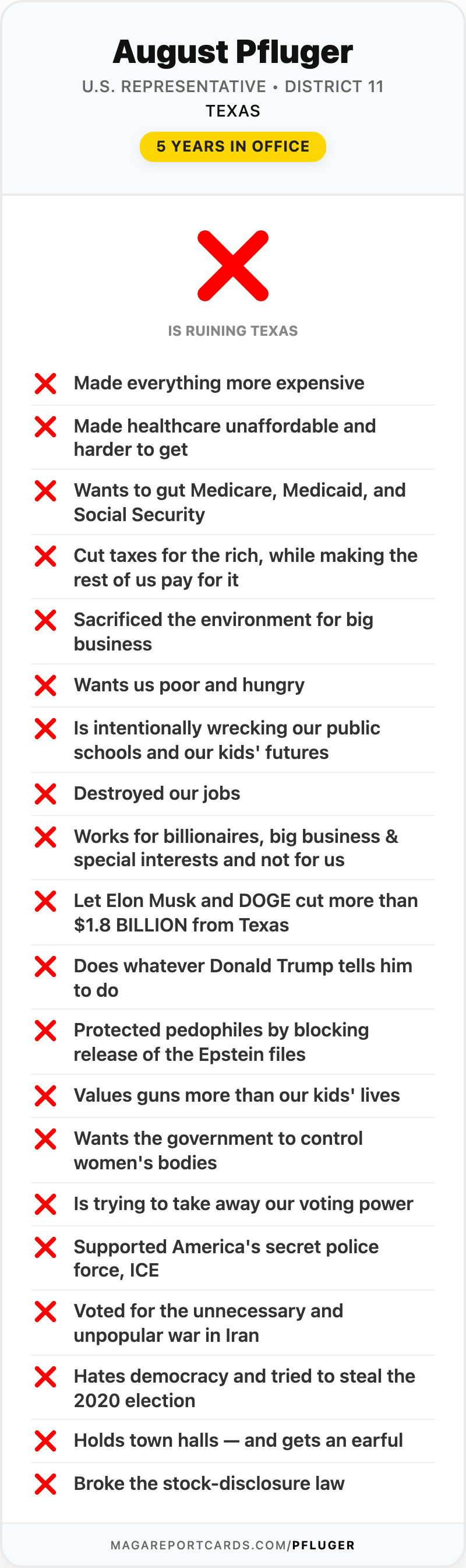
Most members of Congress vote on other people's bills. August Pfluger writes the plan.
Pfluger chairs the Republican Study Committee, the largest bloc of conservatives in the House. On January 13, 2026, he unveiled what the RSC calls its "Making the American Dream Affordable Again" framework — a roadmap for a second budget bill, following the one that passed in July 2025.
Here is how he described it, in his own words:
"This blueprint cuts costs where families feel it most—housing, health care, and energy—slashes woke and wasteful spending, and locks in President Trump's deregulatory agenda through the only process Democrats can't block: reconciliation."
Read that last part again
"Reconciliation" is Washington's word for a special fast-track process. A bill moved through it can't be filibustered — it needs only a simple majority in the Senate, so the minority party has no way to stop it. It exists to move budget legislation quickly.
Pfluger didn't hide the appeal. He named it as a selling point: "the only process Democrats can't block."
He added a deadline, too: "We have 11 months of guaranteed majorities. We're not wasting a single day."
That's a plan to move as much as possible through the one route that requires no negotiation, before an election might take the majority away. Whatever you think of the policies, that sentence tells you the design goal was speed and unstoppability, not agreement.
What the last one did to Texas
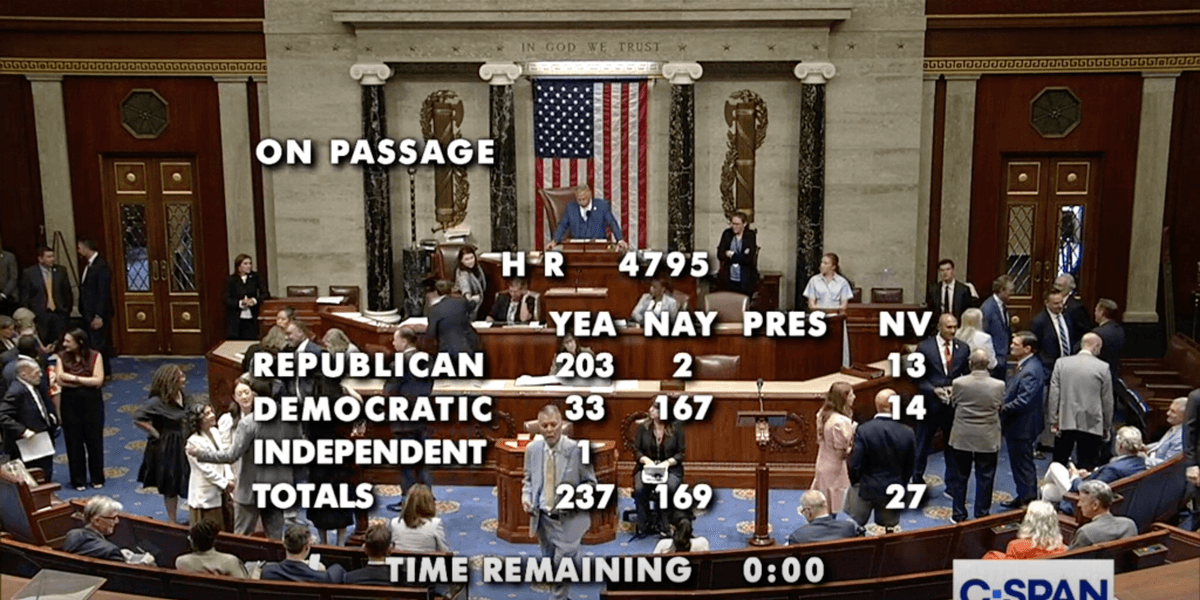
We know what a budget bill built this way does, because Pfluger voted for the last one on July 3, 2025.
For his own state, KFF's allocation of the Congressional Budget Office's estimates is blunt. The law is projected to leave 480,000 more Texans without health insurance by 2034, and to take $27.9 billion in federal Medicaid funding out of Texas over ten years — 7 percent of what the state would otherwise get. Add the separate expiration of the enhanced Affordable Care Act premium tax credits at the end of 2025, which the bill did not extend, and KFF puts the combined Texas coverage loss at 1.4 million people.
About 3.47 million Texans get SNAP food benefits every month, and 1 in 4 Texas kids faces hunger.
Pfluger's own district is West Texas — small towns, long drives, rural hospitals. The distance to the next emergency room is not an abstraction in Sterling City or Eden.
"Over $1 trillion in net deficit reduction"
The framework's headline number is more than $1 trillion in net deficit reduction.
That's a big number, and the honest question is where it comes from. Congress can reduce a deficit by raising revenue or by cutting spending. The framework's own description of its health care pillar is about "ensuring taxpayer-funded benefits serve American citizens—not bureaucrats or special interests" — which is the language used for tightening eligibility and paperwork requirements on benefit programs.
The last bill found a trillion dollars, and none of it went to the deficit, which that law increased. It went the other way: $1 trillion in Medicaid cuts to fund $1 trillion in tax giveaways for the richest 1 percent, as the Center for American Progress totted it up.
The release makes the claim for him: the framework "is not a wish list. It is a governing blueprint."
He's also taking credit for the last one
At a Ripon Society breakfast on January 7, 2026, Pfluger described the RSC's role in the first budget bill this way:
"I'm going to credit the RSC for being the incubator, the place where we were able to talk about these ideas in the lead up."
So this isn't a case of a member who got handed a bill and voted for it. Pfluger is telling you his organization grew the ideas, and he's building the next one the same way — nearly 190 RSC members, a menu of policies already tested against the Senate's procedural rules, "nearly 70 percent of which have already been introduced or passed by House Republicans."
He also told that audience: "We are governing conservatives. We have a responsibility to be the conscience of the conference."
The people in his district already told him
On July 28, 2025, just over three weeks after that vote, hundreds of people packed a town hall in San Angelo. They confronted Pfluger over health insurance, immigration and tariffs. His mention of the budget bill drew boos. A 92-year-old woman who said she'd worked the border told him: "We don't want to hear you talk — you're here to listen." Many people walked out before it ended.
Give him this much: he holds real in-person town halls. Plenty of his colleagues don't — Ohio's David Joyce answered a similar demand from his constituents with a telephone town hall that ran about 30 minutes. Pfluger shows up and takes it.
Then, five months later, he unveiled a framework for doing it again — and named as its chief virtue that no one who disagrees can stop it.
Who he answers to
Pfluger has a 0% score from the League of Conservation Voters for 2025, and a 0% lifetime score. Run down his top donors this cycle and, after the pro-Israel lobby at the top of the list, it is the oil and gas industry his Energy and Commerce Committee regulates most of the way down: Permian Resources, Summit Petroleum, BC Operating, Double Eagle Energy, Southwest Royalties, Diamondback Energy, Fasken Oil & Ranch, and the American Exploration & Production Council. Only 7% of his money comes from small grassroots donors, which ranks him 317th out of 440 House members.
The framework's third pillar is energy: "cutting red tape, accelerating permitting." That is, word for word, what his donors want.
The affordability crisis the framework names is real. Groceries, rent, insurance, power bills — West Texans feel every bit of it. The question is whether a plan built to be unblockable, by a chairman funded by the industries it deregulates, is going to fix the part that hurts them.
The last one is projected to take health coverage from 480,000 Texans.
Source
Making the American Dream Affordable Again: RSC Officially Unveils Reconciliation 2.0 Framework — Republican Study Committee, January 13, 2026. Photo: The Ripon Society.