The signs went up on the doors of the housing units.
Maintenance on the gas system. No hot food. No hot water. No date for when it would be fixed. The notice ended, one detainee said, with "thanks for cooperation."
By the weekend, about 100 men held at the Adams County Correctional Center in Natchez, Mississippi were refusing to eat.
What they were being served
Lunch that Saturday, according to several detainees: two flour tortillas, two slices of bologna, some shredded cheese and a thin slice of cake.
Sunday breakfast: cereal and sour milk. Eloisa Deorta, the wife of one detainee, said the men threw the milk in the garbage. She said the last time she visited, her husband had been served "hot dogs that were green."
Andrei Zykov, a detainee from Russia, said the facility often serves food that "looks like meat," but isn't.
The men made their point without saying a word. They put the food on the floor — "as a sign that it is inedible," one said.
"The protest was organized by the people in Pod C," said Johan Calderon, another detainee, speaking in Spanish. "We went out to eat with them, and when we saw the garbage food they were giving us, we stood by them and joined together to protest in solidarity."
Melvin Funez said his fellow detainees were outside the cafeteria "striking" over the "meager rations."
Four detainees spoke only on the condition of anonymity. They said they feared retaliation.
What happened next
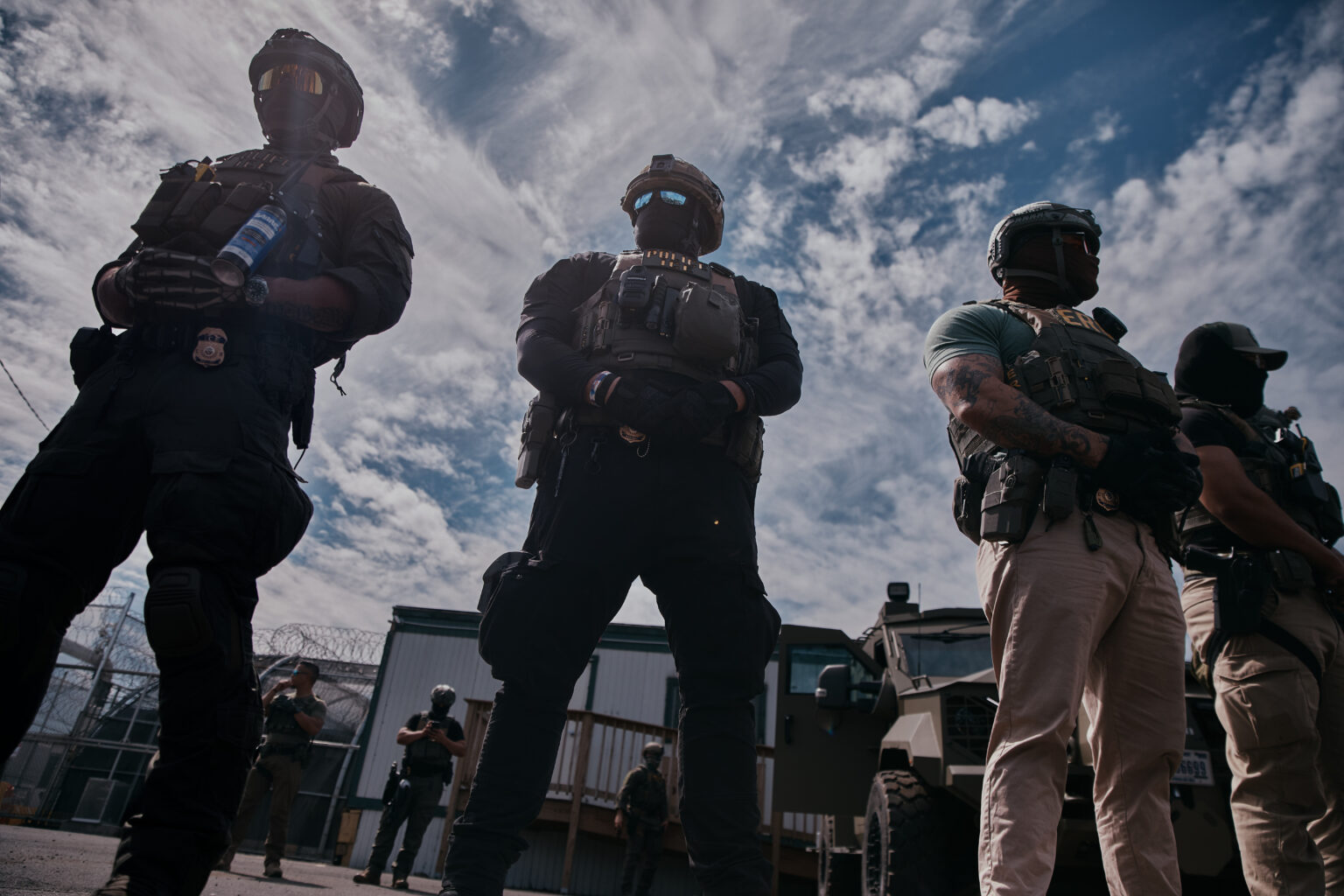
Facility staff came in wearing riot gear.
The facility's special response team "sprayed" some detainees and threw others to the ground, Funez said, then went into the dorms and locked the doors. Some men said it was pepper spray. Others said it was tear gas.
Accounts differ on what the protesters did. One person said some began damaging property — mailboxes and the like. Two men who took part maintained the protest stayed peaceful throughout.
Well past midnight, staff handed some detainees dry cookies and ramen as their dinner. Funez said it was "to make up for the lackluster food."
"We accepted it, but that does not make up for everything we are going through here," one detainee said.
This facility was already in trouble
The food protest did not come out of nowhere. It came out of a facility that has been failing for weeks.
Three weeks earlier, nearly 70 detainees signed a petition to the warden. Their demand: stop putting three people in two-person cells, and stop making men sleep in beds on the floor — many of them, the petition said, with their heads next to the toilet bowls.
On August 14, the Guardian reported that a "mystery gas leak" at the same facility had led to the air conditioning being switched off during a heat wave. Detainees got sick. They were denied medical care.
By the weekend of the food protest, Calderon said, the source of the gas leak still hadn't been found. The electricity had also been cutting out at night.
So: no air conditioning in a Mississippi heat wave, then no hot water and no hot food, in a building where men are sleeping three to a two-man cell.
Representatives for CoreCivic, the private company that runs the facility, declined to comment about the availability of hot food and hot water.
Somebody is making money on this
The Adams County Correctional Center is not a government jail. It is run by CoreCivic, a private prison company whose revenue jumped more than 27% in a single quarter, to $684.9 million, off the ICE detention buildup.
That is worth holding next to the petition those 70 men signed. Three to a two-man cell means more people in the same building — and the cost of the third bed falls entirely on the man sleeping next to the toilet.
CoreCivic's outgoing CEO, its incoming CEO and its corporate PAC have all written checks to a freshman congressman who sits on the House Homeland Security Committee — and who campaigned for that funding on Newsmax, on OANN, on the House floor and in committee.
That is the loop. Congress appropriates the money. ICE fills the beds. CoreCivic books the revenue. CoreCivic's executives write checks to the members who appropriate the money.
Nobody in that loop has an incentive to check the milk.
The part that should worry everyone
Four of the men who described what happened would only speak anonymously, because they were afraid of what the facility would do to them if it knew who talked.
They are in federal custody. Their food was described by name and by menu. Their air conditioning had been switched off in a heat wave. Their water was cold. And the thing they were most afraid of was being identified as having said so.
The facts, in short
About 100 men in a privately run federal detention center lost their air conditioning in a heat wave, then their hot water and hot food, were served sour milk, and some of them were sprayed by staff in riot gear when they put their trays on the floor. CoreCivic is paid to hold them, declined to answer questions about the conditions, and its executives and its PAC have been writing checks to a member of Congress who funds the beds.
Source
Mukta Joshi, "Detainees protest meager meals in Natchez ICE facility", Mississippi Today, August 23, 2026. Photo by Rory Doyle for The New York Times.