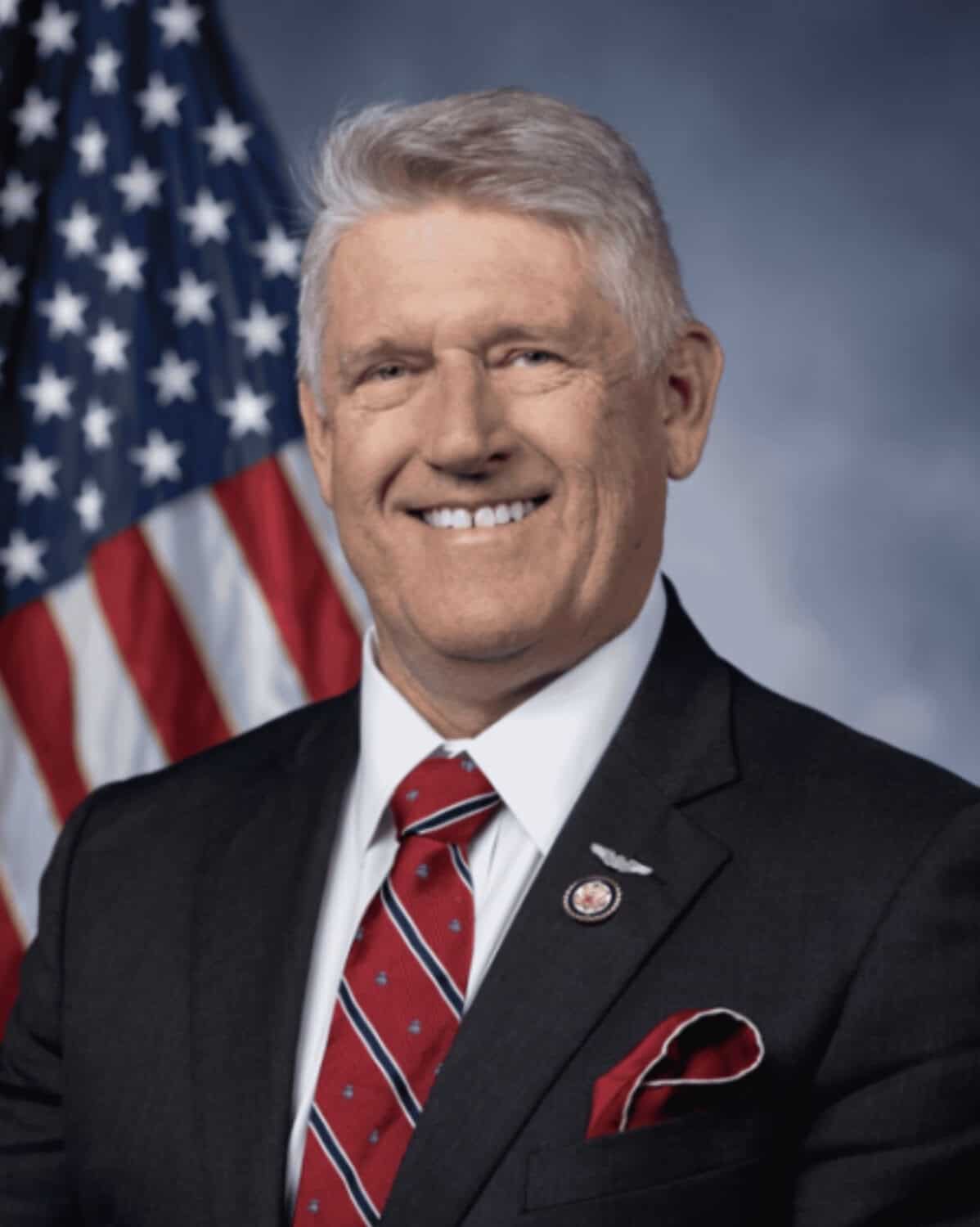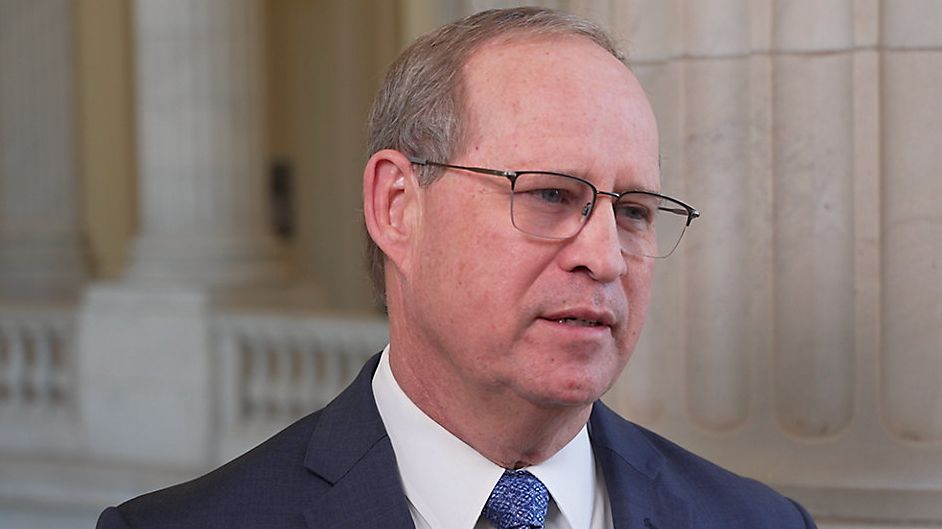
Greg Murphy is the only member of Congress who still sees patients. He's a urologist in Greenville, North Carolina, and he does it unpaid. "I can't get paid, I have to do it for free," he says.
That gives him standing almost nobody else in the building has. And when he uses it, he is worth listening to.
At a House Ways and Means hearing in January 2026, Murphy told a row of health insurance executives:
"You have put profits above patients and you have put profits above those who care for patients."
And then:
"You guys need to be broken up. The vertical integration has destroyed competition in this country and again if I had my way, I'd turn all of you guys into dust, we'd start back from scratch, we'd have competition in the industry, we'd have associated health plans, and we would have nonprofit hospitals."
On a physicians' podcast he went further, saying of insurers: "Some of our drug cartels are more ethical than our insurance companies." Of UnitedHealthcare specifically: "I think some of those people ought to go to jail."
He isn't performing. He knows the machine from both ends. About a year and a half before he spoke to Spectrum, a benign tumor was found in Murphy's brain, and he had two surgeries for it. He then needed medication to do the job his pituitary gland no longer could. Here is what happened to a sitting United States congressman with a brain tumor:
"I had a total of eight denials from the beginning of trying to get the first medicine to finally trying to get the last medicine before I got it."
We checked his money, because that's usually where these stories go. It doesn't go there. Murphy's campaign has taken nothing from UnitedHealth, Cigna, Elevance, Humana, CVS/Aetna, Centene, Molina, or the insurance industry's trade group this cycle, according to his FEC filings. Nobody bought this position. He means it.
Which makes what he did with his vote much harder to explain.
The vote
On July 3, 2025, the House took up the final version of Trump's budget bill. Murphy voted Aye.
The Congressional Budget Office estimated that bill cuts federal Medicaid spending by more than $900 billion over a decade and leaves 7.5 million more people uninsured. For North Carolina specifically, state health officials say North Carolina is bracing for a $49.9 billion decrease in federal Medicaid funding over the next decade — money that pays rural hospitals and the doctors in them. Up to 195,000 North Carolinians are at risk of losing coverage — and the state's own health secretary, Dev Sangvai, put the number at a quarter of a million.
Murphy's district is eastern North Carolina. It is not the part of the state with spare hospitals.
Here is the thing a urologist knows better than a lobbyist: a patient with no insurance at all does not get a prior-authorization denial. They get nothing. There is no appeal, no eighth attempt, no medication at the end of it. The people Murphy voted to knock off Medicaid don't get to have the fight he had. They don't get to the starting line.
He told insurance executives they put profits above patients. Then he voted for a bill that takes the patients out of the equation entirely.
The vote he wasn't there for
On December 17, 2025, the House passed H.R. 6703, the Lower Health Care Premiums for All Americans Act. It was the vehicle for dealing with the expiring health insurance tax credits — the ones whose lapse is driving premiums up for millions of people.
The clerk's record for Roll Call 349 lists Greg Murphy as Not Voting.
That was not a choice about this bill. Murphy missed every recorded vote in the House from December 15, 2025 through January 20, 2026 — 61 of them — and on December 16, the day before the premium vote, his office announced that he would "soon undergo follow-up treatment" for the benign pituitary condition. He cast his next vote on January 21.
So there is no dodge here. There is a gap. The one member of Congress who actually practices medicine, the one who says insurers belong in prison, has no recorded position on the health insurance premium bill.
What he does instead
Murphy's actual legislative energy goes somewhere narrower. In May 2026 the Ways and Means Committee passed his Provider Reimbursement Stability Act, H.R. 8163, on a 44-0 vote. It raises the spending threshold that triggers automatic Medicare fee cuts from $20 million to $54.3 million and caps year-to-year swings in physician payment.
That's a decent bill. It also happens to be the bill the doctors' lobbies want most. Seven medical specialty PACs — anesthesiologists, ophthalmologists, radiologists, orthopaedic surgeons, neurosurgeons, dermatologists and urologists — have together given Murphy more than $250,000 across his FEC filings. We've written before about the health industry money behind him.
So the pattern isn't that Murphy is bought by insurers. It's narrower and stranger than that. On the fights where physicians and insurers are the two parties, he shows up swinging. On the fight over whether ordinary people have any coverage at all, he voted with his party and moved on.
What it would take to mean it
Murphy is right that insurance companies deny care for profit. He's right that vertical integration has hollowed out competition. He is one of the few Republicans in Congress willing to say so with the CEOs in the room.
None of that is worth much to a family in Pitt or Craven County who loses Medicaid. They will not be denied care by an algorithm. They'll just stop going.
Murphy asked to have his own pay withheld during the March 2026 Homeland Security funding lapse, saying members of Congress should not be paid "if we fail to accomplish the basic responsibility of keeping the government open." It was a real gesture and it cost him something. Constituents in his district have been demanding a town hall and holding one without him when he didn't come.
He should go. He'd be the most credible person in the room on what insurance companies do to sick people. He'd also have to explain the vote.
Sources
- Rep. Murphy shares personal story and struggles with insurance companies, Spectrum News, February 5, 2026
- Congressman Greg Murphy: Even Drug Cartels Are More Ethical Than Health Insurance Companies, Offcall
- House Roll Call 190 — One Big Beautiful Bill Act (Murphy: Aye) and Roll Call 349 — H.R. 6703 (Murphy: Not Voting), Office of the Clerk
- Dr. Murphy Update, Office of Rep. Greg Murphy, December 16, 2025
- Quarter of the 1 million Medicaid insured patients in NC could lose their benefits: DHHS, ABC11/WTVD, July 14, 2025