On July 13, 2026, John Moolenaar introduced a bipartisan rural health care bill. The announcement the next day quoted him saying this:
"Rural Michigan residents deserve to have access to the highest quality health care available."
The bill is the Medicare Access to Rural Anesthesiology Act. What it does is narrow: it would let rural hospitals use Medicare funding to hire physician anesthesiologists, which current law reserves for anesthesiologist assistants and nurse anesthetists. Moolenaar's own description calls it "a small change to existing law."
It is also an old one. Some version of the Medicare Access to Rural Anesthesiology Act has been introduced eleven times since 2006, by six different members of both parties in both chambers, and not one has ever reached a floor vote. Moolenaar cosponsored it under Kansas Republican Lynn Jenkins in 2016 and again in 2017, and took it over himself in August 2023. Two days after he reintroduced it this July, the Ways and Means Committee ordered it reported, 41–0 — the furthest any version has got in twenty years.
It is a fine idea. It is also being offered by a congressman who, twelve months earlier, cast a vote that researchers say put two hospitals in his own district at risk of closing.
July 3, 2025: the vote
Moolenaar voted yes on the final passage of H.R. 1, Trump's budget bill, on July 3, 2025. It passed 218–214. Trump signed it the next day.
The law cuts roughly $1 trillion from Medicaid over the next decade to make room for tax cuts. The Congressional Budget Office estimated about 12 million people could lose health coverage.
In Michigan, Medicaid covers more than 2.5 million people. Brian Peters, CEO of the Michigan Health and Hospital Association, said in a statement the day of the vote:
"Cuts to funding are cuts to care. Limiting how states can fund their Medicaid programs puts Michigan in an extremely difficult position. If the state can no longer provide the same reimbursement, hospitals will be faced with difficult choices that will include eliminating service lines or even entire facilities."
Peters estimated the law will cost Michigan hospitals more than $6 billion in Medicaid funding over ten years.
In Moolenaar's district specifically, the Joint Economic Committee projected that 29,397 people in MI-02 will lose health coverage — 20,197 losing Medicaid and 9,200 losing Affordable Care Act coverage.
June 12, 2025: two of the hospitals are his
Three weeks before the vote, four Senate Democrats released an analysis they had commissioned from researchers at the Cecil G. Sheps Center for Health Services Research at the University of North Carolina, on which rural hospitals the cuts put in the most danger. They found more than 300 nationwide at risk of closure, conversion, or service cuts — hospitals already running negative margins for three straight years, or unusually dependent on Medicaid. The hospital-by-hospital tables list them by congressional district.
Three of them are in Michigan. Two are in Moolenaar's district:
- McLaren Central Michigan, in Mount Pleasant — Isabella County, MI-02.
- UM Health-Sparrow Carson, in Carson City — Montcalm County, MI-02.
(The third, Ascension Borgess-Lee, is in Dowagiac, in southwest Michigan.)
Mount Pleasant is a town of about 21,600 people with a median income around $40,000. Nearly 8% of residents have no health coverage at all. McLaren Central Michigan told the Michigan Independent what the cuts mean in practice:
"In order to maintain a level of operation, providers would be forced into making difficult decisions, potentially eliminating meaningful services or, in severe circumstances, leading to the closure of facilities entirely."
And then the hospital said the quiet part directly to lawmakers like Moolenaar:
"For the sustainability of Michigan's and the nation's rural health care infrastructure, we appeal to lawmakers to carefully consider the detrimental impact of these cuts and to reconsider them."
He did not reconsider them.
June 2026: a Michigan rural hospital actually closed
This is not a hypothetical.
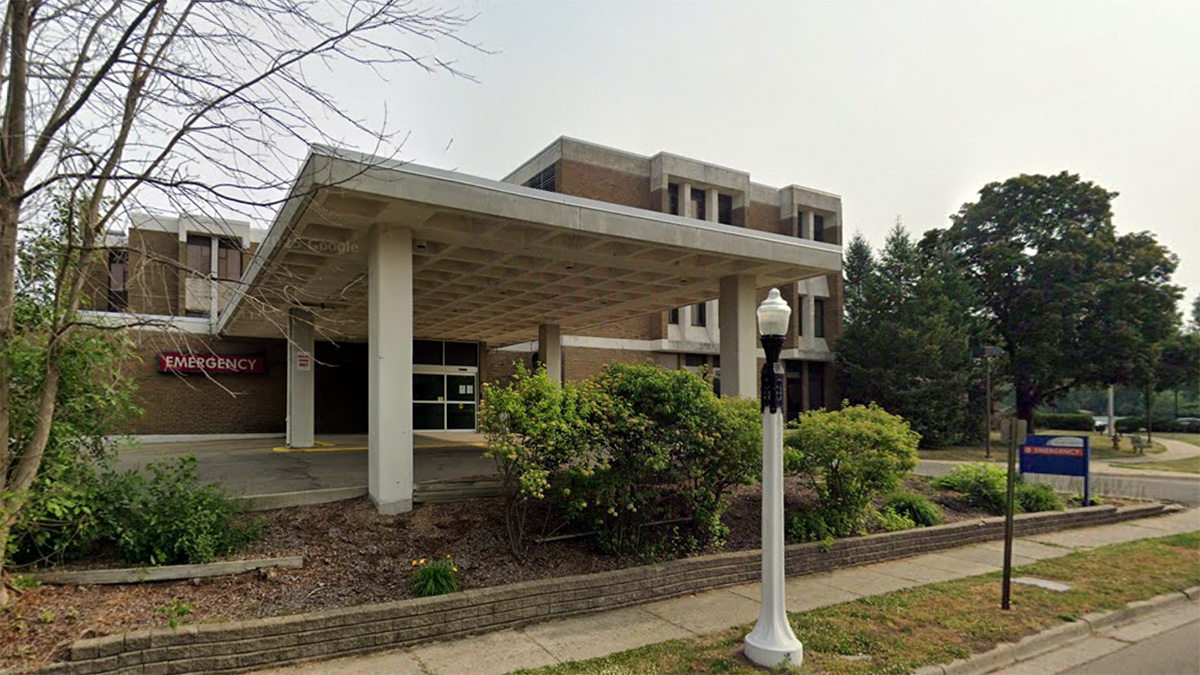
On June 19, 2026, Sturgis Hospital closed after more than a century in rural St. Joseph County — 84 licensed beds, roughly 300 employees, gone. It had already tried everything on the menu: pandemic relief loans, state support, and in 2023 it became Michigan's first federally designated rural emergency hospital. None of it was enough.
Dr. Andrea Wendling of Michigan State University's College of Human Medicine told Bridge Michigan she worries the closure is "the first of more closings that we're going to see over the next few years" in the state.
Sturgis Director of Public Safety Ryan Banaszak described what a closure does to a small town:
"What was once approximately a 2-mile transport for patients has now become closer to 25 miles, which takes ambulance personnel and equipment out of service for a much longer period of time."
That is the actual stake here. Not staffing rules — distance, in minutes, between a person having a heart attack and a hospital that's open.
The $50 billion that isn't enough
Republicans have an answer ready when you raise any of this: the Rural Health Transformation Program, a $50 billion fund created by the same law. Michigan got $173 million for its first budget period.
The people who run Michigan's rural hospitals don't think it closes the gap. Michigan is projected to lose about $2 billion a year in Medicaid funding. Munson Healthcare, which runs hospitals across northern Michigan, expects to lose roughly $30 million once the law is fully in effect.
Michael Shepherd, a rural health professor at the University of Michigan, put it plainly to the Michigan Independent:
"It is highly unlikely that this program is going to make rural health, rural hospitals whole again."
Gabe Schneider, Munson Healthcare's director of government relations, was blunter:
"We certainly recognize that it's not even a comparison. It's not really fair to say one offsets the other."
He was warned, in his own district, on the record
Moolenaar cannot say nobody told him.
In March 2025 — three months before the vote — he held a virtual town hall where constituents asked about Medicaid. He defended adding work requirements, saying "that would be a condition of receiving Medicaid." That same month, roughly 200 of his constituents held an "empty chair" town hall in Mount Pleasant — the same town as McLaren Central Michigan — which he did not attend. Medicaid was one of the things they came to talk about.
The scoreboard
Set the two things he has actually done side by side.
The anesthesiology bill is the one he has spent a decade on — cosponsored in 2016, cosponsored again in 2017, taken over in 2023, reintroduced in 2026. In all that time it has moved once, out of committee, two days after he filed it again. It changes which professionals a rural hospital may pay for out of a pot of money it already has.
The budget bill took him one afternoon. It cuts about $1 trillion from Medicaid, and by the time he voted for it, researchers had already put two hospitals in his district on the at-risk list.
Ten years on the small thing. One vote on the big one.
We've watched this shape before. Mississippi's Cindy Hyde-Smith told her state "Medicaid is not going anywhere," voted for the cuts anyway, and then started cosponsoring rural hospital rescue bills — three of them in five months. Tennessee's David Kustoff has filed rural health bills in three Congresses without passing one, then voted for the law taking $7 billion out of TennCare.
A rule change about who can administer anesthesia does not replace $6 billion. It doesn't reopen Sturgis. And it doesn't do anything for the 29,397 people in Michigan's 2nd District projected to lose their coverage — 20,197 of them thrown off Medicaid by a vote John Moolenaar cast on a Thursday afternoon.
If rural Michigan residents deserve "the highest quality health care available," the time to say so was July 3, 2025.
Sources
- Huffman, Moolenaar Introduce Legislation to Improve, Modernize Rural Health Care — Office of Rep. Jared Huffman, July 14, 2026
- Sturgis closure may be 'first of more' for Michigan rural hospitals — Eli Newman, Bridge Michigan, July 8, 2026. Photo: Bridge Michigan.
- 3 rural Michigan hospitals deemed at risk following Trump's cuts to Medicaid funding — Michigan Independent, July 21, 2025
- Markey, Leader Schumer, Wyden, Merkley Release Data Detailing Hundreds of Rural Hospitals Across U.S. at Risk Due to Republican Health Care Cuts — Office of Sen. Ed Markey, June 12, 2025, releasing the Cecil G. Sheps Center response of June 10, 2025