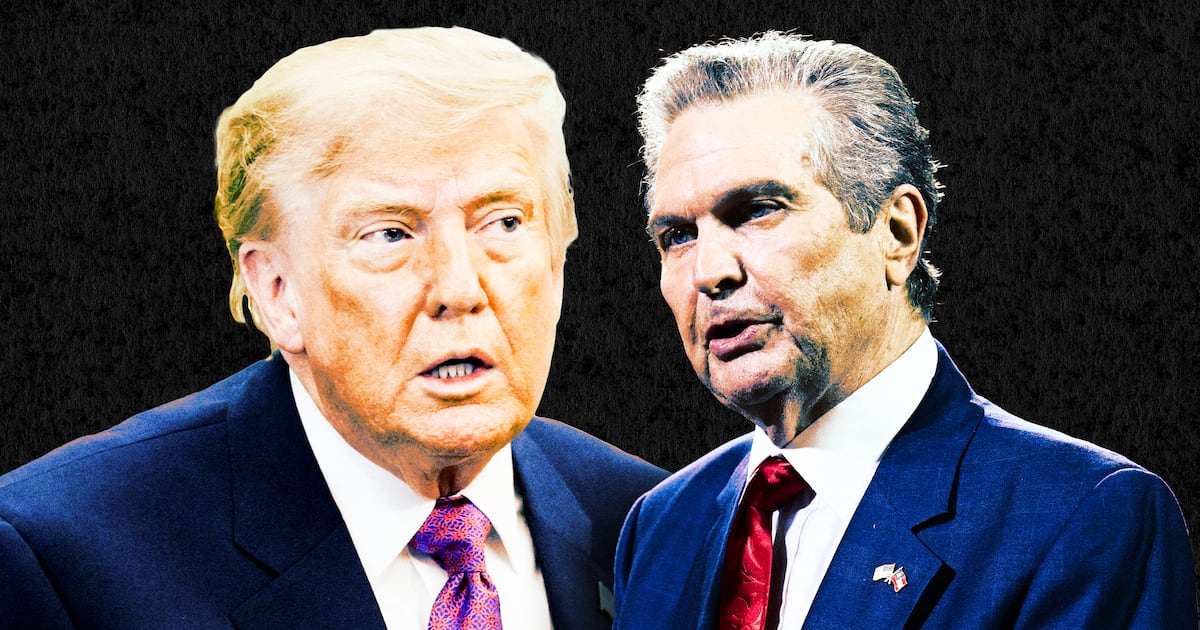
On June 3, 2026, the House Judiciary Committee voted 16 to 7, along party lines, to advance a bill written by Tom McClintock.
The bill is H.R. 5437, and here is what it does, in the plainest terms the text allows. Section 3 reads the same in the version McClintock introduced and in the substitute the committee adopted, and it has two parts:
"(a) In General.—A qualified civil action may not be brought in any Federal or State court.
(b) Dismissal of Pending Actions.—A qualified civil action that is pending on the date of enactment of this Act shall be dismissed, as soon as is practicable after the date of enactment of this Act, by the court in which the action is pending."
A "qualified civil action" is a lawsuit against a maker or seller of a stone slab for "harm suffered from silicosis or other conditions relating to or associated with silicosis resulting or arising from the occupational exposure to crystalline silica or other substances generated during fabrication" — the wording in the substitute the committee adopted by voice vote before reporting the bill out. It carves out one thing: a suit in which the manufacturer or seller was the injured worker's own employer.
So: no new lawsuits, and every lawsuit already filed gets thrown out. KQED reported the number of pending cases the bill would dismiss at about 500. Most of them are from California — McClintock's own state.
What the lawsuits are about
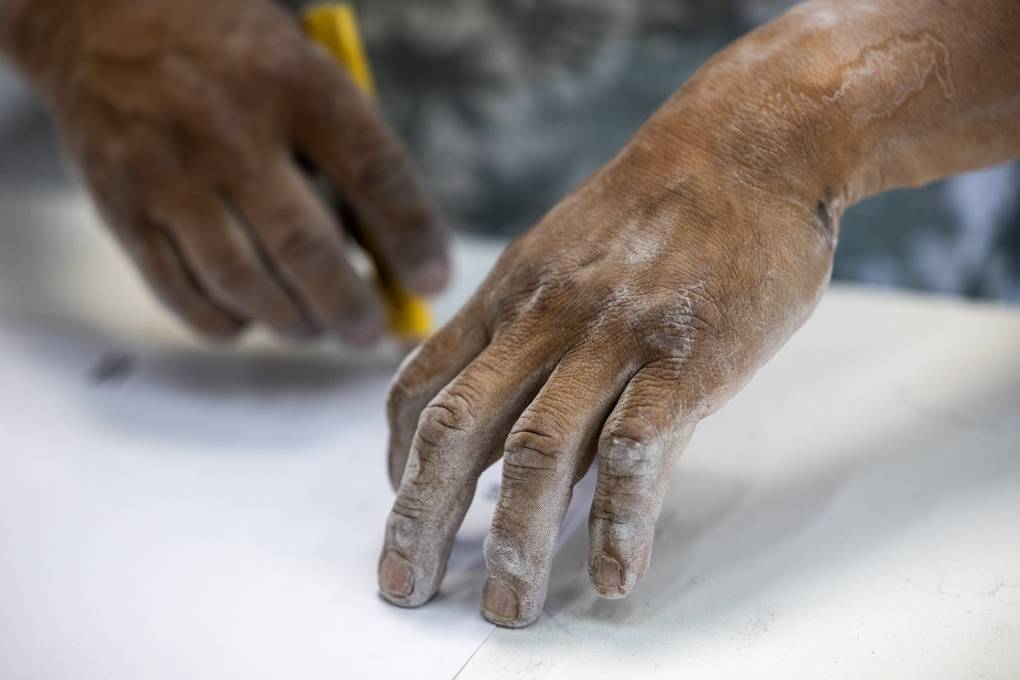
Engineered stone — also sold as quartz or artificial stone — is now the top countertop material in America. Cutting and polishing it releases crystalline silica dust. Breathing that dust causes silicosis, an incurable disease that scars the lungs until they stop working.
In California, the only state actively tracking it:
- More than 560 people have been confirmed with silicosis
- At least 31 have died since 2019
- Dozens have undergone lung transplants; dozens more were found ineligible for one
Nearly all of the patients are low-income Latino men, many of them immigrants, who said they did not know the dust was dangerous until they or their co-workers got sick. And because workers' compensation has largely not covered them, the cost of their treatment has fallen on California taxpayers.
The scientific problem with McClintock's premise is that this isn't a story about a few bad shops. Growing evidence shows the silica dust from artificial stone is uniquely toxic, and stonecutters get sick even when the safety rules are followed — even in sophisticated shops using water suppression, ventilation and masks. That is the assessment of doctors and workplace safety experts including those at Cal/OSHA and the California Department of Public Health.
Australia banned artificial stone outright in 2024. California took a key step in May 2026 toward banning slabs with more than 1% crystalline silica.
McClintock's argument
Here is what he said at the markup:
"This legislation addresses a fundamental question of fairness in our civil justice system. Who should be held responsible when workplace safety laws are violated? Who is liable when an otherwise safe product is misused? We're now seeing crippling lawsuits that ignore the guilty fabricators and instead sue the manufacturers, because that's where the money is."
Because that's where the money is. That is a sentence about lawyers. It is not a sentence about the 31 people who are dead.
His bill's own findings section declares that these products "are not inherently dangerous" and that "upon their manufacture and entry into the stream of commerce, they do not pose an inherent risk of injury to human beings" — a claim contradicted by the public health agencies of his own state.
David Michaels, a former OSHA assistant secretary of labor who is now an epidemiologist at George Washington University, put it this way:
"It is tragic that the Republican majority showed no interest in stopping this epidemic that is killing workers. Passage of this legislation will undoubtedly result in more workers being disabled by deadly dust."
The name is not an accident
McClintock called it the Protection of Lawful Commerce in Stone Slab Products Act.
That is a near-copy of the Protection of Lawful Commerce in Arms Act, the 2005 law that gave the gun industry broad immunity from lawsuits over the harm its products cause. It is the most famous industry liability shield in modern American law, and McClintock modeled his title on it directly.
Which tells you the ambition. This isn't a tweak to a legal standard. It's a request for the same kind of blanket protection Congress gave gunmakers, for an industry whose product is currently killing his constituents' neighbors.
Who benefits
At the hearing, Rep. Jamie Raskin argued the bill was preferential treatment for one man: Marty Davis, CEO of Cambria, the Minnesota company that is the largest domestic producer of engineered stone.
"Check out this legislation, which would protect one super-powerful, super-rich Donald Trump campaign donor from facing any accountability in the courts as young working men die from avoidable lung failure."
The "Trump campaign donor" part checks out. FEC records show Martin E. Davis of Cambria gave $100,000 to the Trump 47 Committee in October 2024 and $150,000 to Trump Victory in 2020, plus six figures apiece to the Republican National Committee, the NRCC and House Majority Whip Tom Emmer's fundraising committee.
To be precise about one thing: those same records show no contributions from Davis or anyone listing Cambria as their employer to McClintock's own campaign. Whatever moved him here, it wasn't a check with his name on it.
The industry did spend on Washington, though. Cambria reported $250,000 in lobbying in 2025 and $50,000 in the first quarter of 2026. Cosentino, the Spanish manufacturer, reported more than $350,000 in 2025 and $80,000 in the first quarter of 2026.
Meanwhile, several major manufacturers have started selling low-silica or silica-free products in the U.S. since Australia's ban. Cambria has not.
The verdicts this would erase
Juries have started to rule. A former Los Angeles stonecutter won $52.4 million in 2024, a verdict now under appeal. A 28-year-old stoneworker in Colorado won $17.4 million in May 2026.
Twenty-eight years old. That is what this disease does — the form of silicosis that artificial stone produces is, in KQED's words, an aggressive one, and it takes young men.
McClintock's bill would end that avenue entirely, for everyone, including the roughly 500 cases already filed and waiting.
The other job he holds
McClintock chairs the House Judiciary Subcommittee on Immigration Integrity, Security, and Enforcement — one of the top posts overseeing Trump's deportation campaign. He wrote the Shut Down Sanctuary Policies Act, which cleared his committee in March 2026.
The workers whose lawsuits H.R. 5437 would dismiss are, by KQED's reporting, nearly all low-income Latino men and many of them immigrants.
It is the same committee, the same chairman, the same session of Congress: expand the machinery aimed at immigrant workers, and close the courthouse door on the ones dying of an occupational disease.
This is a pattern with this Congress, not an anomaly. Byron Donalds cosponsored a bill to block the first federal heat protections for outdoor workers before they can take effect. Hal Rogers, who represents the heart of black lung country, won't back the bill to raise miners' benefits. The through-line is who gets protected from what.
McClintock's original cosponsor on H.R. 5437 was Andy Biggs of Arizona. The bill now has 16 cosponsors and is waiting on a House floor vote.
Source
California Lawmaker Pushes Immunity for Stone Makers Amid Silicosis Epidemic — Farida Jhabvala Romero, KQED, June 4, 2026. Photo: Brian van der Brug / Los Angeles Times via Getty Images. Bill text and legislative history from congress.gov and govinfo.