When a soldier is hurt in combat and forced out of the military before 20 years of service, they get shortchanged. Their military retirement pay is cut a dollar for every dollar of disability pay they get from the VA. Veterans advocates call it the "wounded veterans' tax."
The Major Richard Star Act would end that for combat-injured retirees. It has 340 cosponsors in the House. It has been stalled for years.
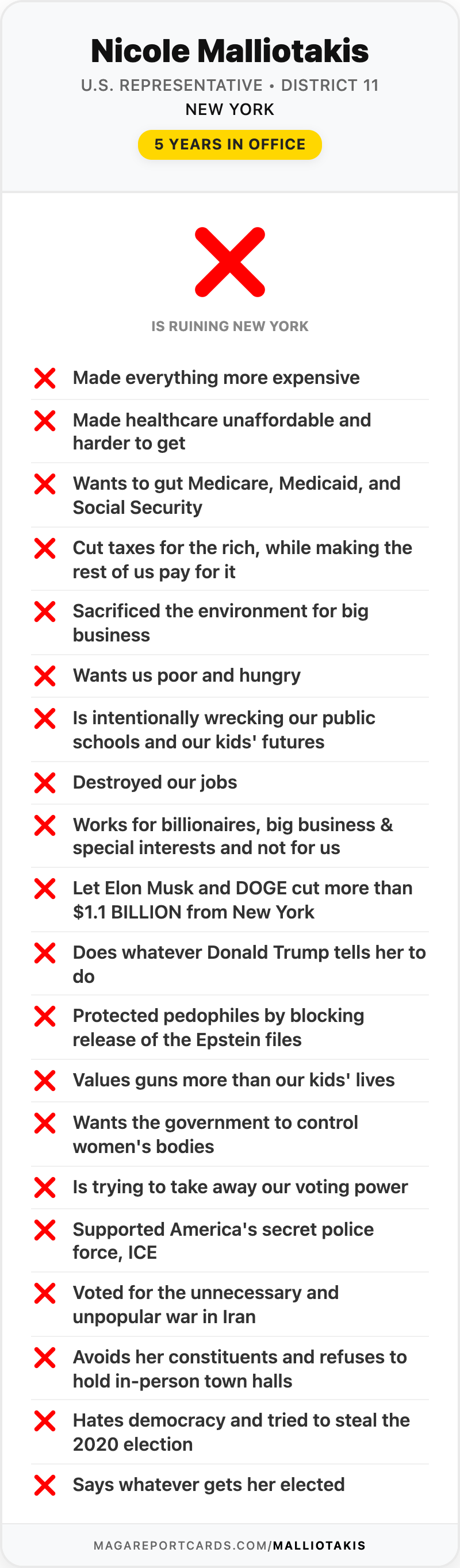
Nicole Malliotakis has been one of those cosponsors since March 14, 2025, the day the bill was introduced. But when Democrats and a handful of Republicans tried to force the bill onto the House floor this year, she would not sign on. On Tuesday the petition got its 218th signature anyway — from a South Carolina Republican, not from her.
What "holdout" means here
When House leaders won't bring a bill up, members can go around them with a discharge petition. If 218 members — a majority of the House — sign it, they can force a vote.
Rep. Mark Takano, the top Democrat on the Veterans' Affairs Committee, filed Discharge Petition No. 22 on May 21, 2026. The House Clerk's official list shows who signed and when:
- Every House Democrat but one signed — Adam Smith of Washington is the exception. New York City's Jerry Nadler, Grace Meng, Gregory Meeks and Yvette Clarke signed on day one; Hakeem Jeffries, Alexandria Ocasio-Cortez and Ritchie Torres followed in early June.
- Five Republicans signed: Jeff Van Drew (June 4), Thomas Massie (June 9), Brian Fitzpatrick (July 13), Anna Paulina Luna (July 15) and Nancy Mace (September 15).
- By September 2, the petition had 217 signatures. It sat one short for almost two weeks.
- Malliotakis's name is not on it.
So "holdout" is precise. The Brooklyn Eagle reported that 10 of New York City's 11 members of Congress signed the petition, and "the one holdout" was Malliotakis, who represents Staten Island and southwestern Brooklyn. She is the only Republican in the city's delegation.
It is not a claim that she opposes the Star Act itself. She is still listed as a cosponsor. The charge is narrower, and it's about the one thing that could actually get the bill a vote.
Veterans kept asking her
This wasn't a secret fight in Washington. Veterans came to her.
On August 13, advocates, elected officials and veterans rallied outside the Manhattan VA Medical Center to press Malliotakis to sign. The Eagle noted that the U.S. Army Garrison at Fort Hamilton is inside her district, and that she "has traditionally been a strong supporter of veterans."
Then the veterans group Five Borough Veterans, which had hosted that August rally, planned another one — this time outside her own district office on Third Avenue in Bay Ridge, on Labor Day. The group said the offset costs affected veterans an average of $1,650 a month.
She still didn't sign. Nancy Mace did, on September 15. "Our combat veterans earned both of these benefits the hard way," Mace posted. "They shouldn't have to fight Washington to keep them."
Michael Matos, president of Five Borough Veterans, called it a "massive victory for combat-injured veterans," but said "it is deeply disappointing that Staten Island and South Brooklyn were left out of this pivotal moment." And he added: "When our community needed her action most, Rep. Malliotakis failed to step up for a bill she explicitly claimed to support."
Her reason: a different bill
Malliotakis explained herself to the Brooklyn Eagle the day after the petition hit 218:
"Of course I'll vote for the Richard Star Act when it comes to the floor, as I am a co-sponsor of the legislation. However, we've been working diligently to pass a more comprehensive package of over 60 veterans bills that includes the Major Richard Star Act … I'm concerned that if we pass the Major Richard Star Act alone, the other measures in the package will fall to the wayside."
That package is the Take Care of America's Veterans Act, H.R. 9237. It was introduced June 10 by Mike Bost, the Republican chairman of the Veterans' Affairs Committee. Malliotakis signed on as a cosponsor on June 15. All 30 of its cosponsors are Republicans.
Here is what she left out of her statement: how that package pays for the Star Act.
The package cuts other veterans to pay for it
According to Military Times, the package covers its cost by writing into law a planned VA rule that changes disability pay for two conditions that commonly affect veterans: tinnitus and sleep apnea.
- Tinnitus, or ringing in the ears, now gets a 10% disability rating. Under the rule it would be treated as a symptom of another condition, like hearing loss, and would no longer get its own rating.
- Veterans with sleep apnea that has no symptoms, or a mild case controlled by treatment, could get a 0% rating.
- The estimated savings: $57 billion over 10 years.
Critics' objection is simple: future veterans' benefits shouldn't be cut to pay for what other veterans have already earned.
That split veterans groups. At least 22 organizations backed the package, including the American Legion. The VFW and Disabled American Veterans led the opposition. Pat Murray, a former VFW legislative director who lost a leg in Iraq and was medically retired, said he would get more money under the bill. But he didn't want to "get those benefits at the expense of others."
We wrote about what the committee chairman did next: one day after the VFW put a protest cartoon on a T-shirt, Bost asked the VA to look at whether the VFW should keep its accreditation.
The package she's protecting is already stuck
Malliotakis's worry is that passing the Star Act alone would leave the rest of the package behind. But the package got stuck months ago, on its own.
On July 16, the House was set to vote on it. Democrats offered a motion to send it back to committee, and it failed by one vote, 210 to 211. Malliotakis voted no. Then Speaker Mike Johnson pulled the bill from the floor anyway, blaming "misinformation" and guessing the House would take it up again in September.
It didn't pass in September. Roll Call reported this week that the package, with its tinnitus and sleep apnea cuts drawing opposition "from some veterans groups, Democrats and some Republicans," is "now stalled as well." The House was scheduled to leave town Wednesday until after the midterm elections, so a vote on the Star Act will likely wait until November.
So for two weeks in September, the choice in front of Malliotakis was this: sign and help give 59,000 combat-injured veterans — the number House Veterans' Affairs Democrats cited — a way to force a vote on the bill she cosponsored, or hold out for a stalled package that pays for the same benefit by lowering disability ratings for other veterans. She held out.
What the record shows
Nicole Malliotakis has cosponsored the Major Richard Star Act since the day it was introduced in March 2025. When a petition to force a House vote on it was filed in May 2026, every other New York City member of Congress signed it, and for nearly two weeks it sat one signature short. She never signed; Nancy Mace supplied the 218th signature on September 15. Malliotakis says she held back to protect a Republican package she also cosponsored — one that pays for the Star Act with an estimated $57 billion in cuts to future disability ratings for tinnitus and sleep apnea, and that House leaders pulled from the floor in July.
Source
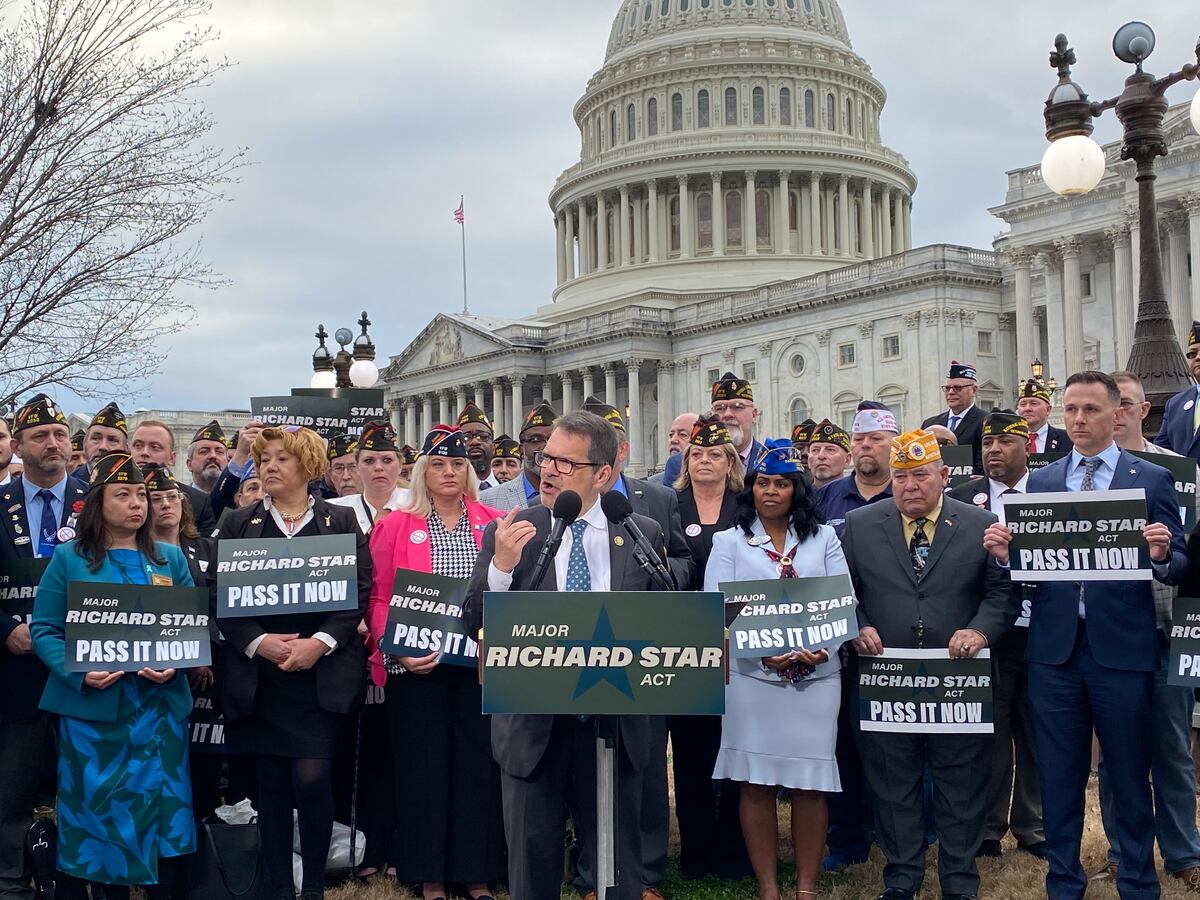
This post is based on reporting by the Brooklyn Eagle (September 16, 2026). Signature dates are from the House Clerk's official record of Discharge Petition No. 22. Photo: Rep. Gus Bilirakis at a 2024 Capitol Hill rally for the Major Richard Star Act (Leo Shane III/Military Times).