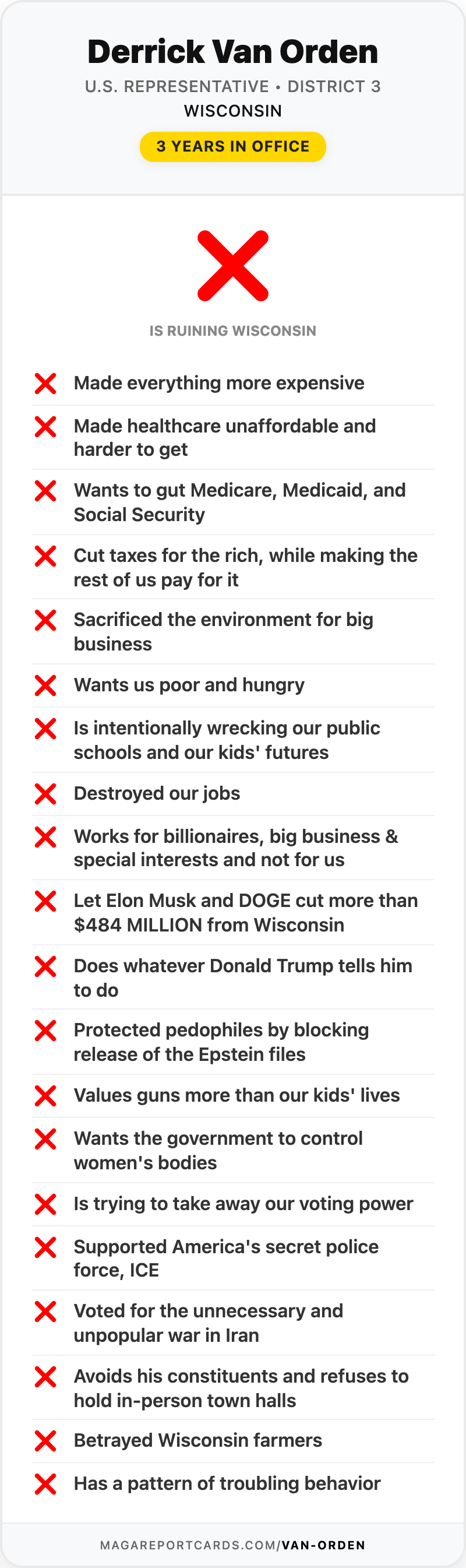
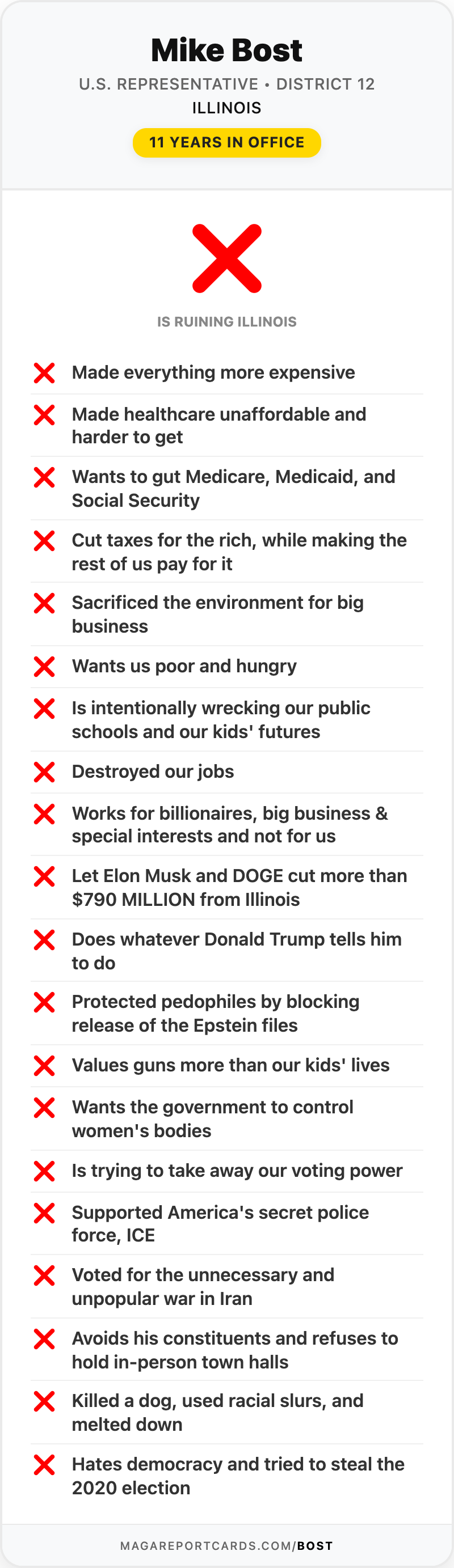
Derrick Van Orden sits on the House Veterans' Affairs Committee. In 2025 he led the call to shut down a program that was keeping veterans in their homes. It worked. Now thousands of veterans are paying for it every month.
An NPR investigation published October 30, built on Department of Veterans Affairs data nobody had reported before, found:
- More than 15,000 veterans who had their VA home loans changed after a money crisis saw their monthly payment go up by at least $150.
- More than 700 saw it go up by $1,000 or more.
- 63% of veterans who got a changed loan saw a payment increase. For loans backed by Fannie Mae and Freddie Mac, which cover most of the country's mortgages, the figure was 2%.
NPR says Van Orden "led the call to wind down" the program. He did not answer NPR's requests for comment. Neither did Mike Bost, the Illinois Republican who chairs the committee.
What got shut down
The program was called the VA Servicing Purchase program, or VASP. When a veteran fell behind on a VA-backed mortgage, VASP rolled the missed payments into a new loan at a 2.5% interest rate. With mortgage rates around 7%, NPR calls it "a lifeline." It was helping tens of thousands of veterans.
Here is how Van Orden talked about it at a Veterans' Affairs Committee hearing on March 11, 2025:
"If the Biden version of VASP was allowed to continue, I fear that the home loan will not exist in the future for my fellow veterans."
At that same hearing, NPR reports, mortgage companies and housing groups warned the administration not to end VASP until a replacement was ready. If it did, they said, veterans would be stuck with much worse choices than other homeowners: a changed loan at today's higher rates, or foreclosure for those who couldn't pay.
The Trump administration ended VASP anyway, on May 1, 2025. Congress never voted on it. NPR reports that House Republicans announced the shutdown before the VA did. Van Orden and Bost put out a joint press release that day:
"We — along with many of our colleagues — had serious concerns about the impact VASP would have on not only the future of VA's home loan program, but the mortgage lending business as a whole. Today, the Trump administration rightfully put an end to VA's VASP program."
That "rightfully" is now costing veterans money every month.
The replacement took 13 months to show up
Van Orden did write a bill for a replacement, the VA Partial Claim Program. It lets a veteran move missed payments to the end of the loan and keep the original rate. Congress passed it with support from both parties.
But a bill isn't a program. The VA took more than 13 months after ending VASP to announce how the new one would work. It finally did in June 2026. Lenders were then given another 180 days, until November 28, to start offering it. NPR reports that most mortgage companies still don't.
The veterans who fell into that gap don't get anything from the new program. They are locked into the higher-cost loans they had to take to avoid foreclosure. Foreclosures on VA loans hit a 10-year high after VASP ended, according to industry data NPR cites. In April, NPR reported that more than 10,000 veterans had lost their homes to foreclosure since the program was shut down.
"This was a foreseeable outcome of abruptly ending a program without a replacement in place," Matthew Douglas of the Housing Policy Council told NPR. His group represents the country's largest mortgage companies, and it was among those warning the VA. "It's a mathematical certainty that borrowers are going to have those kind of shocking payment increases."
One veteran: $1,181 more, every month
NPR tells the story of Scott Boyd, an Army veteran who served in the infantry and in military intelligence. He bought a house near Columbus, Ohio, in 2021 with a VA loan at a low rate. Then he lost his job in a mass layoff, and his PTSD came back. He checked himself into the Dayton VA hospital for treatment and fell behind on his mortgage.
His lender told him not to worry, because VASP would help him catch up. Then VASP was gone. The only offer left raised his rate from 2.75% to 6.75% and stretched his loan to 40 years. His payment went up $1,181 a month. More than 90% of each payment now goes to interest.
He took it, because the other choice was foreclosure. He was raising four kids with his partner and caring for his dying father-in-law in the basement. Two weeks after he signed, the VA launched the new program that would have let him keep his old rate.
"I felt so defeated," Boyd told NPR.
The VA's answer
The VA told NPR that "many leading voices in Congress supported the termination of VASP." Van Orden and Bost were two of those voices. Asked about veterans stuck in the gap, VA press secretary Quinn Slaven said the home loan program "is based on the premise that while Veterans may need some assistance, they must generally be able to make their mortgage payments."
The committee's top Democrat, Rep. Mark Takano of California, called it "the height of insanity." He told NPR the VA could move these veterans back into cheaper loans if it chose to, or Congress could pass a law to make it happen.
This isn't the first time Bost has used the committee against veterans' interests. In July, he asked the VA to review whether the VFW should still be allowed to represent veterans after the group put a protest cartoon on a T-shirt.
What the record shows
Derrick Van Orden led the Republican push to shut down VASP, a 2.5% mortgage rescue for veterans, and he and Mike Bost cheered when the Trump administration ended it in May 2025, over the mortgage industry's warnings. The replacement took more than 13 months to arrive. In the meantime, more than 15,000 veterans saw their monthly payments rise by at least $150, more than 700 by $1,000 or more, and the new program does nothing for any of them.