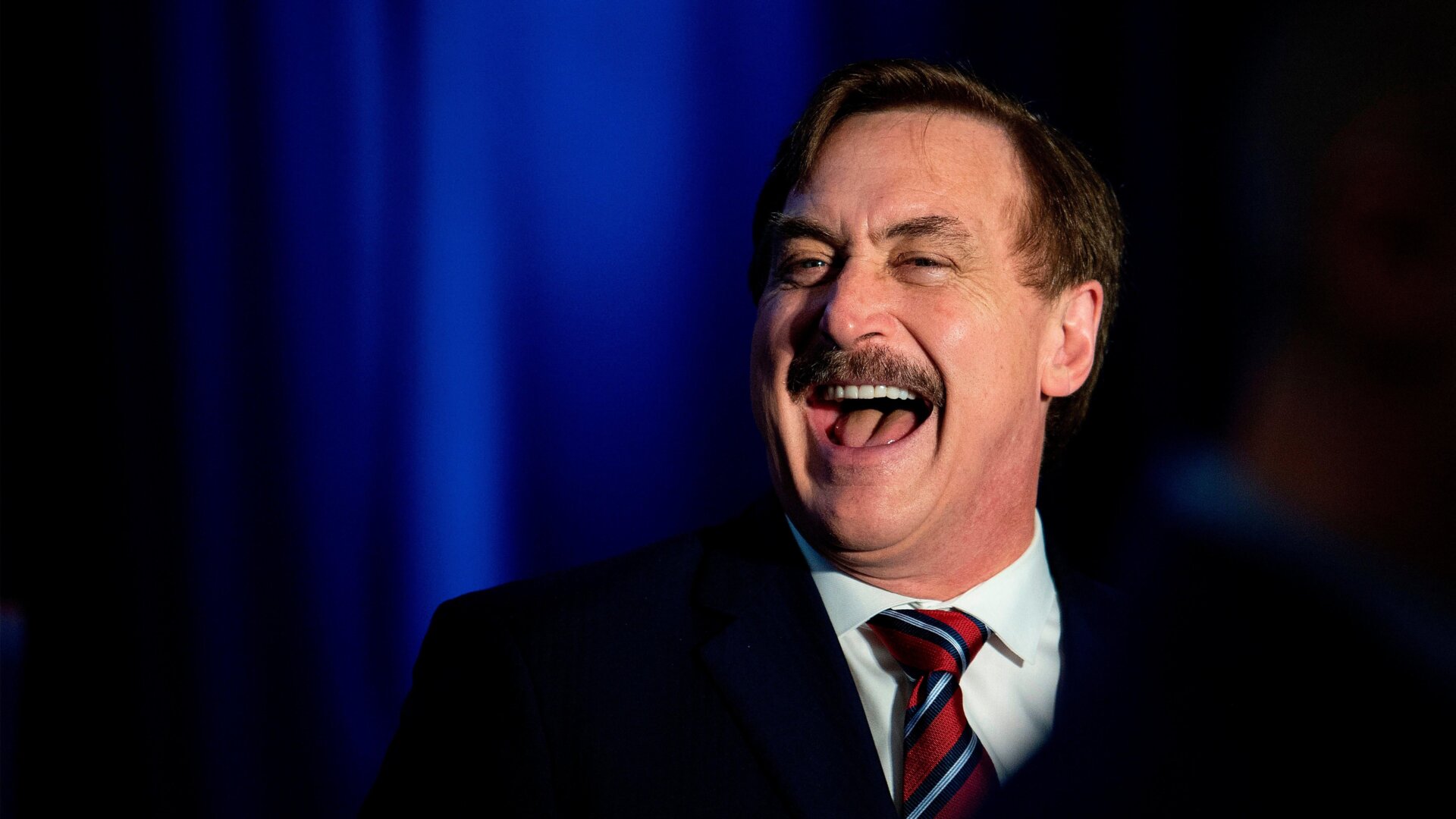
Five years ago this week, Mike Lindell rented a hall in Sioux Falls, South Dakota, and told America he was about to end the argument.
The event was called the Cyber Symposium. It ran August 10 through 12, 2021. Lindell had spent weeks promising that he would put the raw data on a screen, hand it to cybersecurity experts, and prove once and for all that the 2020 election had been hacked and handed to Joe Biden.
He didn't just promise evidence. He promised a specific outcome. He said the proof would be so strong that the Supreme Court would rule for him unanimously, that Biden and Kamala Harris would resign, and that Donald Trump would be put back in the White House on August 13 — the day after the symposium ended.
Then he stood up in front of the room for three days and delivered nothing.
It matters now because Lindell is running for governor of Minnesota, and the thing he failed to prove in Sioux Falls is the number one plank of his campaign.
The promise
Before the event, Lindell said he would produce "100 percent, non-subjective evidence" that Trump had won.
He also offered $5 million to any cybersecurity professional who could look at his data — his so-called "packet captures" from the 2020 election — and show that it wasn't what he said it was. He called it the "Prove Mike Wrong" challenge. It was meant as a flex. If you're that sure, you can afford to bet on it.
Real experts showed up. So did Steve Bannon, QAnon figure Ron Watkins, and the son of Brazil's then-president Jair Bolsonaro. Ordinary supporters flew in from across the country to watch history happen.
The delivery
Lindell opened by announcing that the symposium itself was under attack.
"The whole technology was attacked," he told the room, according to Gizmodo's account of the first day. "This is the cover-up. This is the absolute cover-up of the worst in history."
That was the pattern for three days: a technical problem, an accusation, a promise that the real material was coming tomorrow. Instead of data, attendees got slides. Votebeat's reporter described the finale as dramatic images of computer code and file structures that looked like "a slide of wingding characters" — and then Lindell simply declined to hand over the underlying data.
The security professionals in the room said so out loud, in real time.
Robert Graham, a well-known security researcher, was live-tweeting from the floor. On day two he wrote:
"All day Mike Lindell has been on stage saying the cyber experts are happily working on packet captures. We are not. We haven't been given the packet captures we were promised. I mentioned this because some of his PR guys came by looking to take video of cyber experts working on packet captures. They seem confused by the fact that there's no cyber experts who have seen the promised packet captures."
CNN's Donie O'Sullivan brought election security expert Harri Hursti to the event specifically to analyze whatever evidence turned up. Hursti told the Washington Post that the whole thing was "a big fat nothing and a distraction," and that Lindell's team "have fed us with garbage just to control the narrative."
By the end, Hursti summed it up like this: "We expected a huge pile of data which we wouldn't be able to understand and how it can be evidence. We didn't expect there's no pile of anything."
Even the fans noticed. "I think the guy makes a wonderful pillow," one attendee told CNN. "But I wish some of this information had been organized a little better."
His own hired experts said the data was junk
This is the part Lindell can't blame on the media.
Lindell paid for a "red team" of cyber experts to vet his evidence. One of them, Josh Merritt, told the Washington Times during the symposium that the packet captures were unrecoverable in the data, and that what Lindell had could not prove a cyber attack by China. His description of the material Lindell handed them:
"We were handed a turd. And I had to take that turd and turn it into a diamond. And that's what I think we did."
So the people paid to make Lindell's case said the evidence was garbage. The independent experts said the evidence was garbage. And Lindell's answer, when CNN pressed him at the end, was to say he was saving it: "I have that proof with my people that we're bringing to the Supreme Court. I don't need the media driving the narrative before my case to the Supreme Court."
August 13 came. Biden did not resign. Trump was not reinstated. The Supreme Court did not rule 9-0 for Mike Lindell. None of it happened, because none of it was ever going to happen.
The $5 million bet he lost
Remember that "Prove Mike Wrong" challenge? Someone took it.
Robert Zeidman is a software developer — and a Trump supporter — who flew to Sioux Falls genuinely hoping to watch an election get overturned. He testified later that he entered the contest because he wanted to see "history in the making." He assumed he'd lose, figuring Lindell would never dangle $5 million over data his own experts hadn't checked.
Zeidman was given 11 files to review over two days at the conference. He looked at them and found they weren't 2020 election data at all.
Lindell's own contest panel refused to declare him the winner. So it went to arbitration, and in 2023 the arbitrators ruled for Zeidman. In February 2024, a federal judge in Minneapolis confirmed the award and gave Lindell 30 days to pay the full $5 million.
Lindell's response to NBC News: "I don't have any money. I have a pickup truck and a house that I live in. That's it."
The centerpiece stunt of the Cyber Symposium ended with a court ordering Lindell to pay $5 million to a Trump supporter who proved the data was fake.
Real people paid for the show
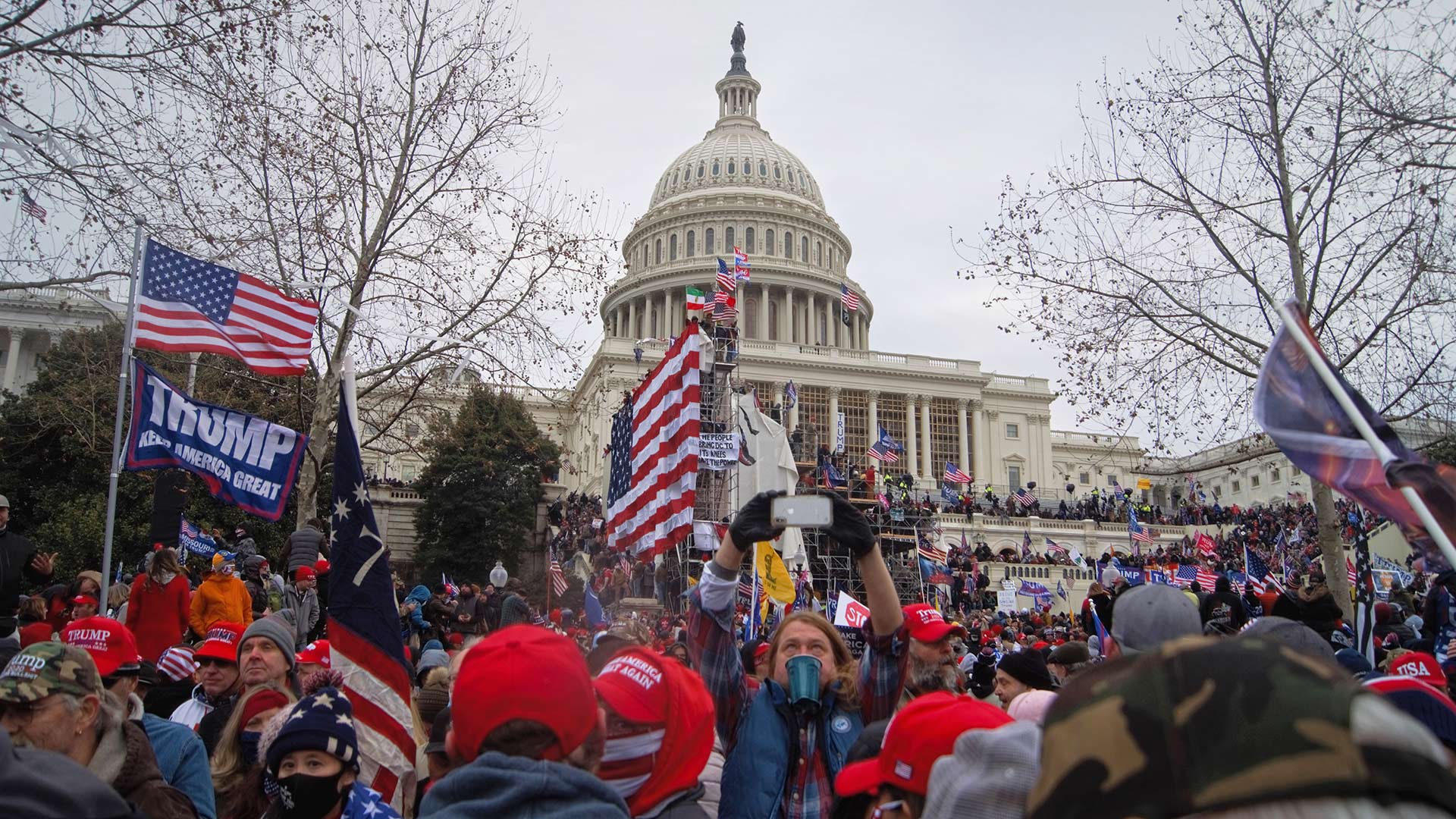
The symposium wasn't just an expensive embarrassment. It landed in the middle of a genuinely dangerous moment for the people who run American elections.
That same week, the Department of Homeland Security put out a public safety warning about "an increasing but modest level of activity online by individuals calling for violence in response to unsubstantiated claims of fraud related to the 2020 election and the alleged 'reinstatement' of former President Trump." State election officials heading to their national conference that week were nervous enough that one texted a reporter: "So like, I don't plan on dying for voting machines anytime soon."
And Mesa County, Colorado, Clerk Tina Peters was in Sioux Falls as a featured speaker at Lindell's event at the exact moment confidential passwords from her county's voting machines showed up on a far-right website. Colorado's Secretary of State decertified the county's election equipment and said Peters "allowed a security breach and, by all evidence at this point, assisted it."
That's the cost of this stuff. Not just wasted money — election workers quitting, equipment thrown out, clerks getting threats.
He is running Minnesota's campaign on the exact claim he could not prove
Here is why a 2021 conference still matters in 2026.
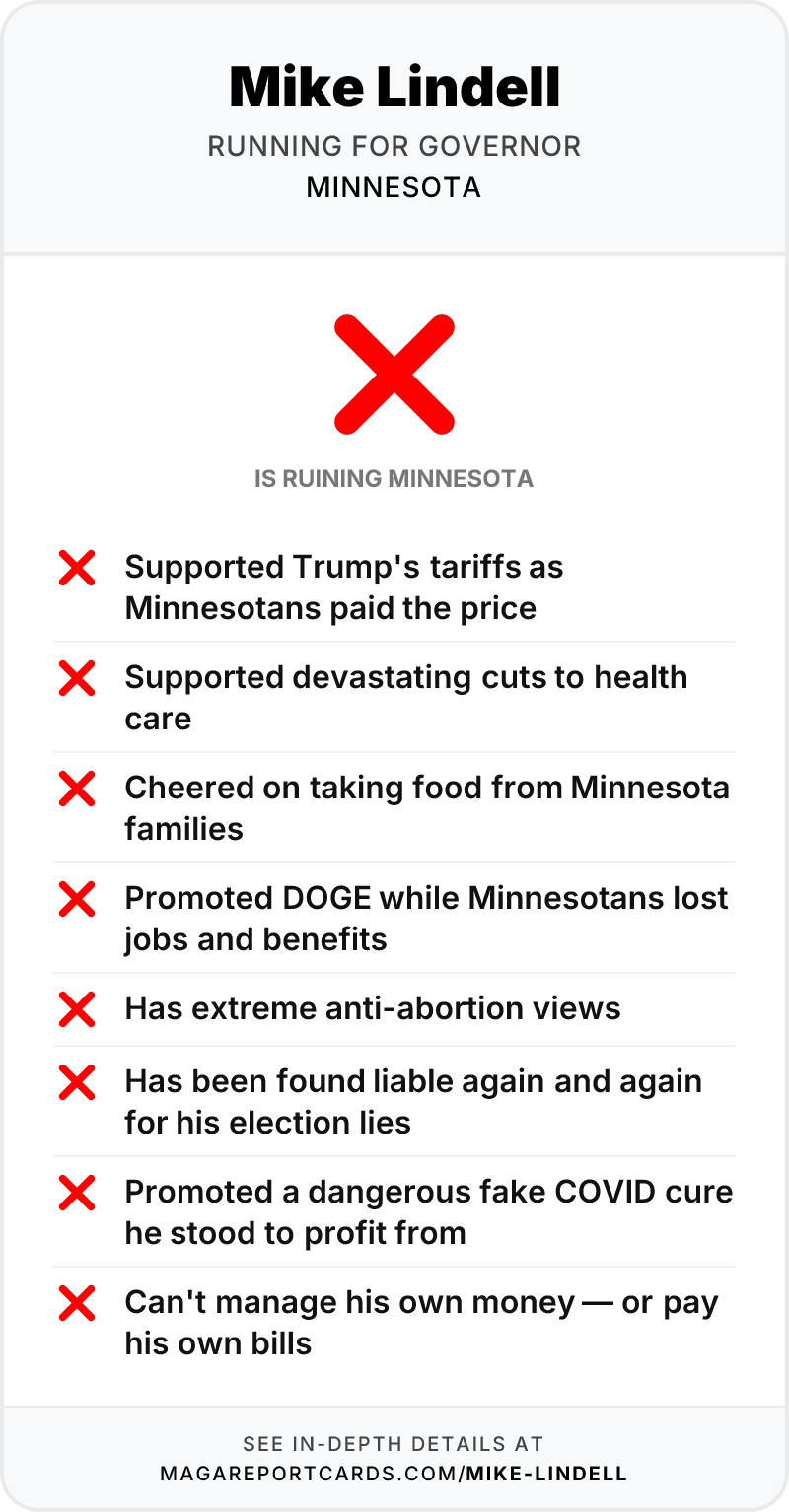
Lindell is running for governor of Minnesota. His campaign platform lists seven things he wants to do — property taxes, schools, fees, public safety. And then it names the one thing he says makes all the rest possible:
"The key to enabling me to fix all of the above? Securing our elections from fraud by ridding us of the machines which have been used to steal elections."
Read that again. He wants to be governor so he can rip out Minnesota's voting machines, on the grounds that they "have been used to steal elections" — the identical claim he flew hundreds of people to South Dakota to prove, and could not.
He has had five years and unlimited motivation. In that time, a Denver jury found he defamed a former Dominion executive and awarded that man $2.3 million. A federal judge in Minnesota ruled that he defamed Smartmatic with false claims about its voting machines. Another federal judge ordered him to pay Zeidman $5 million. He still has not produced the proof.
And when the Star Tribune checked last month, the man who made "election integrity" his life's work wasn't registered to vote in Minnesota.
Minnesota isn't a hall in Sioux Falls. If Lindell doesn't deliver as governor, nobody gets to fly home disappointed. Minnesotans deserve better.
Sources
Joseph Marks, The Cybersecurity 202: My Pillow cyber symposium is yet another font of election fraud lies, The Washington Post, Aug. 11, 2021. Related: Ed Mazza, Mike Lindell Loses It On CNN Reporter As His Cyber Symposium Disintegrates, HuffPost, Aug. 13, 2021, and Lucas Ropek, MyPillow CEO's Cyber Symposium Is Already a Deranged Circus, Gizmodo, Aug. 11, 2021. Photo: Jim Watson / AFP (Getty Images).