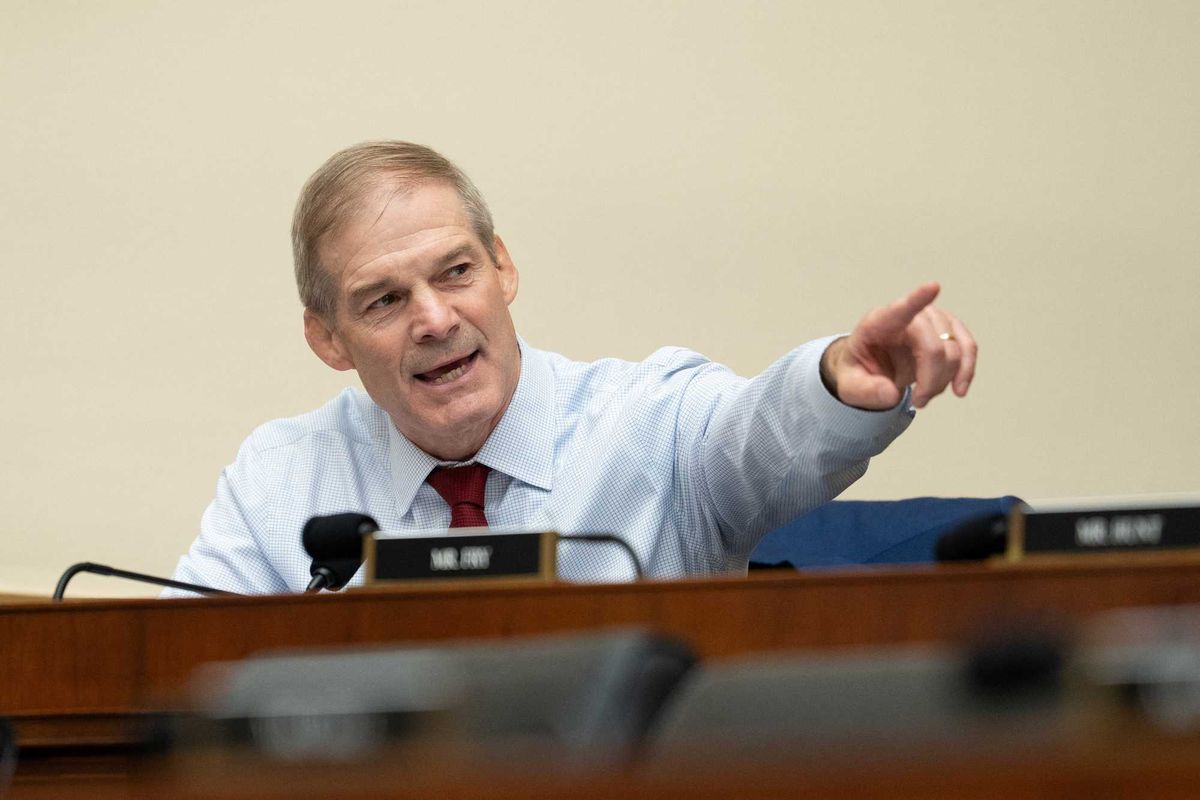
Here is the crime Jim Jordan says Jack Smith committed.
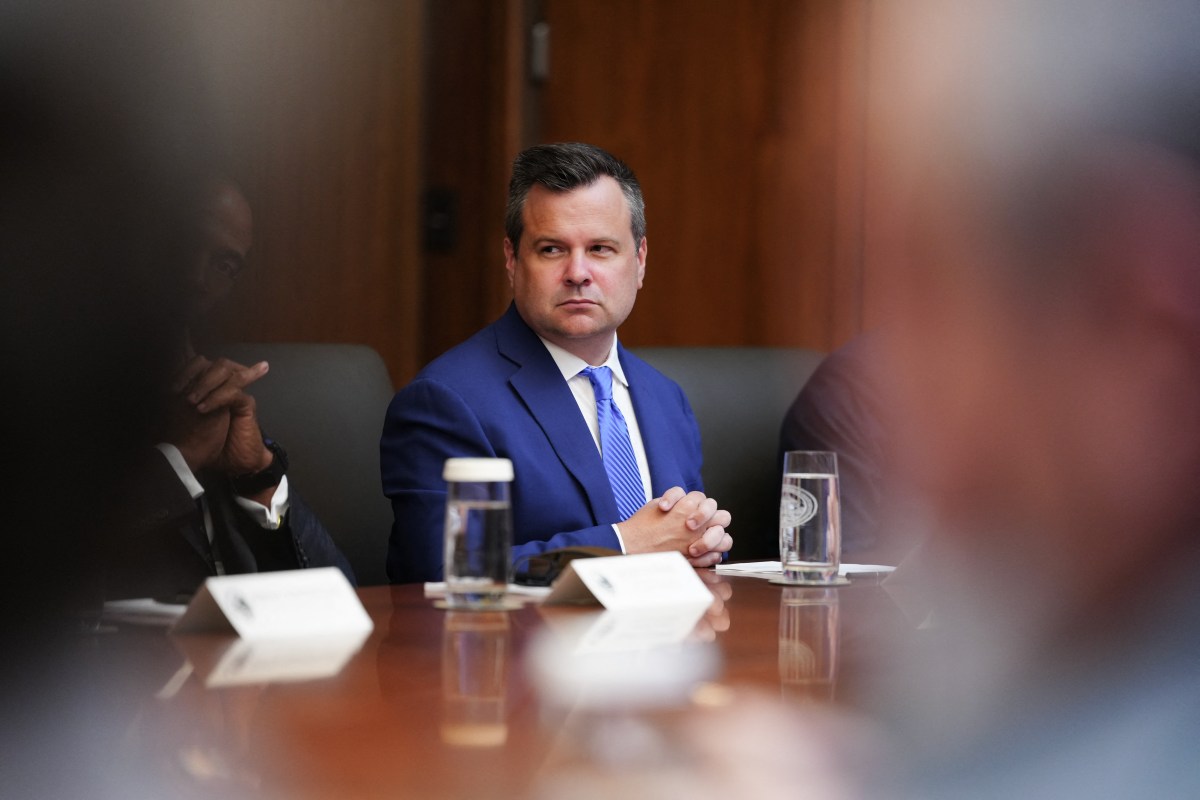
In December 2025, Smith — the former special counsel who investigated Donald Trump — sat for a deposition before Jordan's House Judiciary Committee. He was asked about records his team collected from members of Congress. He testified that his team had sought call records: logs showing who called whom, with no message content.
According to Smith's lawyers, Jordan's referral doesn't contest that it was true.
Jordan's complaint is that Smith didn't also volunteer something he wasn't asked about — that his team had separately obtained texts from 44 members of Congress through a National Archives request for White House phones.
For not bringing that up on his own, Jordan referred Smith to the Justice Department for criminal prosecution under the federal false-statements law.
Smith's lawyers took it apart
On July 22, 2026, Smith's attorneys Lanny Breuer and Peter Koski wrote to Jordan and Acting Attorney General Todd Blanche. The letter went public Friday. They called the referral "spurious."
Their central point is the one that matters:
"During his testimony, Mr. Smith provided truthful, responsive answers and candidly discussed his work as Special Counsel. Those answers are unimpeachably truthful. Notably, the referral letter does not contest the truthfulness of Mr. Smith's answers."
Read that last sentence again. Jordan's own referral doesn't claim Smith said anything false. It claims he committed perjury, as the lawyers put it, "not because of what he said, but because of what he did not say."
The lawyers called that theory unprecedented and dangerous:
"This dangerous theory of criminal liability has no limiting principle and risks ensnaring every witness who testifies before a congressional committee who does not proactively disclose information that is not responsive to a question asked."
They also noted the D.C. Circuit Court of Appeals has already rejected exactly this idea, in a ruling holding that witnesses are not required to volunteer answers to questions they were never asked.
Former prosecutors think it's ridiculous
Former federal prosecutors have been blunt.
Kyle Freeny, quoted by CBS News:
"This referral letter is an embarrassment. If they have bad questions, they do not get the answers that they want. It's almost like deposition 101."
Former prosecutor Gregory Rosen called the referral "legally untenable, if not ridiculous," adding: "If Congress wanted different answers, they should have asked different questions."
That's the whole thing. Jordan chairs the House Judiciary Committee. He ran the deposition. If he wanted to know about texts, he could have asked about texts. He didn't — and now he wants a man prosecuted for it.
The Speech or Debate argument doesn't hold either
Jordan's second argument was that obtaining the texts violated the Constitution's Speech or Debate Clause, which shields lawmakers' official acts from scrutiny.
Smith's lawyers pointed out the messages were voluntarily sent by members of Congress to White House officials — no intrusion into legislative business required.
And then they landed the sharpest point in the letter. Todd Blanche — the acting attorney general receiving Jordan's referral — was Trump's personal defense attorney in both of Smith's federal cases. He would have received those very congressional texts in discovery. He never challenged their legality in court.
"If President Trump's attorneys thought that Mr. Smith and his team had done something unlawful or improper in obtaining these text messages, they could have filed a motion to that effect. Notably, they did not."
Their closing line:
"President Trump has repeatedly ordered that Mr. Smith be prosecuted and jailed. That is not the rule of law."
One set of rules for Jordan, another for everyone else
There's a reason this particular referral is hard to take at face value, and it's Jordan's own record.
In 2022, Congress issued Jim Jordan a lawful subpoena. He was ordered to testify about what he knew regarding January 6th. He refused. Other officials who defied similar subpoenas — Peter Navarro, Steve Bannon — were convicted and went to prison. Jordan faced no punishment at all.
He was promoted instead. Republicans made him Chairman of the House Judiciary Committee, one of the most powerful law-enforcement oversight jobs in Congress.
From that chair, Jordan had issued at least 91 subpoenas of his own by August 2024. The committee's top Democrat, Jerry Nadler, said that May that Jordan had spent 20 million taxpayer dollars in that Congress "to investigate his various conspiracy theories." He has not produced the scandal he keeps promising.
A man who defied a subpoena himself now wants a witness who did show up and did answer truthfully charged with a felony for not being more forthcoming.
What Ohio gets out of this
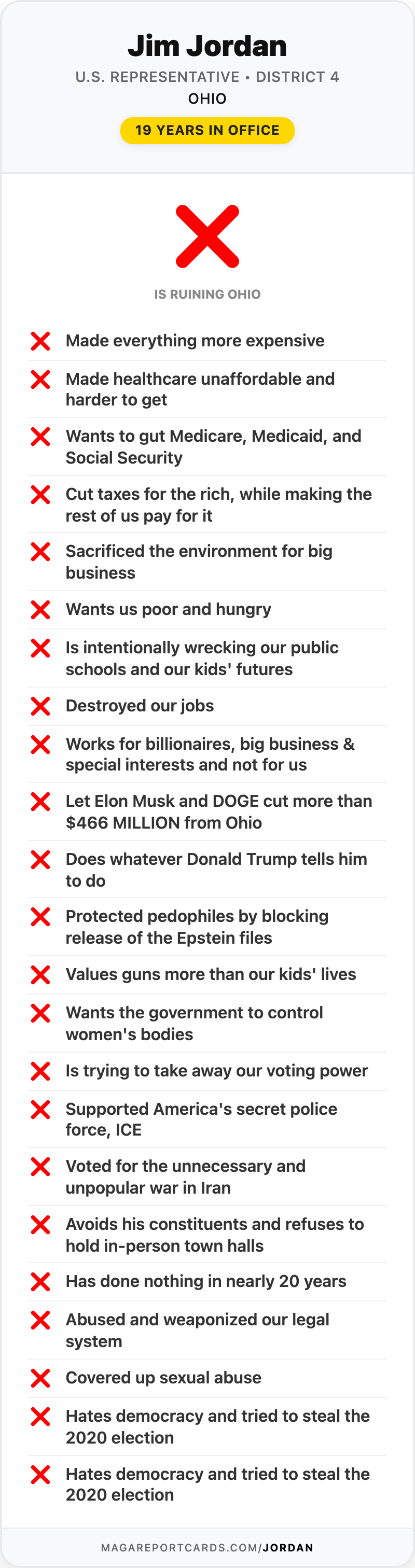
Jordan has represented Ohio's 4th District since 2007 — nearly two decades. In all that time he has never sponsored a single bill that became law. Not one.
That's the tradeoff his constituents are making. Their representative chairs one of the most powerful committees in Congress. He has used it to run investigations that go nowhere and, now, to demand prosecution of a witness over a question he forgot to ask.
Meanwhile the people of Ohio's 4th get no legislation, and the country gets a Judiciary chairman treating criminal referrals as press releases.
The bottom line
You don't have to like Jack Smith to see the problem here. The theory Jordan is advancing — that a witness commits a crime by not volunteering information nobody requested — would put every person who ever testifies before Congress at legal risk. The D.C. Circuit has rejected it. Former prosecutors call it an embarrassment. The acting attorney general it was sent to never raised the issue when he was Trump's defense lawyer and had every reason to.
This isn't oversight. It's a chairman using the criminal justice system to settle scores, from a man who wouldn't answer a subpoena himself.
Source
Complete 'demolition of Jim Jordan': Jack Smith lawyers publish rebuttal to GOP-led attack, Raw Story.