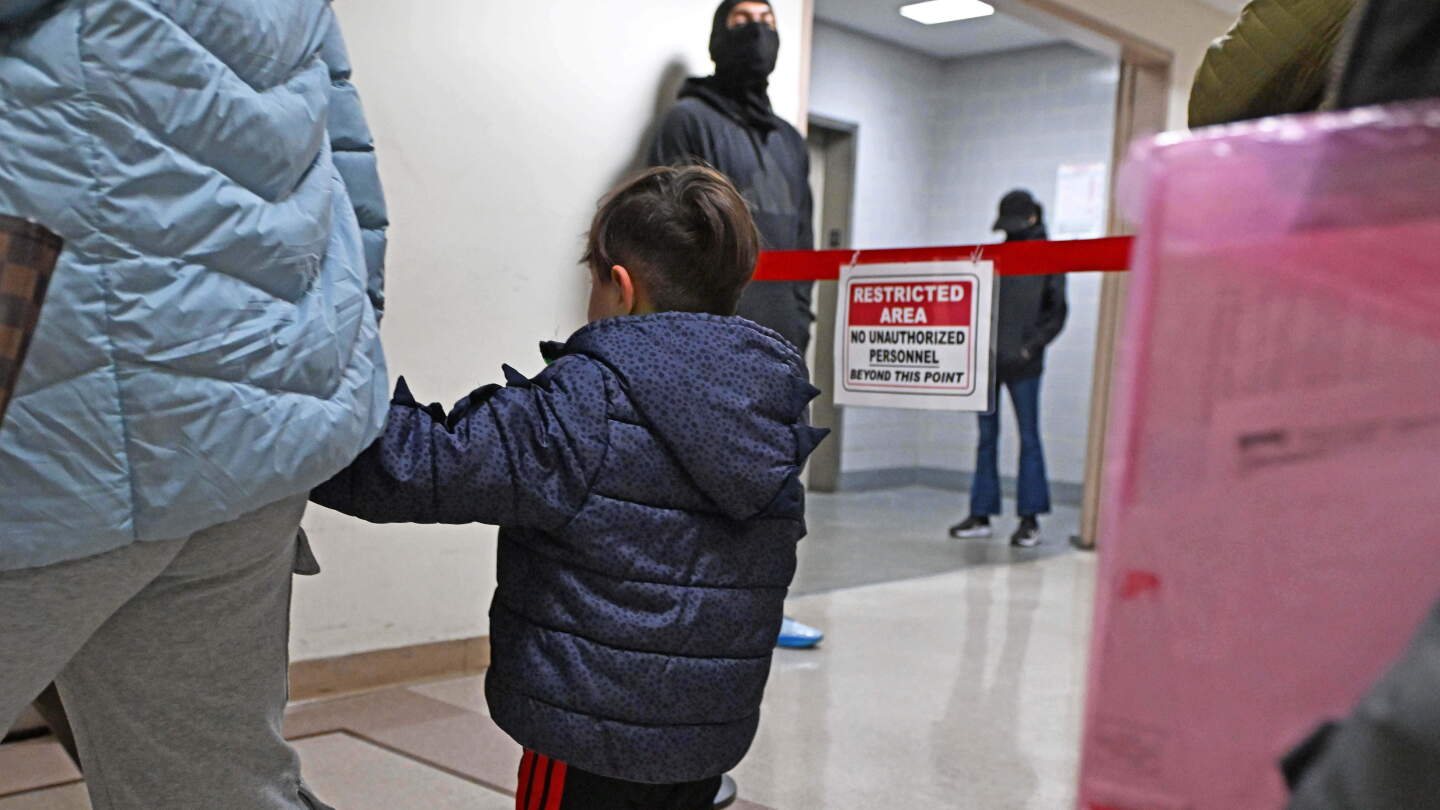
On September 15, the Trump administration's Immigration and Customs Enforcement quietly removed thousands of people from the online tool that families and lawyers use to find someone in ICE custody, the Associated Press reported on Monday.
ICE didn't announce it. Three current and former ICE officials told the AP about the change. Lawyers found out when their clients vanished from the search results.
The people ICE hid are detainees with a final deportation order — the last legal step before removal. It is exactly the moment when a lawyer most needs to know where a client is.
Who disappeared from the list
ICE started the online detainee locator in 2010 so relatives, lawyers and the public could look up someone in custody. Before that, families had to call regional offices or individual jails to track someone down.
The group ICE just removed is large. In July alone, nearly 16,000 people booked into ICE detention had final removal orders — more than a third of everyone booked that month, according to ICE data obtained by the Deportation Data Project at UC Berkeley and UCLA. ICE was holding more than 65,000 people in early July, and Michelle Mendez of the National Immigration Project estimates about 30% of them likely have final orders.
Lawyers told the AP what it looks like on their end:
- Atenas Burrola Estrada of the Amica Center for Immigrant Rights said "every single one of our clients who has a final order has disappeared from the locator" — 17 people as of Monday.
- Among the people who vanished are eight Somali men held at the U.S. military base at Guantanamo Bay, Cuba, according to their ACLU lawyer, My Khanh Ngo.
- The American Immigration Lawyers Association warned its members on Friday.
"Families are freaking out because they think the person has been deported and they don't know where the person might be," said Greg Chen of the lawyers' association.
The only people still listed are those held in places where judges have ordered ICE to keep them in the system — a detention center in Adelanto, California, and temporary holding sites in Minneapolis, New York City and suburban Chicago. Everywhere else, the names came down.
Why hiding people speeds up deportations
A final deportation order is not the end of the legal road. People can still ask to reopen their case or file a habeas petition asking a federal judge to release them. Federal judges have issued thousands of rulings ordering detainees released or given bond hearings, the AP reported. Some people with final orders are legally protected from being sent back to their home countries because they'd likely be tortured or persecuted — and many of them face removal to third countries where they have no ties instead.
All of that requires a lawyer who can find the client in time.
"If you can't find your client, don't know what's happening to your client, you can't get that information to the court to stop their removal," the ACLU's Ngo said. She said the change could make challenging a removal "nearly impossible" in some cases.
ICE's own statement to the AP points to why. The agency wouldn't confirm or deny the change, but said people with final removal orders are being prioritized for deportation — even as it faces a "historic number of injunctions" from courts stopping individual removals. Put those two facts side by side: judges keep stopping deportations, and ICE has now made it harder for lawyers to get a client in front of one.
Losing track of someone is especially worrying, Chen said, because detainees are frequently moved to new facilities before they're deported.
"To me, it's just another iteration of disappearing people," Mendez said. "Why would we do that in the United States of America? It's something we'd hear about in another country and be concerned about individual rights and due process."
Part of a pattern
This is the same detention system a Senate report described as a place where detainees were told "You only have three rights here: drink, sleep, eat." And it's big business: two private prison companies that hold ICE detainees took in $1.4 billion in a single quarter this spring.
The short version
On September 15, without telling anyone, Trump's ICE removed every detainee with a final deportation order from its public locator, except in the handful of places where judges have ordered it to list them. That covers a group that made up more than a third of July's bookings — nearly 16,000 people that month alone. Lawyers say it keeps families and attorneys from finding people in the final days before deportation, when a court filing is their last chance to stop it.
Source
AP Exclusive: ICE hides locations of thousands of detainees with final removal orders — The Associated Press, via OPB, September 21, 2026. Photo: Julio Cortez/AP.