His hometown paper asked him a simple question. Keeping Colorado's worn-out coal plants running past their retirement dates is going to cost more than $87 million, and that money comes out of people's electric bills. Was it worth it?
Jeff Hurd said yes. Then he said the federal orders forcing one of those plants to stay open should last longer.
That exchange ran in the Grand Junction Daily Sentinel on August 4, 2026, in a Q&A by reporter Nathan Deal. It is worth reading slowly, because the man answering represents the two Colorado towns that are paying most of the bill.
Where the $87 million goes
The number comes from a July 21, 2026 investigation by Mark Jaffe in the Colorado Sun, which added up what it costs to keep aging coal units running after they were supposed to shut down. Three pieces:
- Comanche 2 in Pueblo. It was supposed to close at the end of 2025. When the newer Comanche 3 unit was damaged and went offline, Xcel Energy got permission from state regulators to keep Comanche 2 going. Running it through March 2028 costs nearly $65 million in capital, maintenance, and fuel.
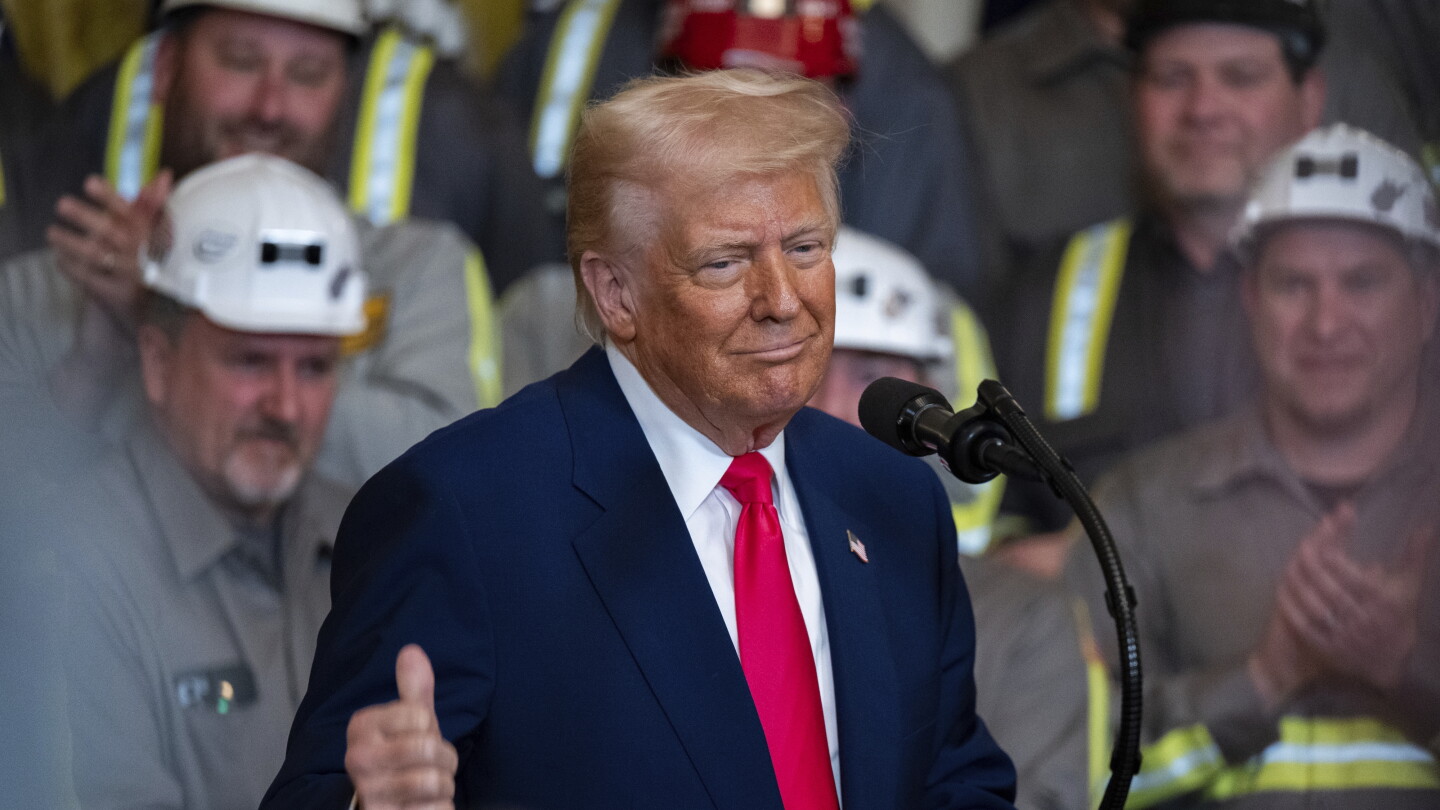
- Craig Unit 1 in Moffat County. The 45-year-old plant was set to shut down on December 31, 2025. One day before, the Trump administration's Department of Energy ordered it to stay open. That order has cost at least $6.5 million so far — about $1 million a month.
- Hayden Station in Routt County. Repairing the pollution controls on one unit runs $9 to $10 million.
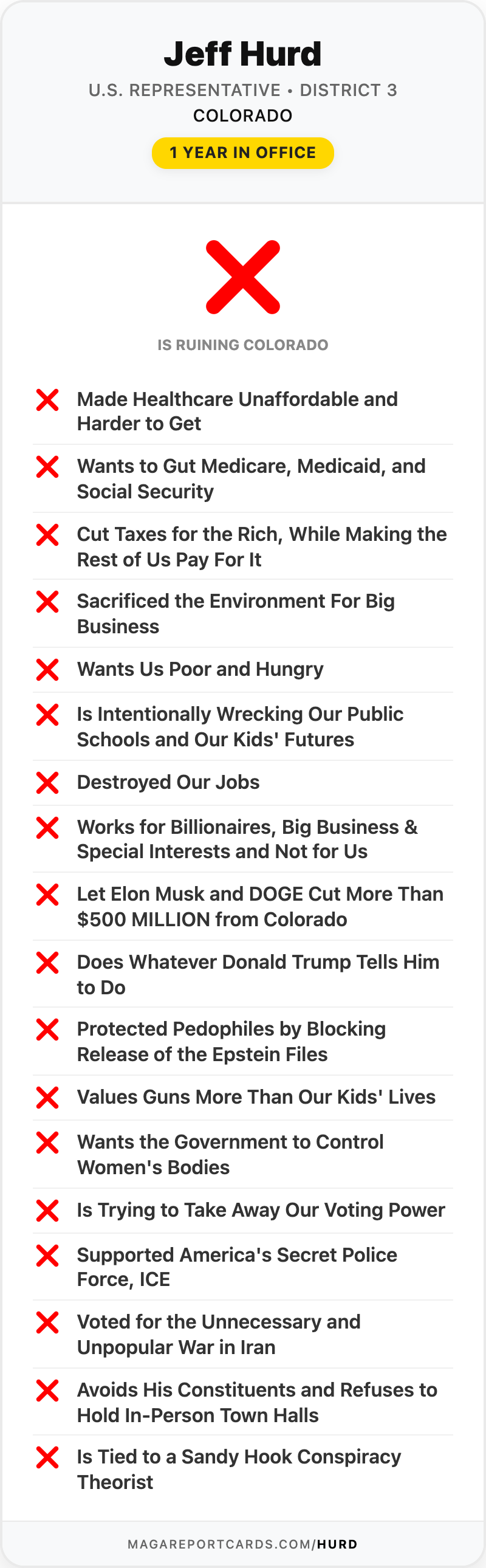
Pueblo and Craig are both in Hurd's district. So the people footing this bill are, in large part, his own constituents. Xcel customers pay for Comanche. Tri-State, the wholesale power supplier ordered to keep Craig running, said the costs would be passed along to its member co-ops — which means the rural electric customers across western Colorado who buy power from them.
Colorado's governor was blunt about it when the order came down. Jared Polis said it would "pass tens of millions in costs to Colorado rate payers, in order to keep a coal plant open that is broken and not needed." Attorney General Phil Weiser called the order "an unlawful abuse of the department's emergency authority," and the state took it to court.
The law being used here was written for wartime
The Craig order was issued under Section 202(c) of the Federal Power Act — an emergency power meant for genuine crises, war, and disasters. The Trump administration has used it to stop power plants from retiring on schedule at eight sites, from Florida to Washington state. That is not what the provision was written for; before this, the Sun reports, it "had never been used by DOE to stop plants from closing down."
Craig Unit 1 was closing on its owners' own schedule — "to comply with clean air regulations and for economic reasons," as Tri-State put it — at 45 years old, and a valve failure had already taken it offline on December 19. The federal government stepped in, overruled that plan, and handed the tab to Colorado families.
What Hurd actually said
Asked directly whether the cost was worth it, here is how Hurd answered:
"Certainly the dollar amounts that we're talking about here are significant, but the honest comparison is not $65 million or $87 million versus zero; it's the cost of keeping dependable generation available compared to the cost of replacing replacement power in a very tight market."
Then:
"If it means blackouts and brownouts, then I think all of us should look at the seriousness of the situation and recognize that keeping reliable generation online is critical."
And:
"I think what we're learning in Colorado is that reality has a vote."
Notice what's missing. Not one word about the people whose power bills go up. Not a dollar figure for what this adds to a household in Pueblo or Craig. Not a question about whether a federal agency should be able to override a state's own energy plan and send the invoice to that state's customers. Hurd's whole answer is about the utility system. The ratepayer never appears in it.
He didn't stop there. He went on to complain that the federal orders are "limited to only 90 days" — too short, he said, for utilities to plan around. He suggested longer-term arrangements with Colorado so plants like Craig could run more efficiently instead of "turning off and on so quickly." That is where ratepayers finally turn up — once, at the end of that answer, as people a longer runway would let the utility "recoup costs" from, rather than as people whose bills the order is raising.
Read that again. His criticism of a federal order that costs his constituents $1 million a month is that it doesn't last long enough.
This isn't a one-off
Hurd's record on this is not ambiguous. The League of Conservation Voters gives him a 3% score for 2025 — and a 3% lifetime score. He sits on the Natural Resources Committee's energy and minerals panel and on the Science Committee's energy panel, so these are the exact questions he was put in Congress to work on.
And on December 17, 2025 he was one of 218 Republicans who voted for the "Reliable Power Act," a bill that lets federal energy regulators stall EPA rules on power-plant pollution. Same instinct, same result: keep the old plants running, push the cost and the pollution onto everybody downwind.
To be fair where fairness is due, Hurd has broken with his party on public lands. He was "the lone Republican on the Natural Resources Committee to vote against the lands provision" that would have sold off federal acreage in the West. He is capable of telling his own side no. He just doesn't do it when the bill lands on a utility statement in Pueblo.
The question he didn't answer
"$87 million compared to what?" Hurd asked. Fine — here's a version of the question he might try answering next.
Compared to what a working family in Pueblo can absorb. Compared to what a household on a fixed income in Moffat County has left after groceries. Compared to the more than 32,000 people in his district projected to lose health coverage because of a bill he voted for — many of them the same people now paying more to run a broken coal plant.
Hurd is right that reality has a vote. Reality just doesn't get to vote on your electric bill. He does.
Source
Q&A: Hurd talks coal costs, budget framework and NDAA — Nathan Deal, The Grand Junction Daily Sentinel, August 4, 2026. Photo: The Grand Junction Daily Sentinel.