New Mexico's Secretary of State answers the voter ID question in one sentence: "You do not have to present identification to vote in a statewide election."
There is one exception the state itself flags. Some New Mexico cities require ID in their own municipal elections — and the example the Secretary of State names is Rio Rancho.
Which is where Gregg Hull was mayor for twelve years, and it's the model he wants to take statewide.
What his campaign says
Hull's "Election Integrity" page is unusually direct for a candidate who has been famously vague on almost everything else. It says, in his own words:
"I support Voter ID. New Mexicans deserve election laws that protect legally registered voters, strengthen confidence in the process, and make it clear that every eligible vote is counted accurately and fairly. Voter ID is a common-sense safeguard that should be applied in a fair, consistent, and accessible way across the state."
And on his record:
"As Mayor of Rio Rancho, I stood up for our community's voter-approved election protections, including photo identification requirements in city elections. When efforts were made to move Rio Rancho's local elections into a statewide system that would have weakened local control and removed local Voter ID protections, I opposed that change."
Then the operative promise:
"I will work to support uniform enforcement of voter identification requirements, absentee ballot handling, ballot security, and election procedures statewide."
Read together, that's a plan: New Mexico currently has no statewide voter ID requirement, and Hull says the rules should be uniform statewide and that he supports voter ID. There is only one direction that goes.
Why New Mexico, specifically, is a bad place to try this
Most states debating voter ID are arguing about DMV lines. New Mexico's debate is about something else, and the state has already worked through it.
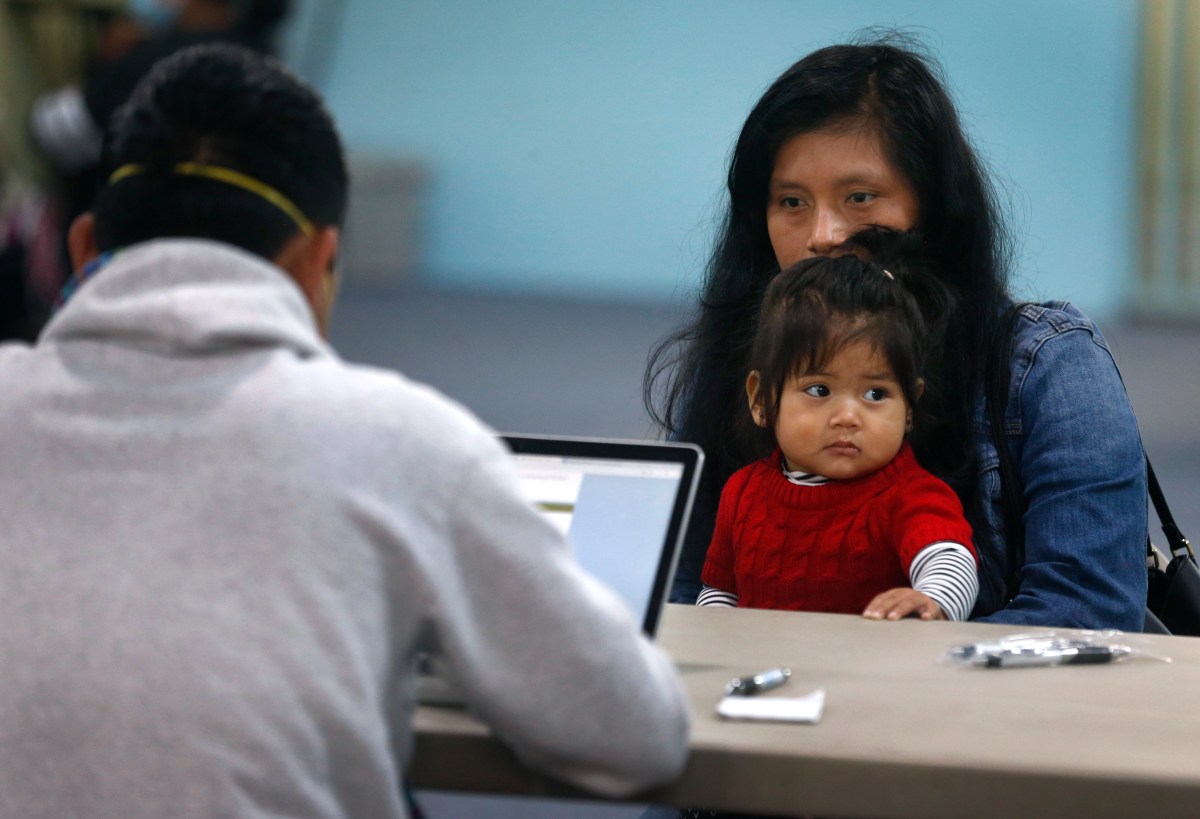
In 2023 New Mexico passed House Bill 4, the New Mexico Voting Rights Act. Inside it was a Native American Voting Rights Act, written into the state's election code. It exists because of a specific, documented problem: in rural New Mexico, many Native residents have what are known as noncity-style mailing addresses — a highway number, a P.O. box, or a description of where a house sits. Those addresses get rejected by systems built for a street address and a ZIP code.
So HB 4 let government buildings serve as mailing addresses for voter registration, let tribes request early voting locations and drop boxes on tribal land, and protected polling places on tribal lands from being eliminated or consolidated without the written agreement of the nation, tribe, or pueblo.
That is the state legislature identifying an ID-and-address barrier and legislating around it — three years ago.
New Mexico's existing rules already accommodate this. When ID is required — for a first-time voter who registered by mail without providing one — the acceptable list is broad: a photo ID, or a utility bill, bank statement, government check, paycheck, student ID, or a government document including a tribal ID showing name and address.
A "uniform" statewide photo ID requirement doesn't add a safeguard to that system. It removes the flexibility that was built into it on purpose.
The problem it solves
Hull's page frames voter ID as being about confidence: election laws that "strengthen confidence in the process."
Notice what's not in there. There's no claim of fraud in New Mexico, no case, no number. The argument is that people feel uncertain, and that the fix for that feeling is a new requirement on every voter in the state.
That's the same argument being made everywhere. We've traced where it leads. The SAVE Act — the national push to require documentary proof of citizenship in person just to register — could block tens of millions of eligible Americans, starting with the 84% of women who marry and change their surname, leaving it no longer matching their birth certificate. It's the same structure: a documentation requirement sold as reassurance, paid for by whoever can't produce the document.
He wouldn't answer the direct question
Here's the part that makes this worth writing about.
When iVoterGuide sent Hull a 34-question candidate survey, one of the questions was: "People should be able to vote without photo identification."
He declined to answer it — along with all 33 others, covering abortion, health care, immigration, education, guns, and more. His answer to every single one is recorded as "Did not answer."
So the position is on his website, where his supporters will find it, and absent from the questionnaire where a skeptical voter might. That's not an oversight. That's a choice about who gets to know what.
It fits a pattern we've already documented on his page: when he entered the race, the Santa Fe New Mexican noted that his campaign website "makes no mention he is a Republican."
"Local control" cuts both ways
There's one more thing worth pointing out, because Hull makes an argument on his own page that undercuts his conclusion.
He defends Rio Rancho's photo ID rule on local control grounds: "Communities should not have their voter-approved election safeguards stripped away by state overreach... state policy should respect the will of those voters instead of forcing one-size-fits-all changes without clear evidence, clear costs, or clear accountability."
That's a coherent principle. It's just the exact opposite of "uniform enforcement of voter identification requirements... statewide."
If Rio Rancho's voters get to decide their own election rules, so do the voters of every other community in New Mexico — including the pueblos and nations whose polling places HB 4 specifically protects from being changed without their written consent. You can have local control or you can have a statewide mandate. Hull's page asks for both, one paragraph apart.
New Mexico built its election law around the people hardest to reach, and it did that on purpose. Gregg Hull wants to standardize that away, and he'd rather you read it on his website than hear him say it. We deserve better.
Sources
- Gregg Hull for Governor — Election Integrity — his own campaign's stated position
- Voting FAQs — New Mexico Secretary of State, on current ID requirements
- The New Mexico Voting Rights Act Unpacked — Caroline Sullivan, Democracy Docket, March 22, 2023. Photo: Source New Mexico.