On November 12, the Trump administration's housing department published a final rule that puts the homes of tens of thousands of children at risk unless their families split up.
The Department of Housing and Urban Development's rule takes effect December 14. It targets "mixed-status" families — households where most members qualify for rent help, but one person, usually a parent, doesn't.
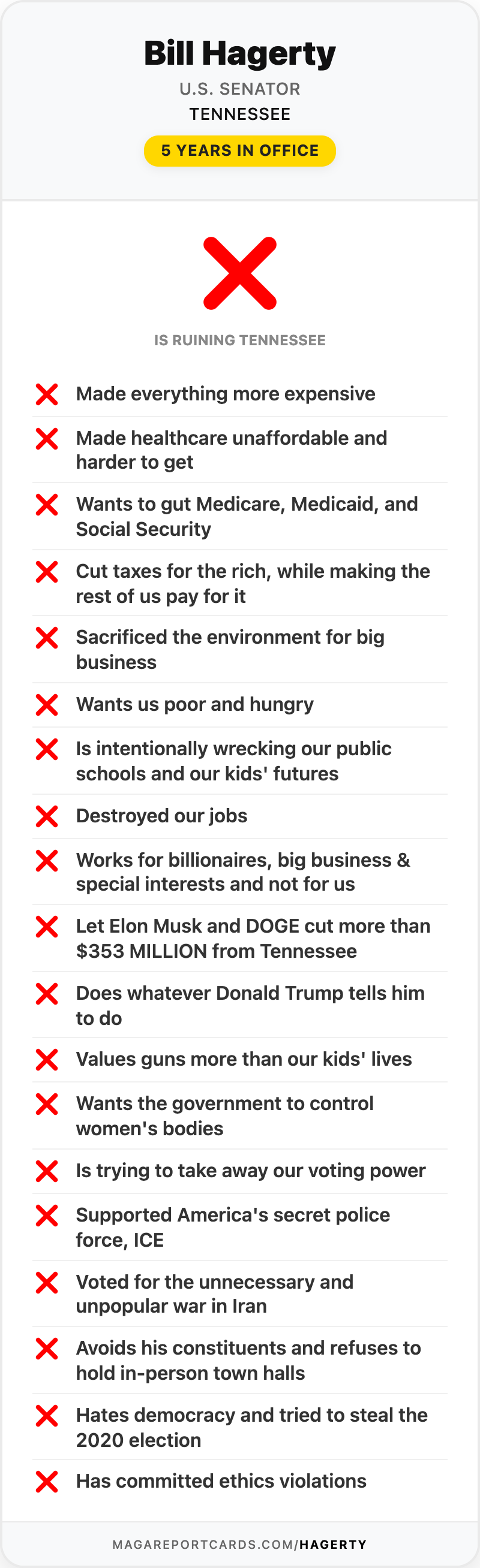
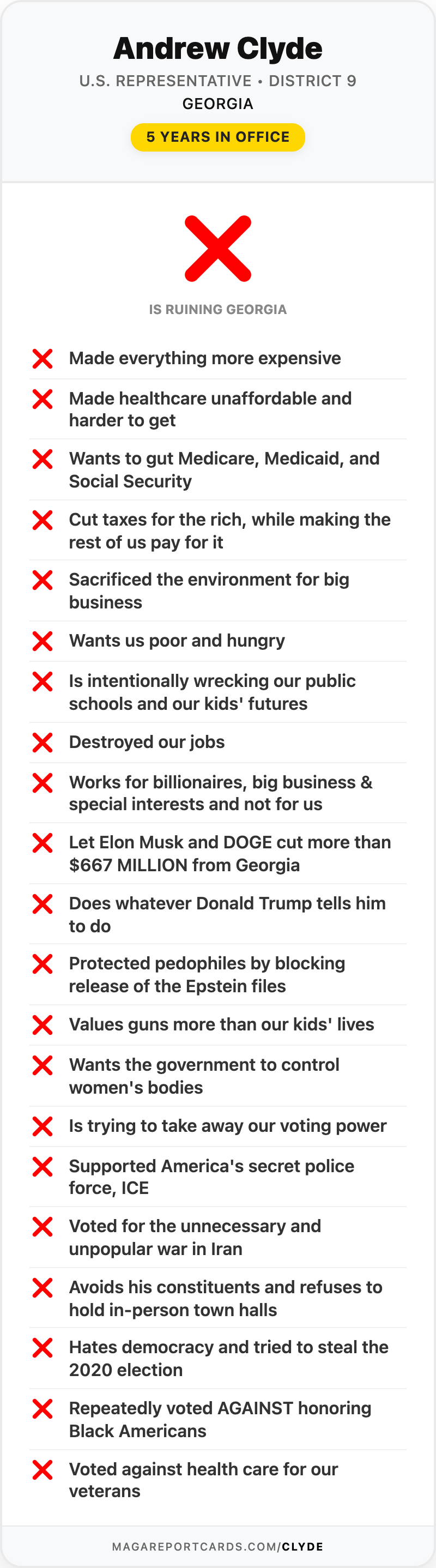
Two Republicans we track pushed for exactly this in Congress. Bill Hagerty wrote a Senate bill to do it. Andrew Clyde signed on to a House bill to do it. Now the administration has done it without them.
What the rule does
Undocumented immigrants already can't get most federal rent help.
What some families do get is a partial subsidy. Picture a family of four: two citizen kids, one citizen parent, and one parent without legal status. Under the rules until now, HUD paid the family's subsidy only for the three people who qualify. The fourth person's share came out of the family's own pocket.
The new rule ends that. HUD's own summary says it makes that partial help "a temporary condition pending verification of eligible status of all family members", where before it "could continue indefinitely." Once the grace period ends, the whole family loses its help if one member is ineligible, The Intercept reported.
That leaves the family two choices: the ineligible parent moves out, or everyone faces eviction.
"It's going to tear families apart and take adults away from their children," Deborah Thrope of the National Housing Law Project told The Intercept.
Who loses
About 80,000 people live in mixed-status families getting HUD help, according to the Terner Center for Housing Innovation at UC Berkeley, and the average household is a family of four with three eligible members. Nearly 37,000 of those people are children, according to Center on Budget and Policy Priorities estimates cited by The Intercept. Most of these families live in California, Texas and New York, The Intercept reported.
It doesn't stop with mixed-status families. The rule also makes every applicant and tenant prove their citizenship or immigration status, "regardless of age," according to the rule itself. Today, citizens sign a statement under penalty of perjury. Under the rule, U.S. citizens are checked through a federal database called SAVE. Experts told The Intercept that older tenants and low-income people without a birth certificate or passport could lose housing they qualify for — and that citizens could be wrongly flagged.
It costs more, not less
The administration says the point is to stop mixed-status families from "pushing aside hardworking U.S. citizens," as The Intercept described HUD Secretary Scott Turner's argument.
But HUD's own cost analysis, cited by The Intercept, found the rule would cost the federal government about $300 million more to serve the same number of families.
Meanwhile, Trump has proposed cutting $3.8 billion from HUD's affordable housing, homelessness and community development programs, according to the National Low Income Housing Coalition.
"This is scapegoating immigrant families, and HUD is doing less," Kayla Blackwell of the coalition told The Intercept.
The Republicans who wanted it written into law
Bill Hagerty introduced the End Housing Welfare for Illegal Aliens Act on August 5. His press release called the people in these homes "illegals who are roommates with eligible individuals." They aren't roommates. They're parents. We wrote about his bill when he introduced it.
Andrew Clyde is the only cosponsor of Rep. Chip Roy's No Housing Welfare for Illegal Aliens Act, which the bill's own text says would "codify 'Mixed-Status' rule to prevent the prorating of housing assistance" for households with an undocumented member.
A rule can be undone by the next administration. A law is much harder to undo. That's why their bills matter even now that HUD has acted.
What the record shows
Trump's housing department published a final rule on November 12 that, starting December 14, ends partial rent help for families with one ineligible member once a grace period runs out — putting the homes of about 80,000 people, roughly 37,000 of them children, at risk, at an added cost HUD itself puts at about $300 million. Bill Hagerty wrote a Senate bill to do the same thing, and Andrew Clyde cosponsored a House bill to make it law.
Source
- The Intercept, New Trump Rule Threatens Immigrant Families With Separation or Homelessness, November 12, 2026