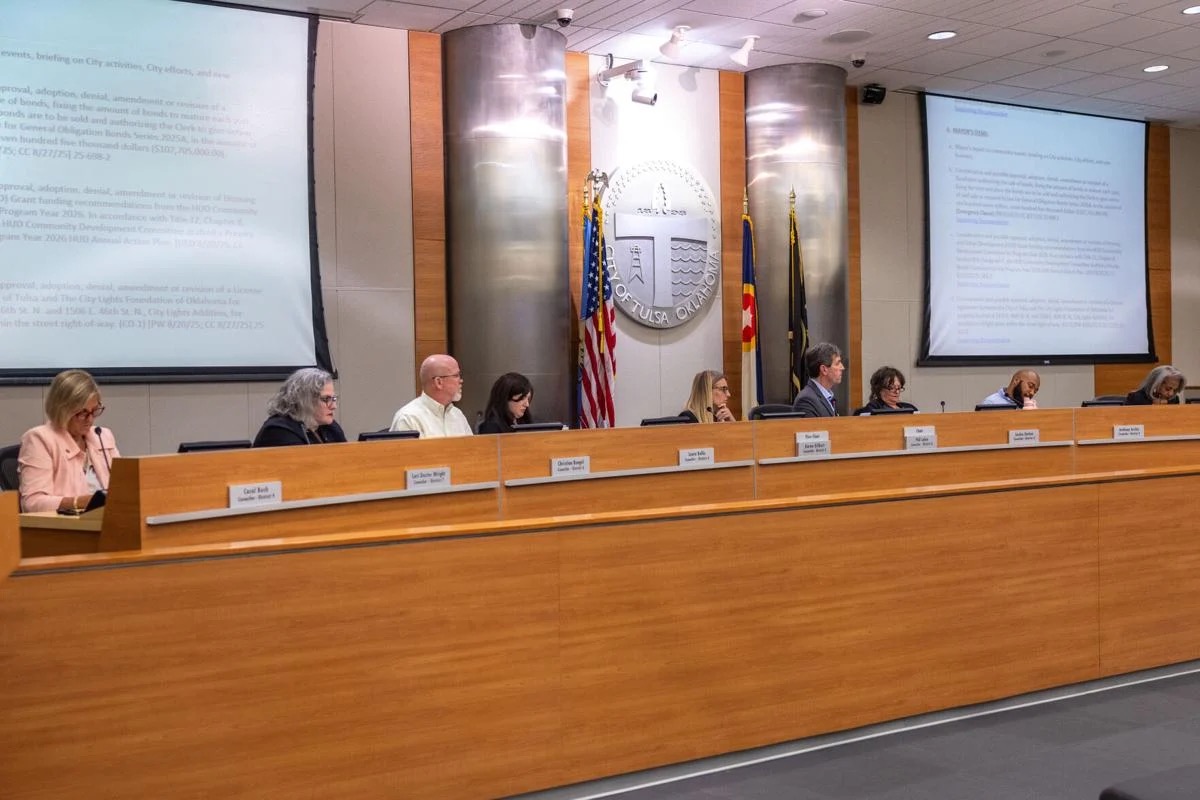
In June 2025, the Tulsa City Council took up a change to the city's human rights ordinances. It did three things.
The first was housekeeping — cleaning up gender-specific language, swapping "he" for "the contractor," adding a seat on the Human Rights Commission for the new Asian Affairs Commission, and updating the Tulsa Women's Commission's name.
The second added veterans to the city's list of protected classes.
The third took protections against discrimination based on sexual orientation and gender identity — which Tulsa already applied to housing — and extended them to public accommodations.
Its sponsors said it overrode no state or federal law and altered no employment standards. Fifteen people signed up to speak in favor at the June meeting. Nobody signed up to speak against it. Mayor Monroe Nichols said he'd sign it as soon as it reached his desk.
The council tabled it 7–2 and set a vote for September 10. Three councilors — Anthony Archie, Carol Bush and Karen Gilbert — asked for more time with the language. Some councilors also raised a worry that the federal government might pull money from Tulsa if it passed. The sponsor, Councilor Laura Bellis, disputed that.
Then Kevin Hern started calling them.
What the councilors say he said
Hern was then, and still is, Oklahoma's First District congressman, representing Tulsa. Multiple councilors told the Tulsa World in August 2025 that he had phoned them about the ordinance.
Councilor Anthony Archie described the call this way:
"He has been receiving a lot of feedback from folks at the state level and some folks at the federal level about the ordinance, and he's concerned that it may hamper his ability to bring resources back to the state of Oklahoma."
Archie was careful about what he had and hadn't been told. He said he did not come away thinking passage would mean a "one-for-one" loss of any particular federal funding source. What he came away with was this:
"But I came away with the idea that the White House was watching, and folks in the executive and the legislative branch federally were watching, and that the decisions we make here in Tulsa affects his ability to navigate his role as a representative for Oklahoma."
Councilor Karen Gilbert said Hern called her too, and put it more bluntly: "The call was to inform of concerns from the federal executive branch how our federal funding could be cut."
Councilor Carol Bush said Hern raised the same concerns she had already raised herself: "It was (about) the unintended consequences when we do things. Does this, you know, shine a light on us that maybe we don't need? Does it jeopardize federal funding?"
Council Chairman Phil Lakin declined to say whether he got a call.
Hern's office did not respond to several requests for comment from the Tulsa World.
It worked
The day before that story ran, Bellis and Councilor Lori Decter Wright abruptly halted discussion of the ordinance. In a joint statement read to their colleagues, they said "the highest levels of the current federal administration are actively spreading misinformation about the ordinance" in order to spread fear and make it fail.
"The malicious misinformation campaign undermines the hard work of many in our community who simply want to make certain Tulsa is a city that welcomes, supports, and protects everyone who calls it home, works here, or comes to visit."
Asked directly, Wright and Bellis confirmed that Hern was one of the people they were talking about.
The context made the threat legible without anyone having to spell it out. The Trump administration had been explicit about withholding money from entities running diversity programs, and within the previous month city councils in Dallas and Fort Worth had ended their cities' DEI programs to head off the loss of millions in federal funds. Tulsa's councilors did not need a specific grant named to understand the shape of the thing.
Look at where that leaves the ordinance today. Tulsa's own city government still lists the protected classes for public accommodations as "race, color, religion, ancestry, national origin, sex, age, or disability." Sexual orientation and gender identity are not among them. Neither is veteran status. A full year later, the law reads exactly as it did before.
Not his job
Hern does not represent the City of Tulsa on the City Council. He holds a seat in the U.S. House. The Tulsa World's editorial board made that point with a list, published September 7, 2025, of seven things he could have been doing instead of calling city councilors.
Number one on the list: host a town hall where the public is invited and people can ask him questions directly.
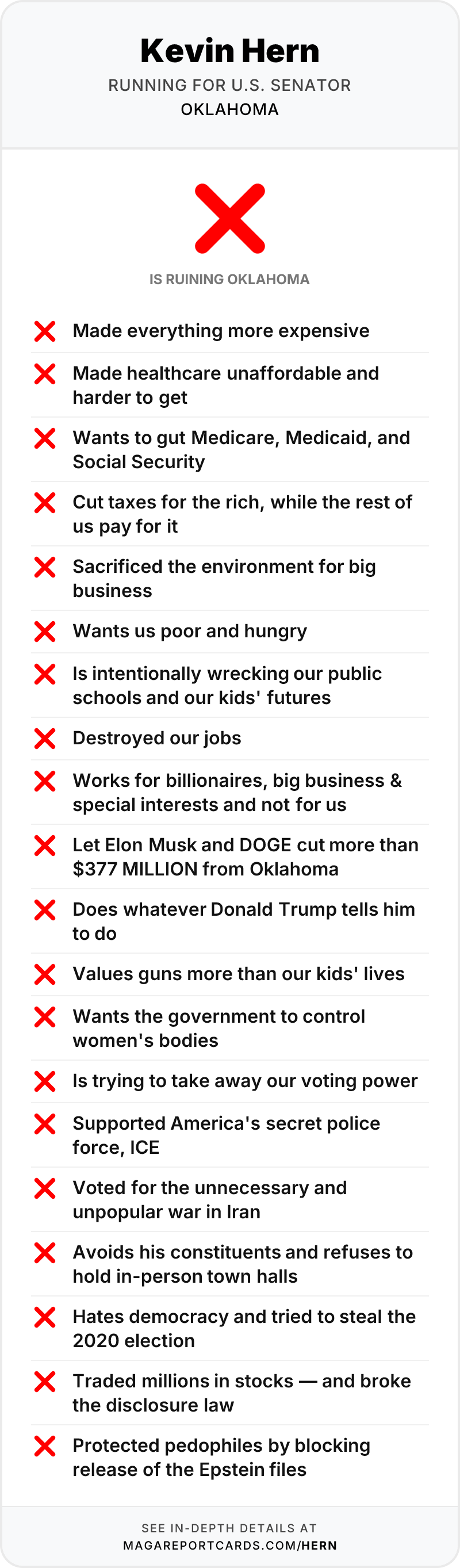
That one lands, because our own research on Hern found that the last time he is known to have taken open questions from a room of Oklahoma constituents was February 2025 — at a Chamber of Commerce meeting in Glenpool where he was pressed hard about Elon Musk and mass federal layoffs. Weeks later a public lunch with him was canceled after more than 100 activists signed up. When a Tulsa station asked all five Oklahoma House members whether they'd keep meeting constituents, two said yes and Hern didn't respond. In April 2025, constituents held a town hall for him anyway and asked their questions to an empty chair, while he was in El Salvador touring the CECOT mega-prison and promoting the trip on Newsmax.
The editorial's other suggestions included getting Ryan Walters to release federal education money still undelivered to Oklahoma schools almost two months into the fiscal year, and working to stop the clawbacks of money he and his colleagues had already voted for. It closed on the asymmetry:
"We bet Congress made a city councilor or two wince a time or three with the belief that federal decisions would hurt Tulsa. But they didn't bother representatives. They are too busy working with other leaders trying to run a city that's progressing into the future."
The same lever, used elsewhere
Threatening a smaller government's funding to make it drop a policy is not a Hern invention; it is the standard play of this era, and it usually works.
The Education Department opened a case against Ann Arbor's schools over a policy on not outing transgender students to their parents, with the district's federal funding as the enforcement mechanism. Greg Abbott threatened two Texas airports' funding over a foot-washing sink, and DFW folded the same day.
What distinguishes Hern's version is how little had to be said. He never had to name a grant. Archie's account is that no specific dollar was ever put on the table — just the information that Washington was watching, delivered by the congressman whose job is to bring Washington's money home. That was sufficient.
Hern is now running for the U.S. Senate.
What the record shows
Tulsa's City Council was set to vote on September 10, 2025, on adding veterans as a protected class and extending the city's existing LGBTQ discrimination protections from housing to public accommodations. Nobody had signed up to speak against it; fifteen people spoke for it; the mayor said he would sign it. Then Kevin Hern, the area's congressman, phoned councilors to say he was worried the ordinance could hamper his ability to bring federal resources to Oklahoma and that the White House was watching. Three councilors — Archie, Gilbert and Bush — described those calls on the record. The sponsors pulled the ordinance, naming Hern as one of the people pressuring them. Hern's office would not comment. Today, Tulsa's public accommodations ordinance still does not cover sexual orientation, gender identity or veteran status.
Sources
Hern called to raise concerns about proposed human rights ordinance, city councilors say — Kevin Canfield, Tulsa World, August 28, 2025, and Editorial: 7 things Rep. Kevin Hern could do rather than bother the Tulsa City Council — Tulsa World Editorial Board, September 7, 2025. Current protected classes verified against the City of Tulsa's own human rights page.