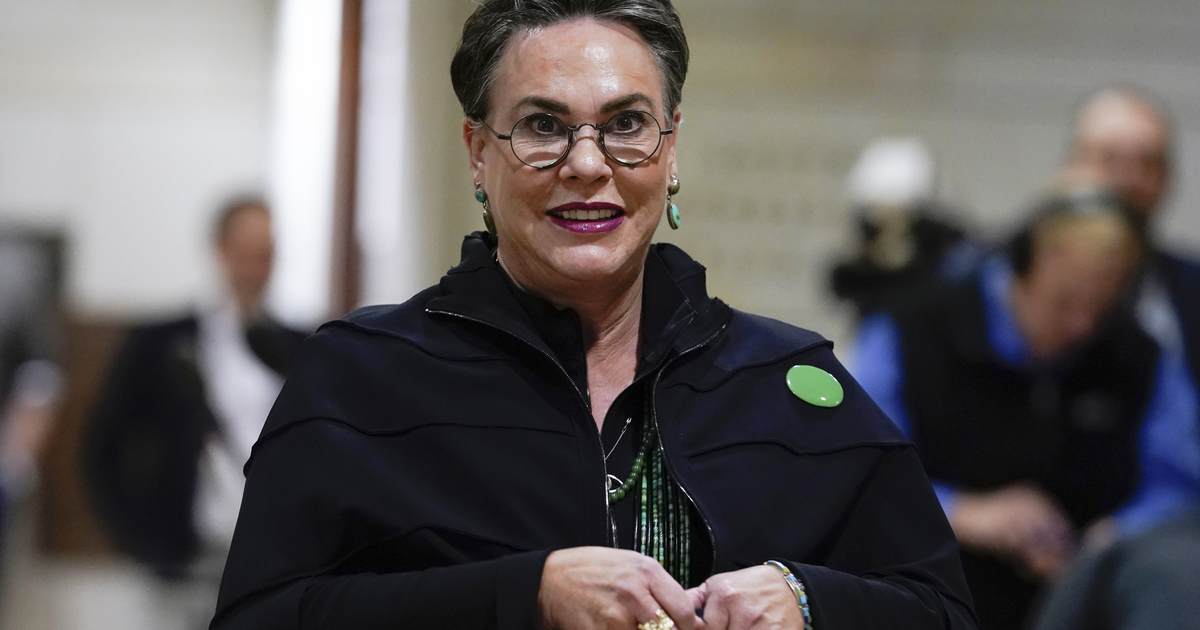
Harriet Hageman has a new bill, and she went on Townhall this week to explain it. She filed it with Sen. Ted Cruz. She calls it the Stop Climate Shakedowns Act.
What it does is simple. When a city, a county, or a state sues an oil, gas, or coal company for the damage climate change is doing to them, this bill would stop the lawsuit.
In her words:
"The purpose of my legislation, and I filed this in conjunction with Senator Ted Cruz, is to stop these lawsuits in their tracks."
She also posted it more bluntly: "Activists can't win in Congress, so they're suing their way to a tax hike on every American family. My Stop Climate Shakedowns Act ends this scheme."
What she's actually calling a "shakedown"
The lawsuit she named is Boulder's.
In 2018, the City of Boulder and Boulder County sued ExxonMobil and Suncor Energy in Colorado state court. The claims are ordinary ones — public nuisance, private nuisance, trespass, unjust enrichment. The argument is that these companies knew what their products were doing and sold them anyway, and now Boulder taxpayers are paying to deal with the results: fires, floods, drought, heat.
In May 2025, the Colorado Supreme Court ruled the case could proceed, holding that the federal Clean Air Act does not block state-law claims. In February 2026, the U.S. Supreme Court agreed to hear it — its first real confrontation with climate damage litigation.
That is what Hageman is calling a shakedown: a local government going to court and asking a jury to decide who pays for the damage.
Boulder isn't alone. Communities and states across the country have filed similar suits, and some have passed climate superfund laws — the same legal idea we've used for decades to make chemical companies pay to clean up the toxic waste they left behind.
Hageman describes those laws this way:
"They've either adopted superfund laws claiming that producing energy has caused climate change and so those energy producers should be responsible for paying billions upon billions upon billions of dollars in fines, and then on the other hand, they're just flat-out suing."
Yes. That's what it is. Somebody made a mess, and the people living in it are asking a court to make them pay for it. That is not a scheme. That is what courts are for.
Who this bill is for
Hageman's argument is that the real victims here are consumers, because if these suits succeed, "the cost of everything" will "absolutely skyrocket."
Set aside whether that's true. Look at who is actually protected by the bill: oil and gas companies, coal companies, and mineral producers. She names them herself. Those are the defendants. Those are the parties whose legal exposure disappears the day this becomes law.
And those are also the people paying for her campaign.
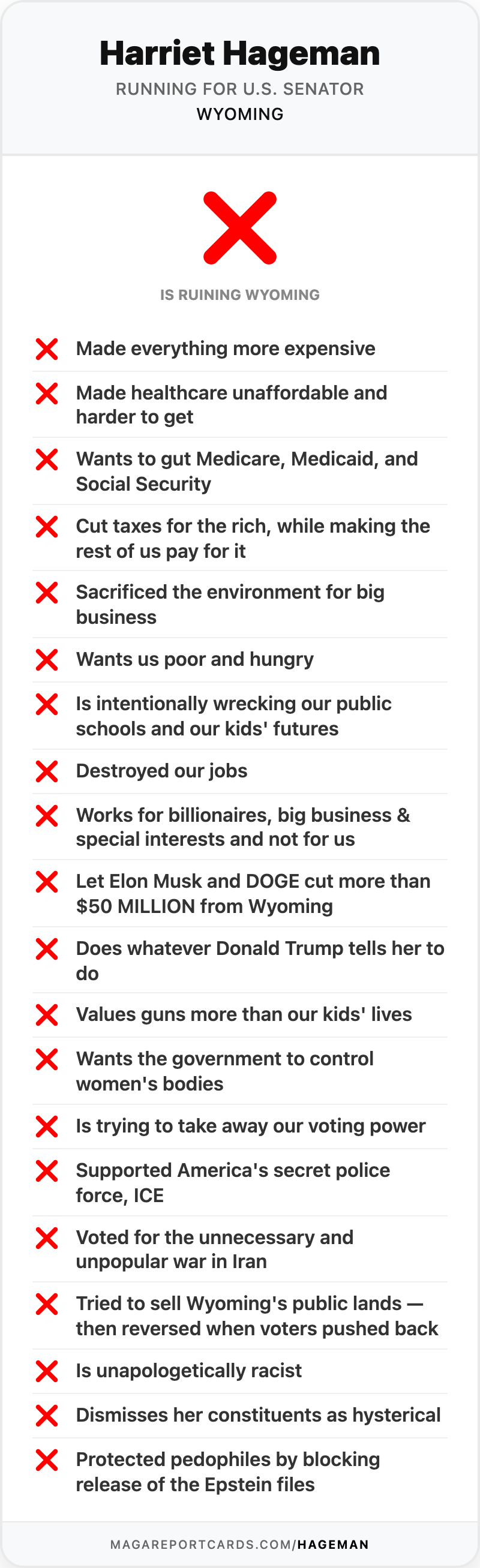
Wyoming is the largest coal-producing state in the country. Hageman sits on the House Natural Resources Committee and chairs its Water, Wildlife and Fisheries Subcommittee — she oversees the very resources at issue. Her top donors include HF Sinclair, Koch Inc., and other energy interests. You can see the same picture at Who Bought My Rep.
A member of Congress whose donors are fossil fuel companies has introduced a bill whose only effect is to make fossil fuel companies immune from a specific category of lawsuit. That's not a conspiracy theory. That's a summary.
The "let Congress decide" problem
The core of Hageman's argument is that climate policy belongs in Congress, not the courts. Activists "cannot get" cap and trade or a carbon tax through Congress or state legislatures, she says, so they're going to court instead.
There's a hole in that.
Hageman has a 0% score from the League of Conservation Voters in 2025, and a 1% lifetime score. She is one of the members making sure Congress never acts. You cannot spend your career blocking every legislative answer and then argue that the courts must stay out because the legislature is the proper venue.
That isn't a principle about separation of powers. It's a strategy for making sure there is no venue at all.
This is the pattern with her and Wyoming's land
Hageman's instinct on natural resources has gotten her in trouble at home before. In 2025 she supported a provision in Trump's budget bill requiring the sale of federal public lands across 11 Western states, including land Wyomingites have hunted, fished, and grazed on for generations. She defended it at a town hall, then withdrew her support after voters came at her over it — while still saying she favors selling federal land.
That's the same reflex as this bill. When Wyoming's land and Wyoming's industries are on opposite sides, she picks the industries.
If a Wyoming town someday needs to make an energy company pay for damage it caused, Hageman's bill is designed to make sure that town can't.
The bottom line
Hageman frames this as protecting families from a hidden tax. What the bill actually does is take away one of the only tools ordinary communities have left — going to court — and hand permanent legal cover to the industry funding her campaign.
She says she wants to stop these lawsuits in their tracks. She's being honest about that. The question for Wyoming is who benefits when the tracks are empty.
Source
Amy Curtis, "Rep. Harriet Hageman Talks About Her 'Stop Climate Shakedowns Act' to End Activist Lawsuits", Townhall, July 31, 2026. Photo: Mariam Zuhaib / AP.