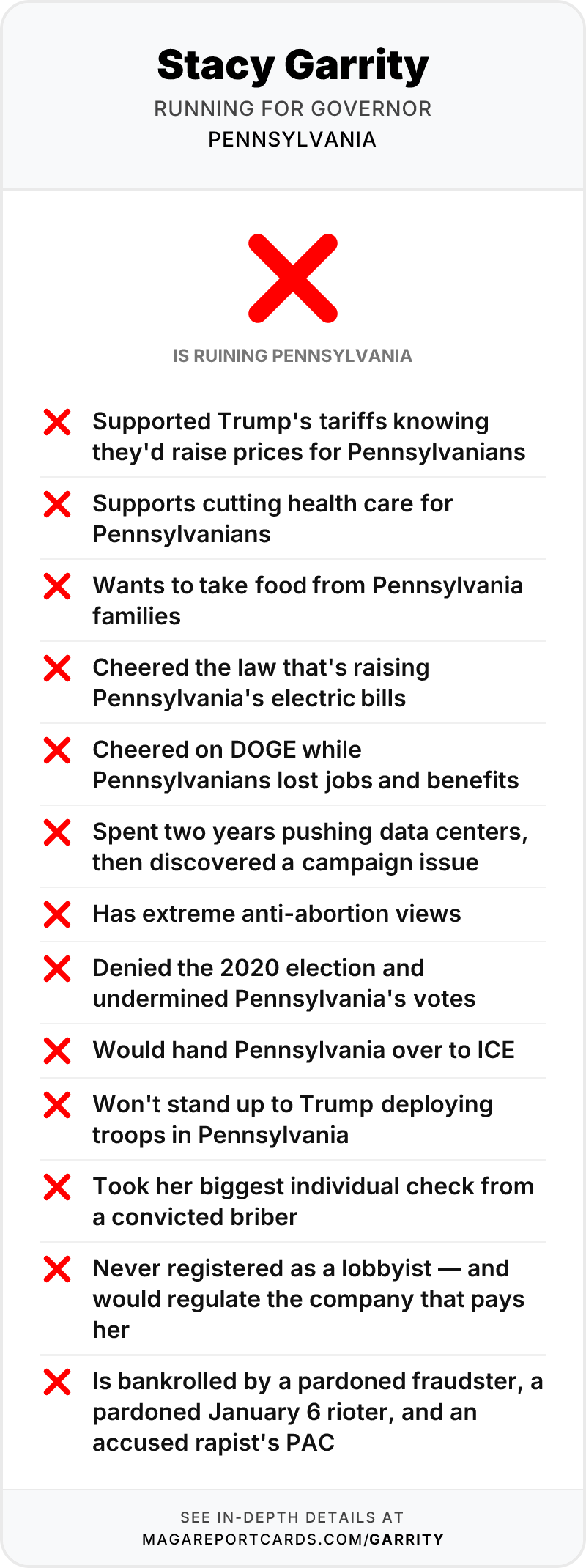
Start with the fact that isn't in dispute.
On February 7, 2023, a Pennsylvania Commonwealth Court judge ruled that the state's school funding system violates the state constitution. Judge Renée Cohn Jubelirer wrote:
"Students who reside in school districts with low property values and incomes are deprived of the same opportunities and resources as students who reside in school districts with high property values and incomes."
Pennsylvania has some of the widest spending gaps between rich and poor districts in the country. Studies presented at trial estimated the state would need an additional $4.6 billion a year to give every student an adequate education. Legislative leaders didn't appeal. The ruling is final.
That is the starting condition for anyone running for governor of Pennsylvania. Here is how Stacy Garrity describes the increases the state has made since.
"Nothing to show for it"
Garrity has criticized Shapiro for significantly increasing spending on public education "with nothing to show for it." Those increases are how lawmakers are answering the court: they are routing additional dollars to the schools they've identified as unable to adequately educate students with their current resources.
That's a striking thing to say about money a court ordered the state to spend because it had been shortchanging poor districts for decades. The increases aren't a fad program someone dreamed up. They're the remedy for a constitutional violation identified in 2023 — and no school funding remedy shows up in graduation rates in two or three years.
Her framing is that spending more on public schools has been tried and failed. Pennsylvania's own courts found the opposite: that it had never been tried at all in the districts that needed it.
What she'd do instead
Garrity's actual education plan is a set of ways to route public money to private schools.
The federal tax credit. Trump's 2025 tax law created a program letting individuals claim tax credits of up to $1,700 for donating to nonprofits that award private school scholarships. States have to opt in. Asked on a December radio appearance whether Pennsylvania should join, Garrity answered:
"I would a hundred percent."
Gov. Shapiro has not opted in, saying he's waiting on federal guidance about how it would work.
Lifeline Scholarships. Garrity supports passing the program — Pennsylvania's voucher proposal, also called PASS — which Shapiro vetoed out of the 2023–24 budget. She also wants to expand the state's existing Education Improvement Tax Credit and Opportunity Scholarship Tax Credit programs.
The framing. At a January Press Club event she put it this way: "parents, not bureaucrats, make the best decisions for their child's future." Her campaign says Pennsylvania "should absolutely support strong public schools, but families must also have meaningful choices, including charter schools, cyber charters, private schools, and scholarship opportunities."
Notice that "should absolutely support strong public schools" is the only sentence in there with no policy attached to it. Everything with a mechanism — a tax credit, a scholarship, an opt-in — points somewhere other than the public school down the street.
Where the money would actually come from
Here's the arithmetic Pennsylvania has to face.
Studies presented at trial estimated the state needs roughly $4.6 billion more per year to fund its public schools adequately. Every dollar diverted into a tax credit for private school donations is a dollar not available for that.
And the students who'd be left behind aren't randomly distributed. When the ruling came down, Chalkbeat reported that sending all state education aid through the fair funding formula weighted to student need could mean nearly $1 billion more for Philadelphia alone. Those are the districts with low property values — the ones with no ability to make up a shortfall locally, and the ones with the fewest private schools nearby for a voucher to be worth anything.
A voucher is only useful if there's a private seat to spend it on and a way to get your kid there. In much of rural Pennsylvania, and in the poorest urban districts, there often isn't. What there is, everywhere, is the public school — which loses funding either way.
Vouchers have a track record
We've watched this run in other states. Research on places that have already tried it finds vouchers mostly fund students who were already attending private school, with wealthy families "overwhelmingly the recipients" — while draining the public schools most kids rely on.
Idaho is a live example. Gov. Brad Little signed a $50 million private-school tax credit in 2025 two days after admitting on the record that it lacked accountability, in a state that already spends less per student than anywhere in America. A year later Idaho cut higher education, raised tuition, and flat-funded K-12.
Pennsylvania would be doing it from a worse starting point: under an active court finding that its public schools are unconstitutionally underfunded.
The question worth asking
Garrity is entitled to believe in school choice. Plenty of people do.
But "nothing to show for it" is not an argument about school choice. It's a claim about whether the court-ordered money is working — made two years into a remedy for a decades-old problem, by a candidate whose alternative is to send some of that money somewhere else.
A court told Pennsylvania it was failing its poorest students. Stacy Garrity's answer is to call the fix a waste and route the money to private schools. We deserve better.
Sources
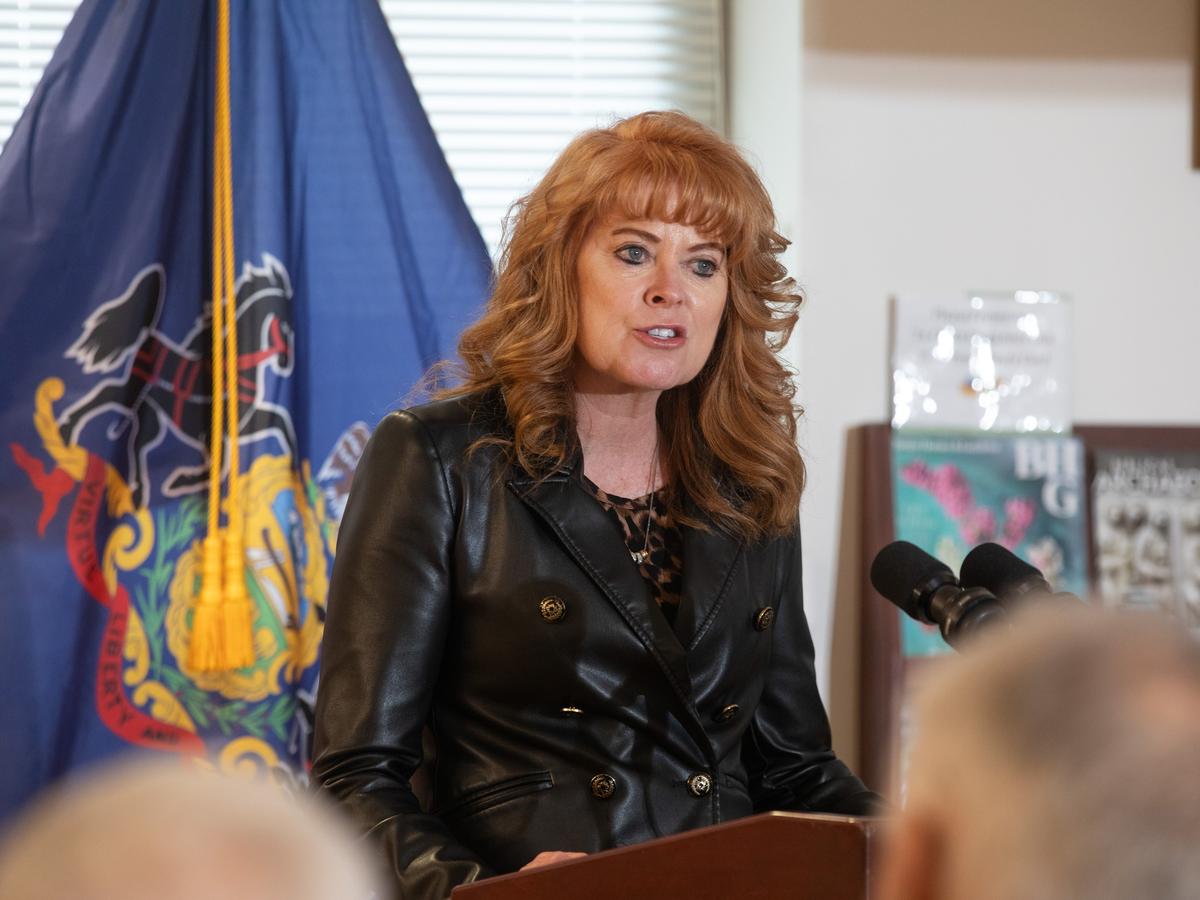
- Pa. primary election 2026: Your complete guide to Republican Stacy Garrity in the race for governor — Katie Meyer, Spotlight PA, April 9, 2026. Photo: Commonwealth Media Services, via Spotlight PA.
- Pennsylvania's school funding system violates state constitution, judge rules — Dale Mezzacappa, Chalkbeat Philadelphia, February 7, 2023