In May 2025, a deputy at the Johnson County Sheriff's Office in Texas ran a search across a national network of more than 80,000 license plate cameras to find a woman. She was not wanted for a crime. She had taken an abortion pill.
The person who wanted her found was her abusive partner.
On September 2, 2026, 404 Media's Jason Koebler reported what the sheriff's own records say about that search — documents obtained by journalist Cameron Probert of the Tri-City Herald and shared with 404 Media. Two things in them are worth sitting with.
The deputies knew there was nothing to charge her with
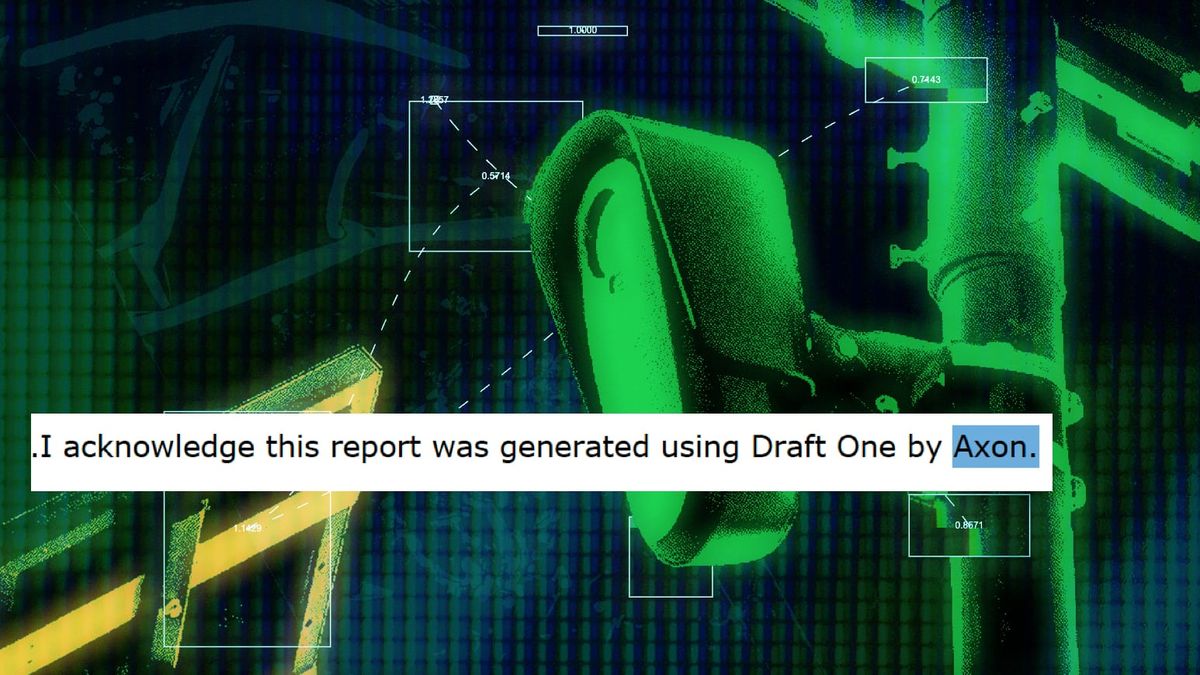
The incident report was written in part by an artificial intelligence tool — Axon's Draft One, which generates police narratives from body camera audio. Sergeant Damien Bethel used it. Here is what the machine wrote about that day's conversation:
Deputies discussed the legal implications of the situation, noting that while the girlfriend self-administered the abortion pill, there were no criminal charges applicable under current Texas law.
So the same case file contains both a nationwide camera search for her and the deputies' own conclusion that she had broken no law. The passage saying so was drafted by software.
That is the part that should stop you. A search of 80,000 cameras is a serious use of state power. Part of the document recording it was produced by a tool that turns audio into prose, and the prose it produced contains the admission that no law had been broken.
Flock's CEO told police customers a different story
Flock Safety is the company that runs the camera network. Its chief executive, Garrett Langley, has repeatedly told the story a different way. In leaked audio of him briefing the company's law enforcement customers — obtained by 404 Media, recorded by Signal Akron — he said the woman "was in an abusive relationship and the family was concerned that she was in danger."
That reframes everything. A worried family looking for a woman in danger is a sympathetic reason to search. It is also not what happened.
The police records contain no mention of a concerned family. The request came from her abusive partner. The company's CEO described a search initiated by the abuser as one initiated by relatives worried about the abuse.
Flock's police customers heard the version with the concerned family in it.
Why the camera network matters more than the one case
The point of a system like this is that a local deputy can query cameras far outside his jurisdiction. One officer in one Texas county reached 80,000 cameras nationwide.
Now put an abortion ban next to it. Eighteen states ban abortion at six weeks of pregnancy or earlier, and Idaho makes it a crime — two to five years in prison — for an adult to transport a pregnant minor toward an abortion her parents do not know about, with no defense that the abortion itself happens in a state where it is legal. In 2025, an estimated 142,000 people crossed a state line for abortion care. The infrastructure to track a car's movements across the country already exists, is privately operated, is sold to any department that can pay, and — on the evidence of this case — gets used on a woman nobody could lawfully charge, at the request of the man abusing her.
This particular search happened in a state where, as the deputies themselves worked out, taking the pill is not a chargeable offense. The system does not check that first. The deputy does, afterward, in a report an AI helps write.
Texas has been buying this quietly
Texans have been paying for these cameras without being asked. A board appointed by Greg Abbott turned a $1 fee on every car insurance policy into at least $30 million of Flock cameras — money collected to fight catalytic converter theft, spent on a network that logs where people drive. Abbott shut the program off the night before the Texas Tribune published the story.
Shutting off one funding stream does not delete the cameras, the searches already run, or the records of where people went.
What the record shows
In May 2025, a Johnson County, Texas deputy searched more than 80,000 license plate cameras nationwide for a woman who had taken an abortion pill, at the request of her abusive partner. The incident report — written in part by Axon's Draft One AI — records that deputies had determined no Texas law made her chargeable. Flock Safety's chief executive later told the company's police customers that the woman's family had asked for the search out of concern for her safety. The sheriff's records mention no family at all.
Source
Jason Koebler, "Texas Police Used AI to Write Report About Using Flock to Search for Woman Who Had Abortion," 404 Media, September 2, 2026. Records obtained by Cameron Probert of the Tri-City Herald.