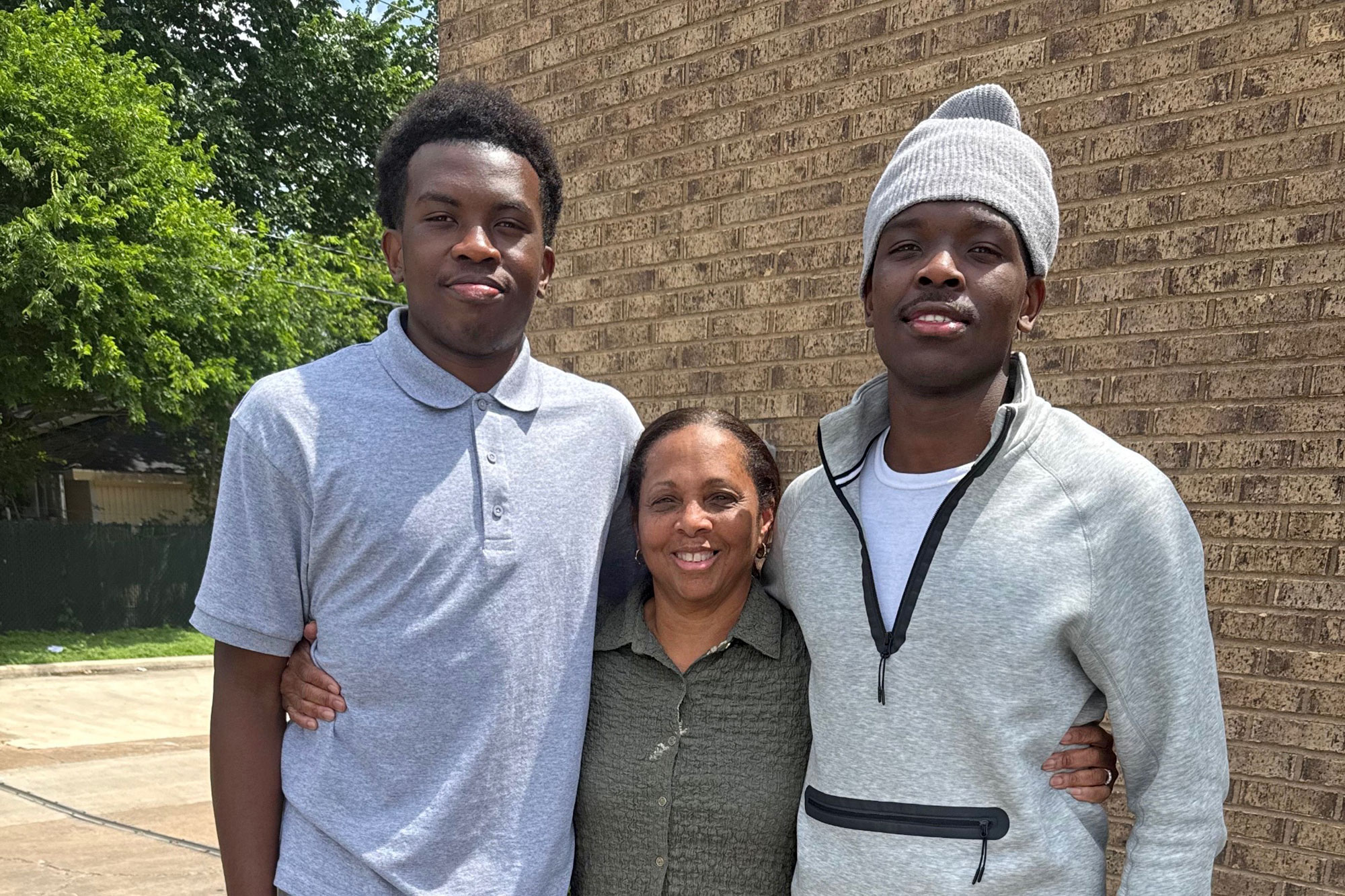
On the morning of April 21, 2026, Israel Makoka, 18, and his little brother Max, 15, were standing outside their house in Diamondhead, Mississippi, waiting for the bus to Hancock High School.
Their host father, Cliff Baptiste, noticed an unfamiliar car sitting nearby. Then the school bus pulled up — and so did ten unmarked cars. ICE agents surrounded the boys and zip-tied them both.
Israel was a month away from graduating. He had a college basketball scholarship commitment. Max played beside him on the Hancock High varsity team. They had come to the United States legally from the Republic of the Congo on F-1 student visas, in 2023 and 2024.
They spent just over a week in immigration detention in two different states before Mississippi's two U.S. senators got them out.
Their own congressman — the man who represents Diamondhead, and who was a cop for four decades before he got to Washington — put out a statement saying his office was watching.
What Mike Ezell said
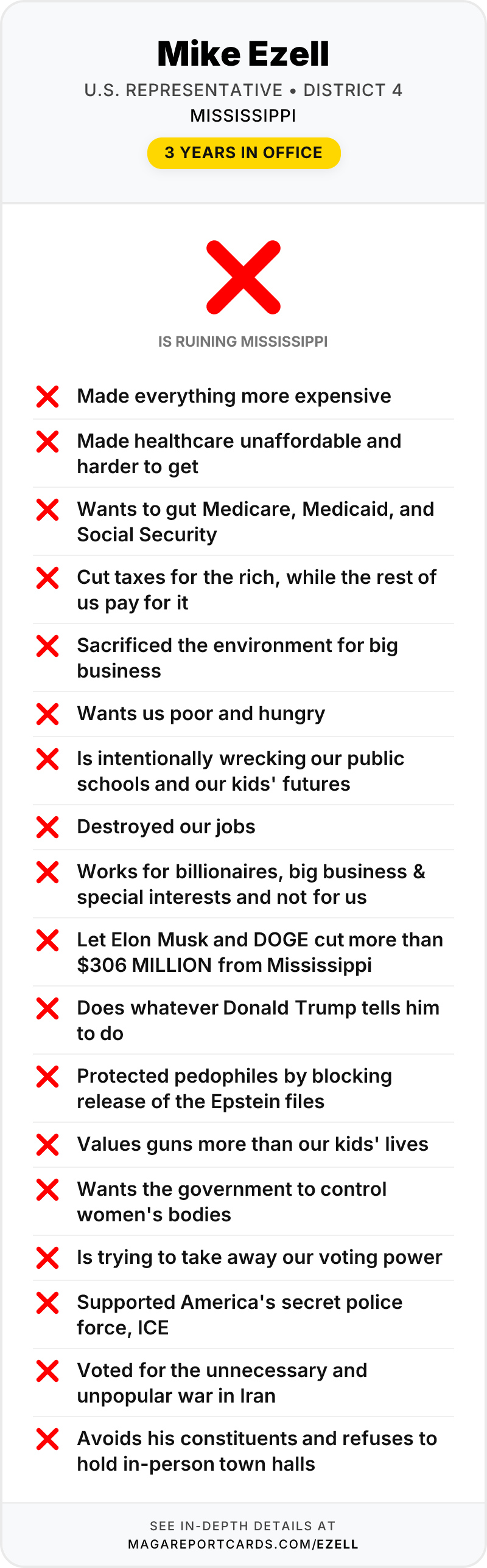
Mike Ezell represents Mississippi's 4th District, which includes Hancock County. His own official biography describes "a career law enforcement officer for more than forty years, most recently serving as Sheriff of Jackson County." His whole political identity is built on being the guy who knows how law enforcement works.
Here is what he had to say while two of his constituents' kids sat in ICE custody. As WLOX reported, Ezell said his
"office is closely monitoring the situation and remains in contact with the appropriate agencies to better understand the circumstances."
That's it. Monitoring. Contacting. Trying to better understand the circumstances — as if the circumstances were unclear. Ten unmarked cars had surrounded two teenagers at a school bus stop in his district. There was nothing to understand.
What actually got them out
Senators Cindy Hyde-Smith and Roger Wicker did the work. The Mississippi Free Press, which broke the story, put it plainly: it was their intervention "which led to the sudden release" of Israel from the Central Louisiana ICE Processing Center in Jena, Louisiana, and Max from a group home in Houston, Texas.
Host mother Gail Baptiste said Hyde-Smith's office connected the family with pro bono lawyers and stayed on it from the start.
"They have been great. They've been involved from the beginning. They got the ball rolling."
Ezell, per the same reporting, was among the Mississippi politicians who "responded to the story of the Makoka brothers ... privately and on social media." Responding on social media is not the same thing as picking up the phone.
What the boys went through while he monitored
Israel later described the week to the Mississippi Free Press. He was chained at the ankles, wrists and belly for close to seven hours during transport. "I thought I was having a mental breakdown," he said. He spent 48 hours in a processing cell with 25 other people and one exposed toilet, with no way to shower.
An agent handed him paperwork to sign away his case. His account of the pitch:
"You sign that paper, you're gonna get deported, and you will get some money."
He refused and demanded a hearing.
Max, who is 15, was shipped to a shelter for unaccompanied children — despite having legal guardians in Mississippi. Their immigration lawyer, Amy Maldonado, pointed out how backwards that is: "The legal definition of an unaccompanied alien child is one without a parent or legal guardian in the U.S."
The paperwork trap
The reason ICE gave was a school transfer.
The brothers had moved from Piney Woods Country Life School, a private school in Rankin County, to Hancock High, a public school about three hours south. That transfer knocked them out of visa status. DHS told the Mississippi Free Press they "violated their student visas by failing to attend classes at Piney Woods School" and were therefore "subject to removal."
Nobody told the family. Nobody told the boys. Maldonado's summary:
"But they were underage, they were not advised that they were gonna be violating status. This is completely inadvertent."
Israel was under 18 for nearly the entire period he was out of status. He turned 18 a few weeks before ICE showed up.
This is what immigration enforcement has actually become: not "the worst of the worst," but two high school basketball players who got caught in a paperwork problem nobody warned them about. It fits a pattern we've written about before: ProPublica found the Trump administration is detaining and removing unaccompanied minors at about three times the rate of his last term, and that the vast majority of those removed last year had no criminal history at all.
He isn't quiet when ICE is the one under fire
Ezell's "monitoring" posture is not how he talks about ICE in general. It's how he talks about ICE when ICE is the problem.
Three months before the Makoka arrests, an ICE agent in Minneapolis shot and killed Renee Good, a 37-year-old American citizen and a mother of three, in her car. State and local officials strongly disputed the administration's claim that the agent was defending himself.
Ezell had plenty to say about that one. On January 8, 2026 — the day after she was killed — he put out a full statement blaming the dead woman:
"The incident in Minneapolis was entirely preventable. Unfortunately, the reckless and unlawful actions of Renee Good left U.S. ICE agents with no choice but to defend themselves and the officers supporting them."
He went on for five more paragraphs. He lectured Americans about the First Amendment. He closed with: "It's time we stop blaming law enforcement for doing their duty. They are not thugs or nazi's."
So we know he can write a statement. We know he can pick a side fast, with confidence, without waiting to "better understand the circumstances." He did it the day after a killing in a city half a country away, on behalf of the agency.
When the agency zip-tied two kids at a bus stop in his own district, the confidence evaporated.
Diamondhead noticed
The community did not need a press release to know what to do. More than 3,100 people — mostly Mississippi Gulf Coast residents — signed a petition demanding the brothers' release. Students held a ceremony for Israel on the day he was supposed to receive his cap and gown. Hancock High's head basketball coach, Conner Entrekin, said the brothers had "done nothing but make this community, this school, and this team much, much better since they've arrived."
Teenagers in Hancock County did more for the Makoka brothers than the congressman they'll be old enough to vote against.
And the case isn't over. Release from detention doesn't restore the boys' status or stop the deportation case. Maldonado is filing to reinstate their student status at a different school, because they can't go back to Hancock.
The job he isn't doing
Casework like this — a constituent tangled in a federal agency — is one of the few things a member of Congress can actually do on his own, without a floor vote or a committee gavel. Two senators picked up the phone and it worked in just over a week.
Ezell has not held an in-person town hall since two stops in a single week in September 2023 — one at the Lucedale Public Library in George County, the other hosted by Americans for Prosperity. His most recent town hall of any kind was a telephone town hall in July 2025. So there is no room in Mississippi's 4th District where a parent can stand up and ask him why he monitored while somebody else made the calls.
He built a career on the badge. When federal agents came for two kids in his district, he sided with the badge by saying almost nothing at all.
Source
Makoka Brothers Free With Help From Senators After ICE Arrests — Nick Judin, Mississippi Free Press, April 30, 2026. Photo courtesy Baptiste Family / Mississippi Free Press.