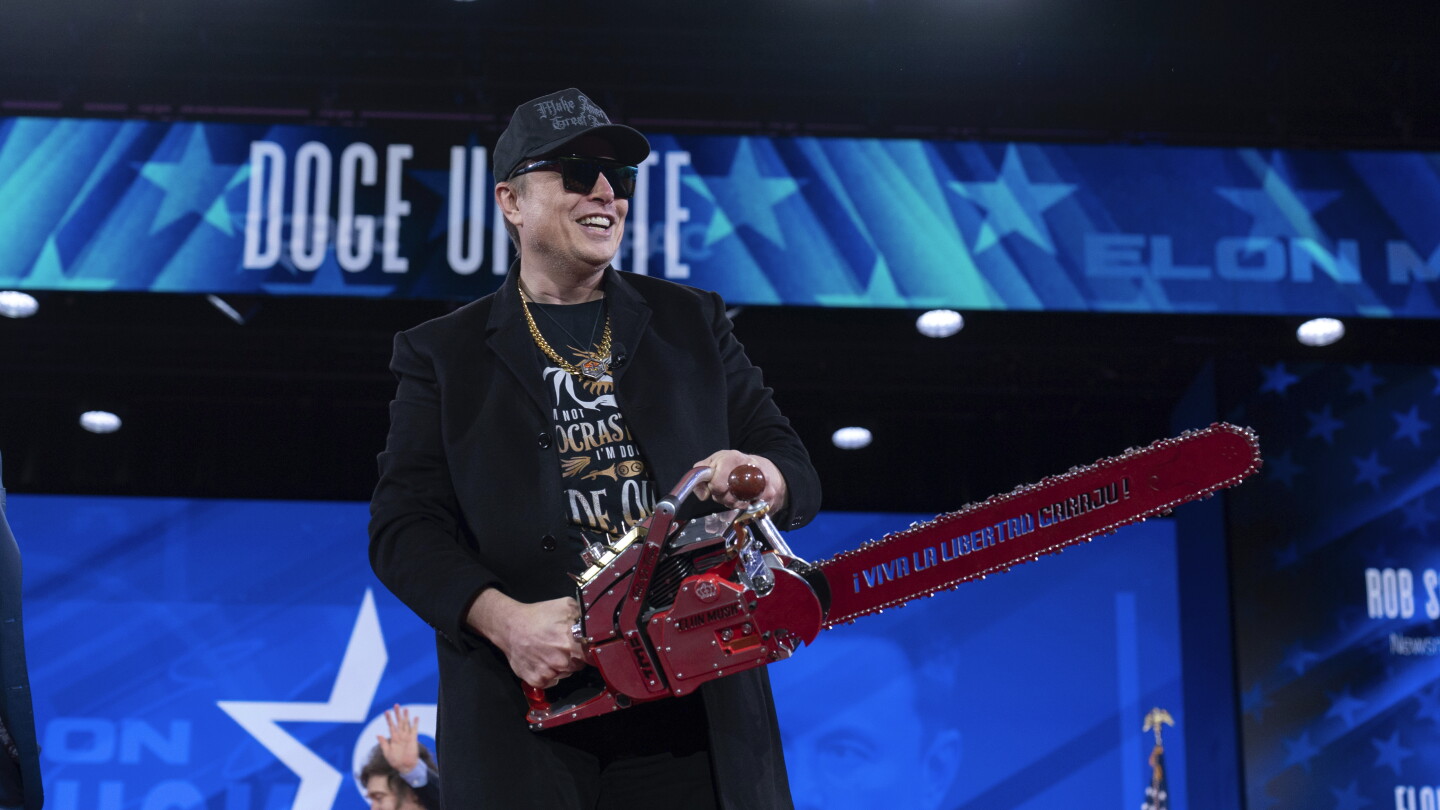
DOGE was sold as a war on government waste. At the National Institutes of Health, the government's own paperwork says it produced the kind of deal it was supposed to stop: a no-bid contract extension.
The Washington Sun reported on October 17 that NIH gave a research contractor a two-year, $20 million extension without opening it to bids. In the document justifying that decision, NIH blames DOGE.
What happened
In June 2016, NIH hired a Maryland company, Social & Scientific Systems, under a 10-year contract worth up to $112 million. The company supports health studies run by the National Institute of Environmental Health Sciences — research into how the things around us affect our health. Those studies follow people for years.
The contract was set to run out on June 29, 2026. The plan was to hold an open competition for the next one, so other companies could bid and the government could get the best price.
That plan fell apart. Here is how NIH explained it in its official justification for skipping competition:
"Although planning for the recompete was underway in calendar year 2025, Executive Order 14158 of January 20, 2025 Establishing and Implementing the President's 'Department of Government Efficiency' caused unforeseen circumstances beyond the control of the acquisition office causing significant delays to the acquisition process."
Executive Order 14158 is the order Trump signed on his first day back in office to create DOGE.
The document goes on: "Between 2025 and 2026, several delays occurred due to staffing changes, organizational transition and other internal realignments." Those changes to the contracting office, it says, "impacted the ability to continue efforts to recompete and issue a new contract award by the time that the subject contract ends."
In other words, the office whose job was to run the competition got reshuffled in the middle of the job, and the competition never got off the ground.
What it cost
Because there was no new contract ready, NIH extended the old one by two years, through June 2028, and raised its ceiling from $112 million to $132 million. That's room for up to $20 million more, to the same company, with no competition. NIH's own estimate is that the reissued work will cost $16.8 million, with the other $3.2 million held for follow-on studies.
And the work NIH had already done is now wasted. "All efforts made to recompete are out of date and need to be updated and resubmitted for reviews," the document says. "The current recompetition has not yet begun."
NIH also says that switching to a new company now would cost about $9 million in transition costs and put the studies at risk — including "potential loss of participants" and damage to years of collected data. That's the trap of a long-running study: once you're deep in, swapping contractors is expensive and risky, which is why the planned competition mattered. Now it is pushed back by at least two years.
To be fair to the paperwork: NIH did post a public notice before the extension, and no other company came forward by the March 4, 2026 deadline to say it could take over. But that is exactly the point of planning a competition years ahead — and it's the planning DOGE broke.
NIH did not respond to the Washington Sun's request for comment.
DOGE's track record
This is one contract. It fits a pattern we keep finding.
The Government Accountability Office reported that DOGE couldn't show its work on 96% of its grant savings. DOGE expired with no report and no proven savings. And the environmental health institute behind this contract is based in North Carolina's Research Triangle, home to a congressional district that was the hardest hit in the country by DOGE's cuts.
The promise was that cutting staff would save money. Here, cutting and scrambling the staff who run competitions produced a no-bid deal, two more years without competition, and a contract ceiling $20 million higher.
The bottom line
NIH planned to put a $112 million health research contract up for open bidding when it expired in June 2026. Its own justification says Trump's DOGE order caused delays and staffing changes that stalled the competition, so it gave the same company a two-year extension and $20 million more room under its ceiling, without a bid. Its earlier work on a competition is out of date, and a new one "has not yet begun."
Source
The Washington Sun: Health Officials: DOGE Disruptions Upended $112 Million Epidemiology Contract


