Here is a number the U.S. Attorney's office put in writing. According to the San Diego County Medical Examiner's Office, fentanyl-related overdose deaths in San Diego County rose 2,375 percent — from 33 in 2016 to at least 817 in 2021. Federal prosecutors called San Diego "a national epicenter for fentanyl trafficking."
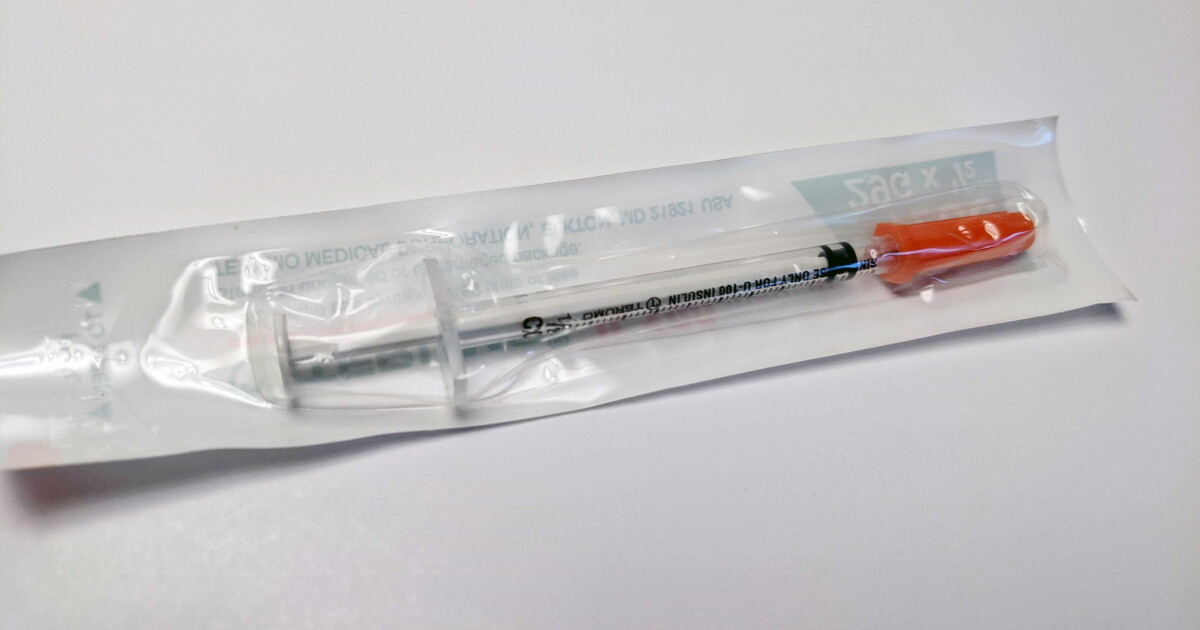
In January 2021, in the middle of that, the San Diego County Board of Supervisors voted on whether to build a harm reduction program — syringe services, overdose prevention, and slowing the spread of infectious disease — overturning a county ban that had stood since 1997.
It passed 3–2. Jim Desmond voted no.
What he said
Desmond's stated reasoning, at the time:
"I see that needle exchange (would) promote health among those who are using, but I think we're kind of treating the symptom instead of the cause."
And, as reporters summarized it, that giving out needles still had the appearance of promoting drug abuse.
Two years later, his supervisor's office posted a page titled "Stop Syringe Services Program", written in his voice, urging North County residents to help kill the county's plan. It says: "I was one of the dissenting votes, primarily because I don't believe enabling drug use will get people the help they need." And: "By providing drug paraphernalia, in large part to homeless individuals, we are essentially enabling and normalizing dangerous drug use, exacerbating addiction issues, and potentially putting our community at an increased risk."
Notice the word in that account of his reasoning: appearance. Not evidence. Not outcomes. How it looks.
The evidence says the opposite
This isn't a close scientific question, and it hasn't been for a long time. The CDC's own guidance on syringe services programs answers every objection Desmond raised, in order.
Do they help people stop using drugs? The CDC's answer is one word — "Yes":
"When people who inject drugs (PWID) use an SSP, they are more likely to enter treatment for substance use disorder and stop injecting than those who don't use an SSP. New users of SSPs are five times as likely to enter drug treatment as those who don't use the programs."
Regular participants are "nearly three times as likely to report a reduction in injection frequency" than people who've never used one.
Do they lead to more crime and drug use? The CDC's answer is again one word — "No":
"SSPs do not cause or increase illegal drug use. They do not cause or increase crime."
Do they leave needles lying around in public? "No. Studies show that SSPs protect the public and first responders by providing safe needle disposal and reducing the presence of needles in the community."
Are they cost effective? Yes — the CDC notes that the lifetime cost of treating one person living with HIV is more than $450,000, and that U.S. hospitalizations for substance-use-related infections cost over $700 million a year.
(The CDC's syringe services pages are no longer live on cdc.gov; the quotes above are from the archived agency page, last updated February 8, 2024.)
Federal health officials say the same thing on HIV.gov: participants are "five times more likely to enter drug treatment and three times more likely to stop injecting drugs," and the programs are associated with roughly a 50% reduction in HIV and hepatitis C transmission.
The part that answers his own objection
Desmond said the program treats "the symptom instead of the cause," and that he'd "like to see an emphasis on prevention." On his site, he says the real answers are "rehabilitation, mental health support, and affordable housing."
Those are good things. Nobody disagrees.
But the whole point of a syringe services program is that it's the door people walk through to get to them. Read what the CDC says these programs actually do besides hand out syringes:
- referral to substance use disorder treatment programs
- screening, care, and treatment for hepatitis and HIV
- education about overdose prevention
- vaccinations, STD screening, wound care
- naloxone distribution and training
- referral to social, mental health, and other medical services
That is the "emphasis on prevention" Desmond said he wanted. It was in the program he voted against.
And here's the strangest part. His own office's page lists exactly what the county program would distribute — and the list it prints, as a reason to oppose it, includes:
- Naloxone
- Fentanyl test strips
- sterile syringes and sharps disposal containers
- wound care supplies
- educational information on HIV, STD, and hepatitis prevention
Naloxone reverses an overdose in progress. Fentanyl test strips tell someone their drugs are laced before they take them. Those are the two items on that list that literally keep people breathing, and they were printed on a page asking residents to help stop the program.
Naloxone matters most of all here. San Diego wasn't facing a slow-moving heroin problem in 2021 — it was facing fentanyl, where the gap between a normal dose and a fatal one is measured in specks. The single most effective thing anyone can do about that is put naloxone in the hands of the people most likely to be standing next to someone who stops breathing.
Who "the appearance" was for
Desmond's objection, as it was reported at the time, was about appearances. That's worth sitting with, because appearances have a constituency and overdose victims mostly don't.
Voting no cost him nothing politically. The program passed anyway, so nobody in North County had to live with the consequences of his vote. He got the position without the price.
The people who did pay a price were the ones counted in the medical examiner's data — at least 817 of them in 2021 alone.
He's asking for a bigger job
Desmond is termed out as supervisor and is now the Republican candidate in California's 48th Congressional District, facing Democrat Marni von Wilpert in November.
Federal money is what funds naloxone distribution, treatment beds, and public health infrastructure across the country. A member of Congress votes on all of it. Desmond's record on this issue is a vote against the county's own evidence-based program, and a page on his official site urging people to help stop it.
A 2,375% increase in fentanyl deaths is not a symptom you get to wait out. Jim Desmond had the CDC's evidence in front of him and voted on how it looked instead. We deserve better.
Sources
- San Diego County Supervisors Overturn Ban On Needle Exchange Program — KPBS, January 26, 2021. Photo: KPBS.
- FAQs for Syringe Services Programs — CDC (archived copy), last updated February 8, 2024
- Fentanyl Seizures at Border Continue to Spike — U.S. Attorney's Office, Southern District of California, August 11, 2022