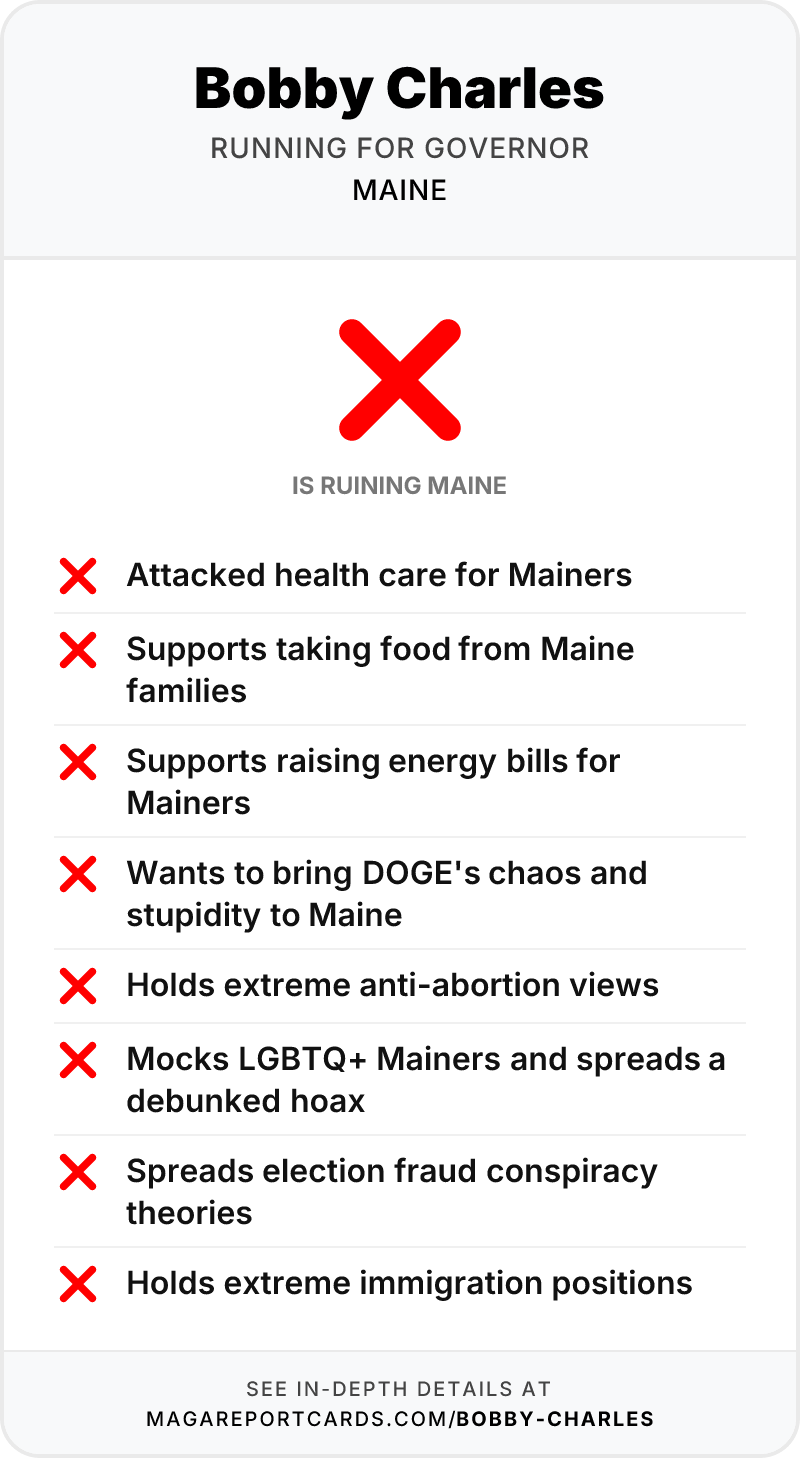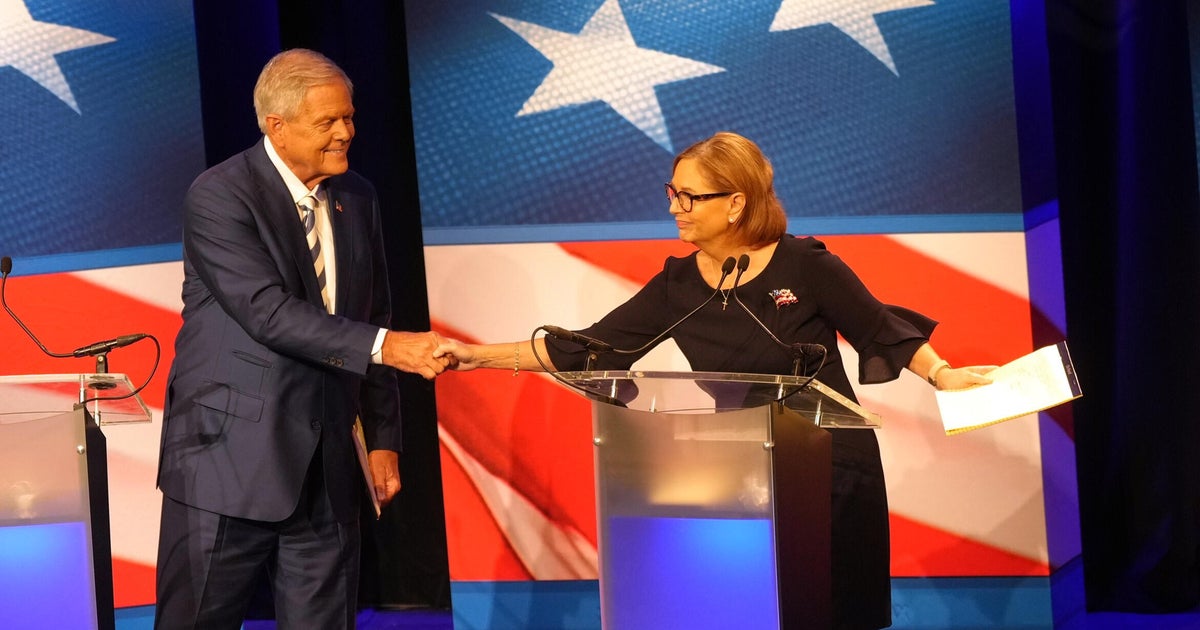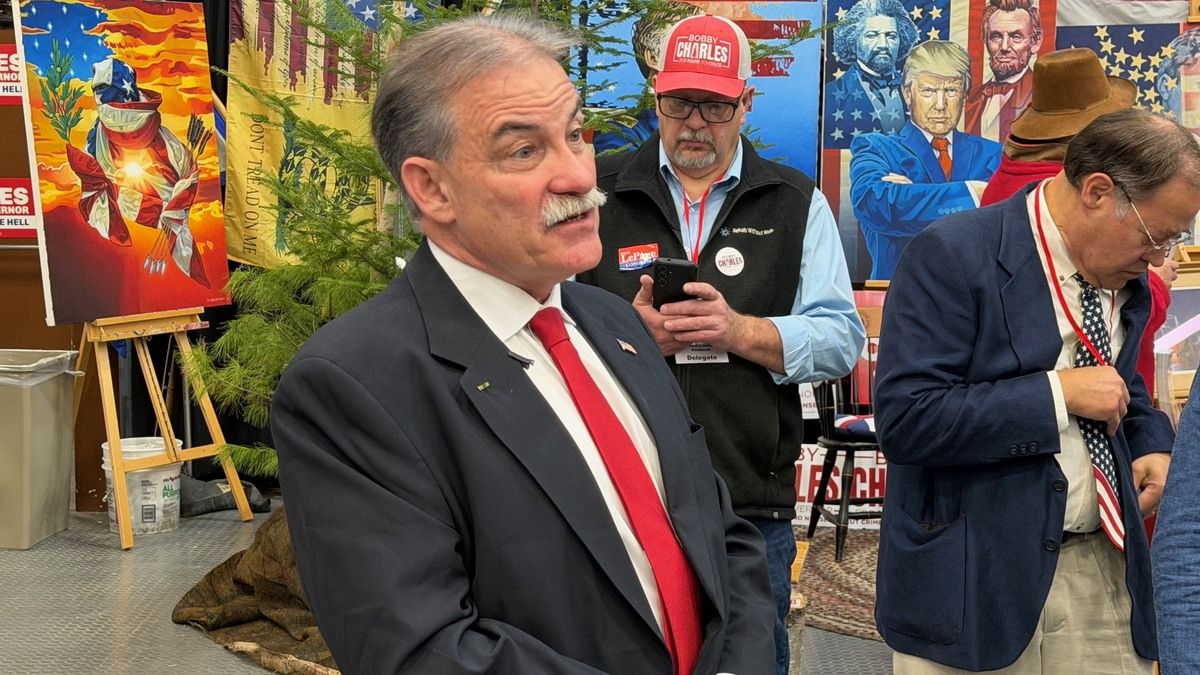
At a debate in Auburn in February 2026, Bobby Charles raised his hand and listed what he had done in Washington.
"I was brought in by [Secretary of State] Colin Powell and the president to clean up that place. At the same time as I cut bureaucrats and cut the budget, I trained the Iraqi police. I trained the Iraqi police and the Afghan police."
That 18 months is the center of his pitch for governor. Charles tells Maine voters that running a big, complicated federal operation is what separates him from the rest of the field — and that it's why he can be trusted to hunt down waste and fraud in Augusta.
So the Bangor Daily News went and read the audits of the operation he ran.
What the watchdogs found
Charles was Assistant Secretary of State for International Narcotics and Law Enforcement Affairs — the bureau that fights drugs and crime abroad — from October 2003 to March 2005. After the invasions, his team was handed the job of rebuilding the police forces of both Iraq and Afghanistan. The State Department contracted with DynCorp International to do the work in early 2004.
More than a dozen federal audits criticized that bureau. They came from the State Department, the Pentagon, the Government Accountability Office and other watchdogs. Auditors found poor management, billions spent without accountability, and failure to accomplish the bureau's primary foreign policy goals — among them its key goals of training national police and countering narcotics.
Some specifics from the reporting:
- The U.S. paid $43.8 million between 2004 and 2006 for trailers meant to house the American police trainers rebuilding Iraq's security forces. They were built in Italy and sat unassembled in storage at the Baghdad airport for more than two years. Officials couldn't say whether they'd received what they paid for.
- A federal audit found the bureau had accepted a contractor's word about the status of work without checking, paid invoices before the work was even contracted, and let millions in unauthorized construction go through without objection — including a swimming pool at the Adnan Palace in Baghdad.
- On counternarcotics, audits found that in Afghanistan the only industry that grew after the U.S. invasion was the opium market. That is the exact opposite of what the bureau existed to do.
- All told, the U.S. poured more than $21 billion into the police training effort over two decades and came away with little to show for it, according to a 2022 report led by the special inspector general for Afghanistan reconstruction.
In February 2005 — one month before Charles left — Defense Secretary Donald Rumsfeld sent Secretary of State Condoleezza Rice a confidential memo from commanders in Afghanistan titled "ANP Horror Stories." It described an Afghan police force that was illiterate and largely untrained despite years of American investment.
"This is a serious problem," Rumsfeld wrote.
John Sopko spent nearly 13 years as the special inspector general for Afghanistan reconstruction and oversaw more than 700 reports and investigations. Asked about the police training effort, he was blunt:
"I don't know why anybody in their right mind would take credit for this. I mean, it was a total disaster, and our reports confirm that."
The audit that covers his desk, in his own building
Charles's central defense is a timing argument, and it deserves to be stated fairly: the audits do not mention him by name. They refer to the position he held, and to work that began during his period. Together they span two decades — far longer than the year and a half he was there.
But one of them is squarely about his tenure.
A 2005 State Department audit found the bureau suffered from "periodic leadership vacuums" and a front office that was "structurally dysfunctional" during Charles's time in charge. Morale was poor. Internal tensions had grown severe enough to warrant a mediator from the State Department's civil rights office.
The bureau also lost standing inside its own department under his leadership. That leadership, the audit said, was:
"perceived as preoccupied with defending its turf, too ready to embroil itself in sterile interagency strife, and as ineffective in presenting its positions in interagency forums"
The result, according to the audit, was a bureau that had become "isolated and marginalized."
That is not a report about the twenty years after he left. That is a contemporaneous review of the shop he was running.
What he says back
Charles's campaign declined an interview with the BDN and did not answer specific questions about his service. He referred to the paper in a post as the "Bobby Derangement Network," and later called the reporting an attack from the "[Gov. Janet] Mills-funded media."
In a statement, he said: "Our operation began with essentially zero police infrastructure, and my team helped build systems to keep people safe under extremely difficult conditions. We trained police, stood up institutions, and took on some of the toughest assignments in the world."
The next morning he went on WVOM's Maine's Morning News with Ric Tyler and made a fuller case. He called it "the season of fake news." He said he'd brought former colleagues and an acting inspector general to the paper and "of course, they ignored virtually everything that I brought to them." He listed accomplishments: counter-narcotics work tied to Plan Colombia, raising the State Department air wing's readiness from about 60% to 85% ("No more hangar queens"), and training what he said was 35,000 Iraqi police.
He said he was the one who called inspectors general into the bureau in the first place: "I want investigators to rip this place apart so that we know where all the fraud is." And he argued that reformers make enemies — "If you're an agent of change, they hate you."
Two people who worked with him back him up. William E. Todd, a career diplomat who was later ambassador to Brunei and Cambodia and worked with Charles directly from 2003 to 2005, said the bureaucracy resisted change and that Charles "brought into INL — which had been running on cruise control for a long time — fiscal responsibility." Retired Air Force Col. John Mosbey, who worked under Charles on police training, described an impossible situation: "The whole situation was complicated, really complicated. I think we made it work."
Pressed on whether any of the audit criticism was fair, Charles allowed that some was, framing it as normal for reform under wartime conditions: "Every business, every government is imperfect."
Those are real answers, and the job was genuinely brutal. The position had sat vacant for 14 months before he took it. Nobody rebuilt a national police force from nothing in a war zone.
Two answers worth looking at twice
On the $43.8 million in trailers, Charles told Tyler flatly: "That happened after me, Ric."
The payments ran from 2004 to 2006. He was in the job until March 2005. The spending started on his watch and continued after he left. "After me" is not what the record shows.
On the Rumsfeld memo describing Afghan police as illiterate and untrained, Charles said he wasn't concerned by it — Rumsfeld sent memos like that all the time, and he and Powell didn't get along. "We used to call them snowflakes, nasty grams."
And on the underlying failure, his explanation was the trainees: "The Afghans are illiterate, that's the problem." He repeated it: "The reason that the Afghanistan police program over the years became more difficult is because it is difficult to train people, period, who can't read."
Set that next to the debate line he opened with — "I trained the Iraqi police and the Afghan police." When it's an accomplishment, he trained them. When the audits come in, the problem is that they couldn't read.
Why this matters in Maine
None of this is ancient history the voters can safely skip, because Charles is the one who put it on the ballot. He is running on those 18 months, and on a promise to bring that same management to state government. He closed the interview by telling Tyler: "We literally have to, in the state of Maine, get accountability, fiscal management, outcomes, efficiency, and law enforcement."
Accountability and fiscal management are exactly what more than a dozen audits say his bureau lacked.
His campaign has a pattern here, and we wrote about another version of it this week: a television ad promising to quadruple Maine's homestead exemption — a tax break he hasn't claimed since moving back to Maine — with no answer for how the state would pay for it. Big number, confident delivery, no arithmetic underneath.
When the Bangor Daily News checked the one credential his campaign is built on, he declined the interview, didn't answer the specific questions, and called the paper fake news.
That is the tell. A candidate proud of his management record answers questions about it.
Mainers deserve a governor whose central qualification survives being read. We deserve better.
Source
Sawyer Loftus, "Bobby Charles ran a bureau that spent billions in Afghanistan and Iraq. Watchdogs say it failed." — Bangor Daily News / Maine Focus, May 6, 2026, republished by The Maine Monitor. BDN writer Michael Shepherd contributed. The BDN also published the underlying watchdog reports. Photo by Benjamin Kail / Bangor Daily News.