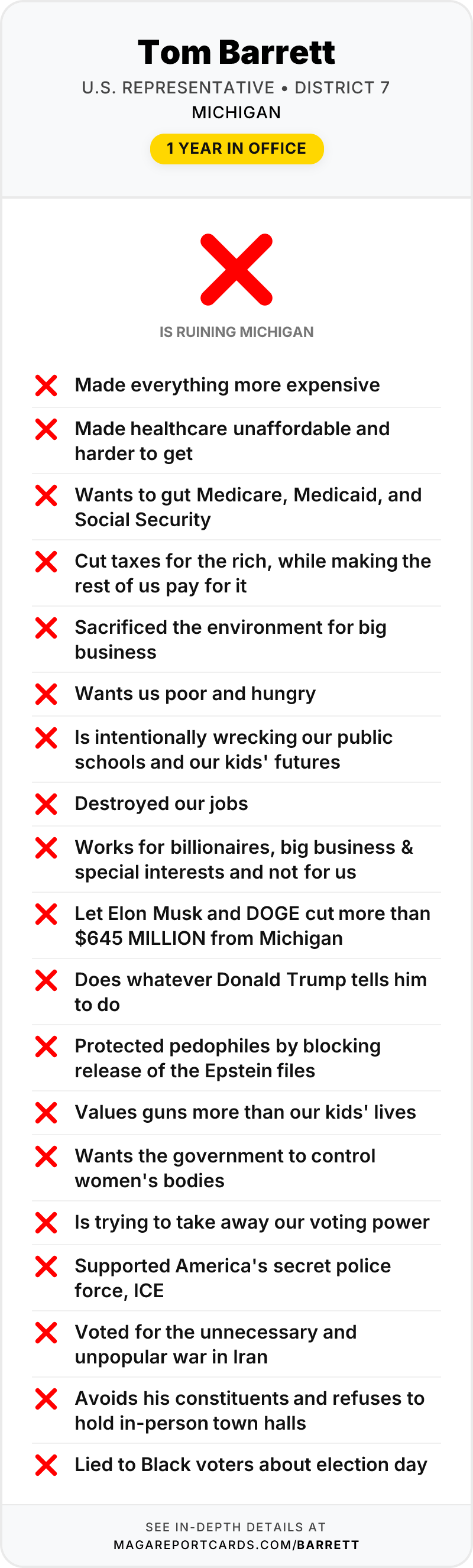
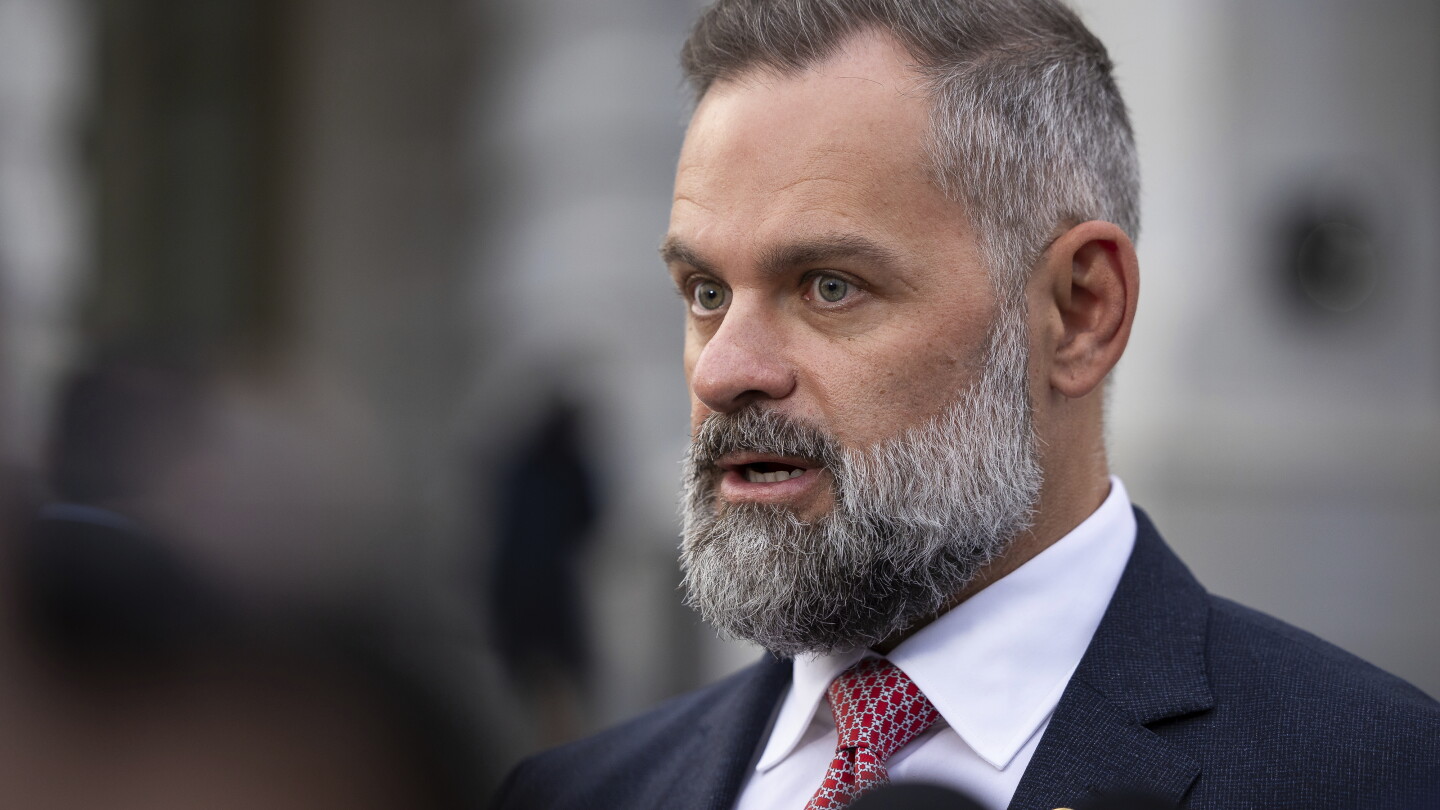
Tom Barrett is a first-term Republican congressman from Michigan's 7th District and a 22-year Army veteran. He sits on the House Veterans' Affairs Committee. Veterans are central to how he sells himself.
Ten years ago, as a state representative, he launched a group that promised Michigan veterans service dogs for PTSD, jobs, housing, health care and mentoring. He told reporters money was already coming in. He then ran for reelection on it.
According to a new investigation by the Detroit Metro Times, the group never raised enough money to provide any of those services.
The promise
In March 2016, Barrett and Democratic state Sen. David Knezek, the first Iraq War veterans to serve in the Michigan Legislature, announced the Michigan Veterans Institute. According to Metro Times, it promised to:
- help veterans with post-traumatic stress get service dogs
- reduce veteran homelessness
- connect former service members with jobs
- improve access to education and health care
- support mentoring programs and hold town halls across Michigan
Barrett didn't describe himself as a bystander. Asked who would run the project, he said nonprofit partners would handle the daily work, but that he and Knezek would be "stepping in as the leaders in this regard to approach donors, raise those resources, and then find the best place to put them."
"We're already raising money"
In a March 2016 interview with Michigan Public, Barrett said the money was already arriving:
"We're already raising money from some corporate donations... AT&T has been very generous in helping us get a grant in place to help us get launched off the ground."
A month later, a press release from a Northville veterans law firm announcing the group said that "the Michigan Veterans Institute has been receiving funding from corporate partners." It named no donors and no amounts.
Later that year, Barrett put it in his reelection pitch: "I have also worked across the aisle in a bipartisan way to help our veterans by partnering with a Democratic colleague to create the Michigan Veterans Institute, a charitable non-profit aimed at assisting veterans in need."
What actually happened
The Michigan Veterans Institute was never its own charity. It ran as a project under an existing Lansing nonprofit, the Insyght Institute, which handled the money.
The head of that nonprofit, Ed Sarpolus, told Metro Times the effort raised "little to no money." "We raised a few bucks, but it didn't raise enough," he said. Some money went to research and event costs, but nothing close to what the promised programs needed.
Sarpolus said he doesn't remember an AT&T grant. The consultant who helped set up the arrangement said he doesn't know whether that grant was ever received. Barrett now says AT&T gave "a few thousand dollars." No one could give Metro Times any record of how much it was, where it was deposited or how it was spent. Barrett also couldn't provide any evidence that he raised any other money.
Now it wasn't his job
In 2016 Barrett said he would lead the fundraising. Now he says he can't account for it because he was never formally in charge:
"Neither Senator Knezek nor I were on the board and neither of us was a fiduciary in any way for the organization so I would not be able to provide the underlying accounting of the organization."
He told Metro Times he "was never an agent of the organization."
His campaign has a second explanation: the project "lost momentum" when Knezek unexpectedly lost his primary. But Knezek didn't lose until August 2018, almost two and a half years after the launch. A year before that, a state women's commission was still talking about sponsors and a $100,000 fundraising goal tied to the institute. As Metro Times put it, Knezek's loss may explain why the institute stopped. It doesn't explain why it raised so little in the roughly 29 months when both lawmakers were still in office.
A pattern of claims that don't hold up
This isn't the first Barrett claim that came apart when someone checked it. His campaign sells "Made in USA" T-shirts whose tags say Made in Haiti. Metro Times also reported in May that his campaign paid him back nearly $22,000 for about 32,350 miles of campaign driving from January 2024 through March 2026, and didn't answer questions asking for the records behind it.
Veterans should be the people Barrett is most careful with. Instead they got a press tour, a campaign line and almost no help.
What the record shows
In 2016 Tom Barrett launched a veterans group, said he would lead its fundraising, told the press corporate money was already coming in, and ran for reelection on it. The nonprofit that housed it says it raised "little to no money" and never paid for the service dogs, housing or job help it promised. No one, including Barrett, can document the grant he cited. He now says he was never responsible for its finances.