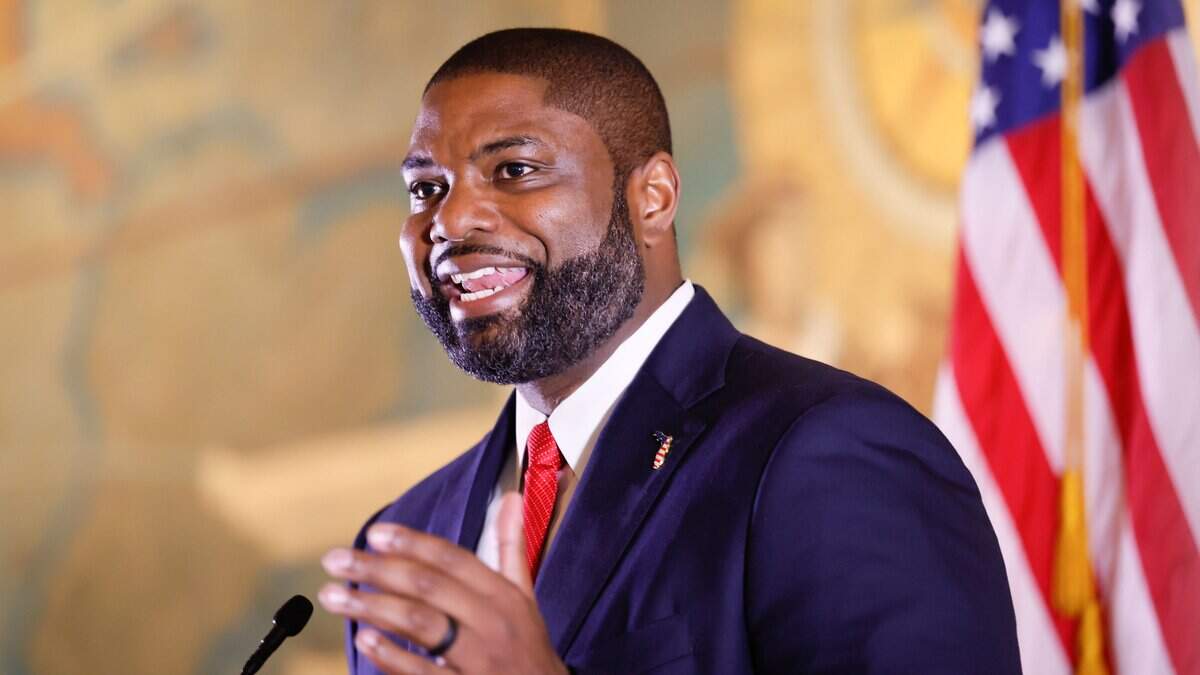
Tim Burchett chairs the House Subcommittee on Delivering on Government Efficiency — the congressional arm of DOGE. Its entire stated purpose is to find waste in the federal government and cut it.
On July 21, 2026, he convened it in Room 2154 of the Rayburn Building to examine the exhibits at a museum.
Not the museum's budget. Not its contracts, its procurement, its leases, its staffing costs. Its exhibits. What the labels say. What's in the gift shop.
The hearing was titled "Rewriting American History: Examining the Smithsonian's Efforts to Reshape the Past," and Burchett announced it under the heading "Extreme Political Activism."
What he said
Burchett opened with this, as NPR reported:
"I feel like [the Smithsonian]'s become infected by a woke ideology that seeped into public displays, educational materials and planning documents. The American story is the birth and growth of a great nation founded on powerful ideals and which we aim to fully achieve. But in the museum's current telling, history is just an ongoing power struggle between oppressors and the oppressed."
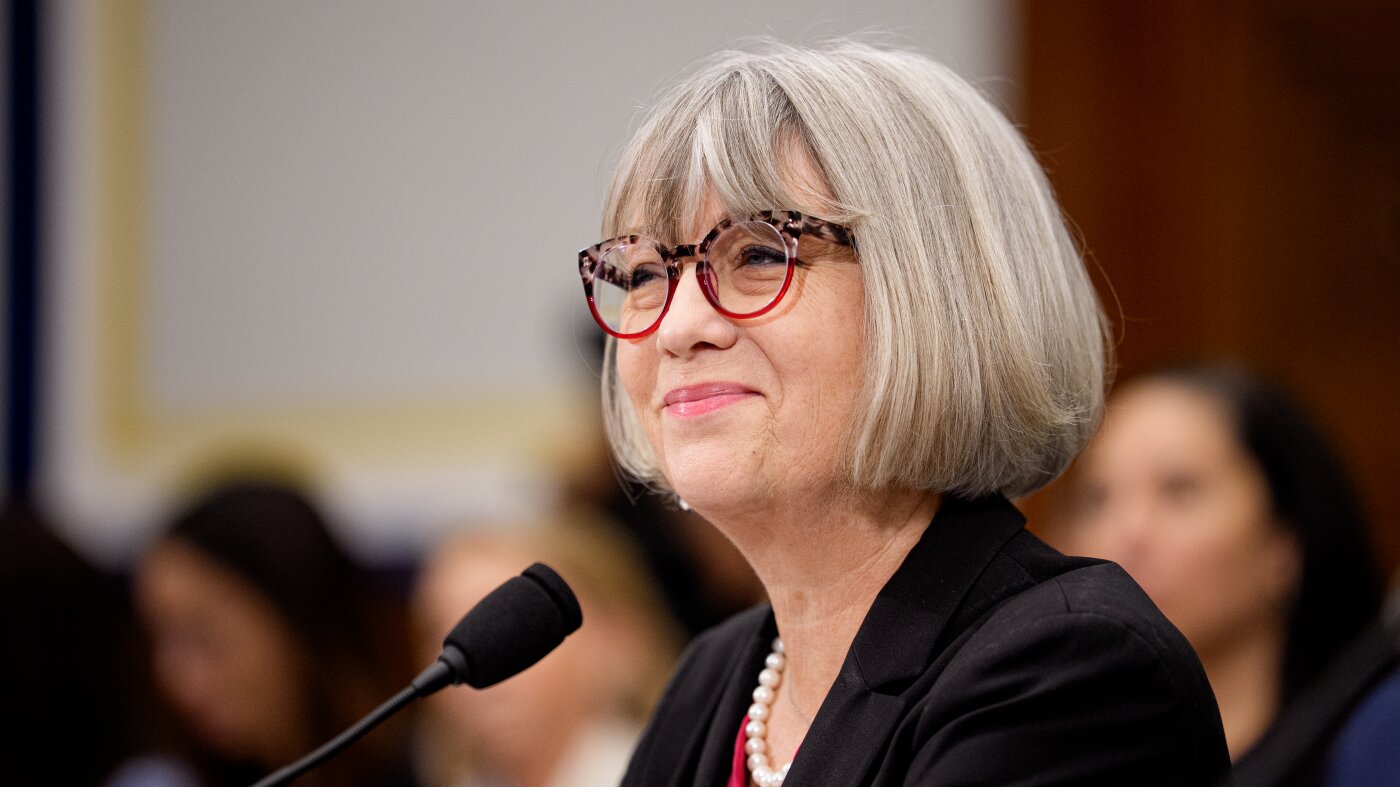
The witness was Anthea Hartig, director of the National Museum of American History. In a written statement to the subcommittee before the hearing, she had already answered the charge:
"When historians talk about reframing a traditional narrative, we do not mean erasing it. We mean adding the evidence, voices and objects that earlier tellings left out, so that more Americans can see themselves in the national story. Examining the harder chapters of our history is not the same as hostility toward America."
That did not slow things down. Nancy Mace asked Hartig, about an exhibition called "Girlhood": "When was your gender revealed to you, Dr. Hartig?" Lauren Boebert asked her: "You intend to use a taxpayer-funded national museum to push a racial narrative that divides Americans by their skin color and guilt?"
Mark Harmon, writing in the Tennessee Lookout, described the questioning as "a bizarre game of whack-a-mole where out-of-context quotes about everything from Mickey Mouse to books sold in the Smithsonian store were assessed as some sort of proof" of national self-loathing.
Burchett's own expert witnesses were a senior fellow from the Heritage Foundation and the dean of Hillsdale College. Democrats brought Yale historian David Blight, who told the room:
"Triumphalist history cannot tolerate nuance, ambiguity, complexity, but they are lifeblood for real historians. We do not write 'woke' history, whatever that is, but we do try to awaken citizens."
Neither the Smithsonian nor Burchett's office replied immediately to NPR's requests for comment.
The efficiency committee wasn't looking for efficiency
Here's the part that should bother Tennesseans regardless of what they think about museum labels.
Burchett's subcommittee is not the Committee on What Museums Should Say. It is the subcommittee on government efficiency, and Burchett has made that his identity — he promotes his efforts to stop "waste, fraud, and abuse," and he chairs the panel because Oversight Chairman James Comer handed him the gavel specifically to do that work.
While he was doing this, here is what was happening in Tennessee's 2nd District and the state around it:
- An estimated $7 billion cut from TennCare over the next decade, with at least 110,000 Tennesseans expected to lose health coverage and at least nine rural hospitals at risk of closing, according to a Tennessee Lookout commentary.
- About 696,100 Tennesseans rely on SNAP food benefits every month.
- 1 in 5 Tennessee children faces hunger.
DOGE itself, meanwhile, had already collapsed. Its charter expired on July 4, 2026 — seventeen days before this hearing — without a final report, having promised $2 trillion in savings and claimed $215 billion. Nobody stepped forward to account for the difference.
So the subcommittee named after a defunct cost-cutting project, chaired by a man who campaigns on fiscal seriousness, spent its hearing time on the Smithsonian gift shop.
The Smithsonian isn't his to run
There's also a structural problem with the whole exercise.
Under its charter, the Smithsonian's 21 museums, 14 education and research centers and the National Zoo are meant to be run independently of the federal government. It's overseen by its own secretary and a board of regents — which happens to include Vice President Vance and Chief Justice John Roberts.
The hearing followed a 162-page report issued by the White House Domestic Policy Council on July 4, 2026, accusing the museum of "institutional capture by a radical, activist ideology." The Republicans on Burchett's subcommittee, as the Lookout put it, "largely extrapolated" on that report.
That is the actual chain of events: the White House writes the accusation, and a House subcommittee chaired by Burchett holds the hearing to amplify it. Congressional oversight is supposed to point the other direction.
The ranking member, Melanie Stansbury, named it during the hearing:
"The [Smithsonian] mission has never depended on whether history is convenient, whether it's comfortable, or whether you like it or not... When politicians begin deciding what facts are acceptable, scholarship ceases to be scholarship; it becomes propaganda."
Where's the town hall?
Burchett has plenty of time for hearings about museum labels. He has not made time to face the people who send him to Washington.
In April 2025, roughly 250 constituents held their own town hall in downtown Knoxville so they could ask him questions. He didn't come. They propped up cardboard cutouts of him holding a sign that read: "Sorry ... I'm out of the office today."
At least nine rural hospitals in this state may close. There is a hearing room in the Rayburn Building where a chairman from Tennessee could ask about that.
We deserve better.
Source
Anastasia Tsioulcas, "Smithsonian too focused on 'oppressors and the oppressed,' say House Republicans," NPR, July 21, 2026, and Mark Harmon, "Tennessee U.S. Rep. Tim Burchett's Smithsonian slam is madness," Tennessee Lookout, July 29, 2026. Photo: Andrew Harnik/Getty Images, via NPR.