Here's a rule every member of Congress knows: you can't use taxpayer money to run your campaign. The money and the staff that taxpayers pay for are supposed to do the people's business — answer letters, help constituents, work on laws. They are not supposed to be a free political machine.
Now we've learned that Marsha Blackburn's office got investigated for allegedly breaking that rule.
What the investigation looked at
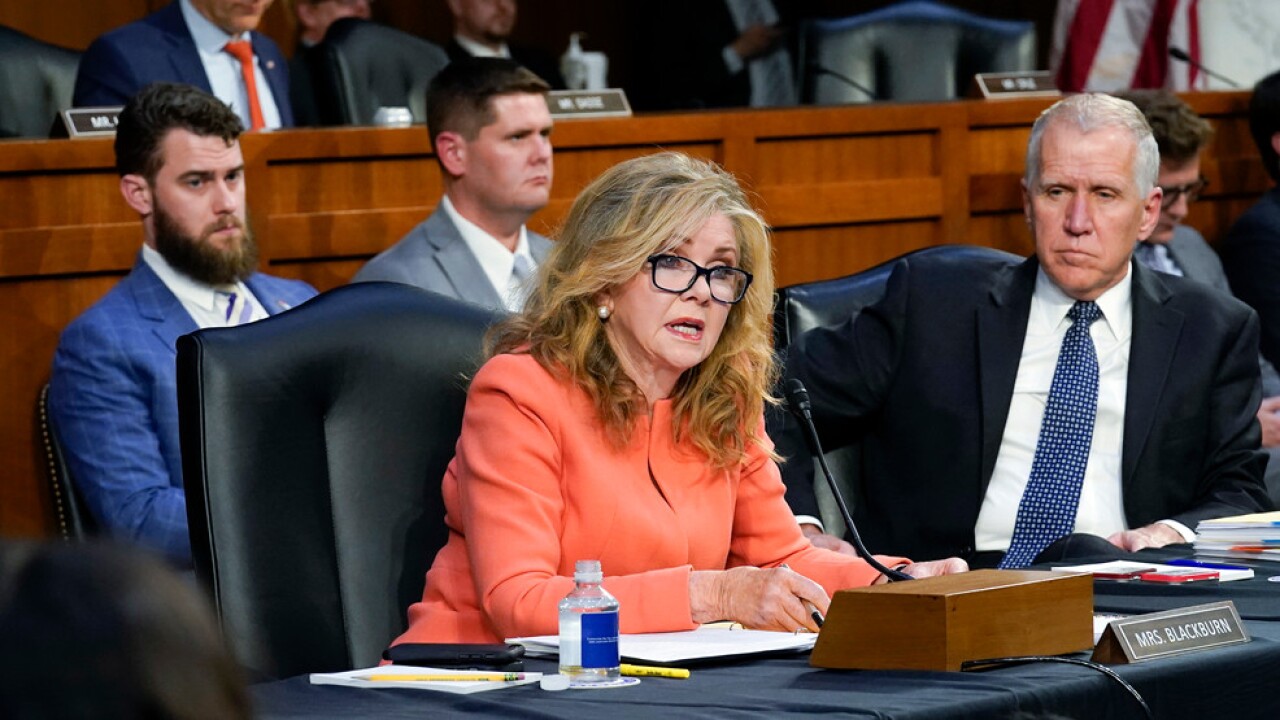
In an exclusive report, NewsChannel 5 Investigates in Nashville revealed that Blackburn's office was the target of a confidential Senate Ethics Committee investigation. The focus: allegations that her office used taxpayer dollars to help her political campaigns.
Investigators wanted to know whether Blackburn's Senate staffers were pushed to do political work while on the clock — on taxpayer time, using taxpayer resources. The trips in question began in 2023, as Blackburn headed into her 2024 re-election campaign; the ethics investigation itself came last year.
NewsChannel 5 found real examples of the problem. Blackburn's team billed taxpayers for staff trips to Republican Party meetings around Tennessee:
- A staffer named Blake Neely went to a Putnam County GOP meeting. The Senate charged taxpayers for his "staff transportation" and "staff per diem."
- A staffer named Tyler Privette went to a DeKalb County GOP meeting. Taxpayers were again billed for his per diem and transportation.
- A staffer named James Matthew Wyatt attended a Weakley County GOP oath ceremony. The office billed taxpayers for that trip too.
In plain English: county Republican Party events are political events. When the taxpayers are footing the bill to send Senate staff to them, that's your money paying for her party's political work.
The strategist in the middle of it
Investigators also asked Blackburn's staff about their relationship with Ward Baker — a well-connected political strategist who has run Blackburn's campaigns for years. That's the exact line that's supposed to stay bright: campaign strategists work for the campaign, and the campaign pays for that with campaign money. Senate staff work for the people, and the people pay for that with tax money. The question the ethics committee was chasing is whether Blackburn's office blurred that line.
"Resolved" — but she won't show her work
So how did it end? Blackburn's office says it's all settled. Her statement:
"No one takes compliance with Senate ethics rules more seriously than Senator Blackburn, and the Senate Ethics Committee completed its review and resolved this matter with our office's full cooperation."
But here's the catch. When NewsChannel 5 asked Blackburn's office to release the letters between the senator and the ethics committee, her office ignored the request. So we don't actually get to see how the committee ruled or what it said. "Trust me, it's fine" is not the same as showing us the paperwork — especially from someone who wants a promotion to Governor.
For a politician who loves to demand investigations of other people, that's a striking amount of secrecy about an investigation of herself. Blackburn has called on the DOJ to investigate Nashville's mayor and even demanded a probe of a Supreme Court justice for attending an awards show. When the spotlight turns on her own office, though, the transparency disappears.
A pattern, not a one-off
If this were the only time Blackburn put money and politics ahead of the rules, maybe you could call it a mix-up. It isn't.
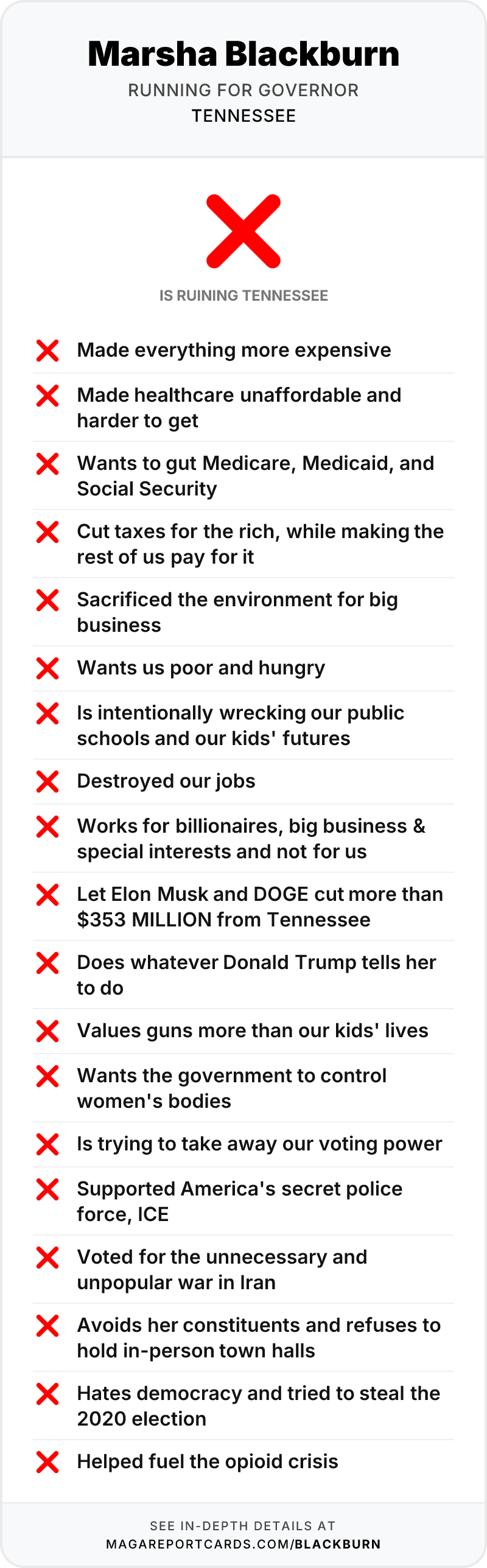
At the height of the opioid epidemic, Blackburn sided with the drug companies. In 2016 she was a leading co-sponsor of a bill — written by a pharmaceutical industry lobbyist, according to documents obtained by the Washington Post — that a joint 60 Minutes and Washington Post investigation found made it "nearly impossible" for the DEA to freeze suspicious shipments of opioids. She had taken $120,000 in campaign contributions from the drug industry, which spent more than $100 million lobbying lawmakers while her bill moved through Congress.
And when you look at who funds her today, the story is the same. Her biggest backers include the tech giant Oracle and CoreCivic — the private prison company that runs on government contracts. Marsha Blackburn works for big money. Now we've learned her office was even accused of running on our tax money.
Why this matters
Blackburn wants to be Governor of Tennessee. The Governor controls a state budget worth tens of billions of taxpayer dollars. Before we hand her the keys to that, it's fair to ask a simple question: can she be trusted with public money?
The record isn't reassuring. Her own office was investigated by the Senate Ethics Committee over allegations it spent your money on her politics — and instead of showing us exactly what happened, she's asking us to take her word for it.
We deserve better.
Source
This story is based on the exclusive reporting of NewsChannel 5 Investigates in Nashville.