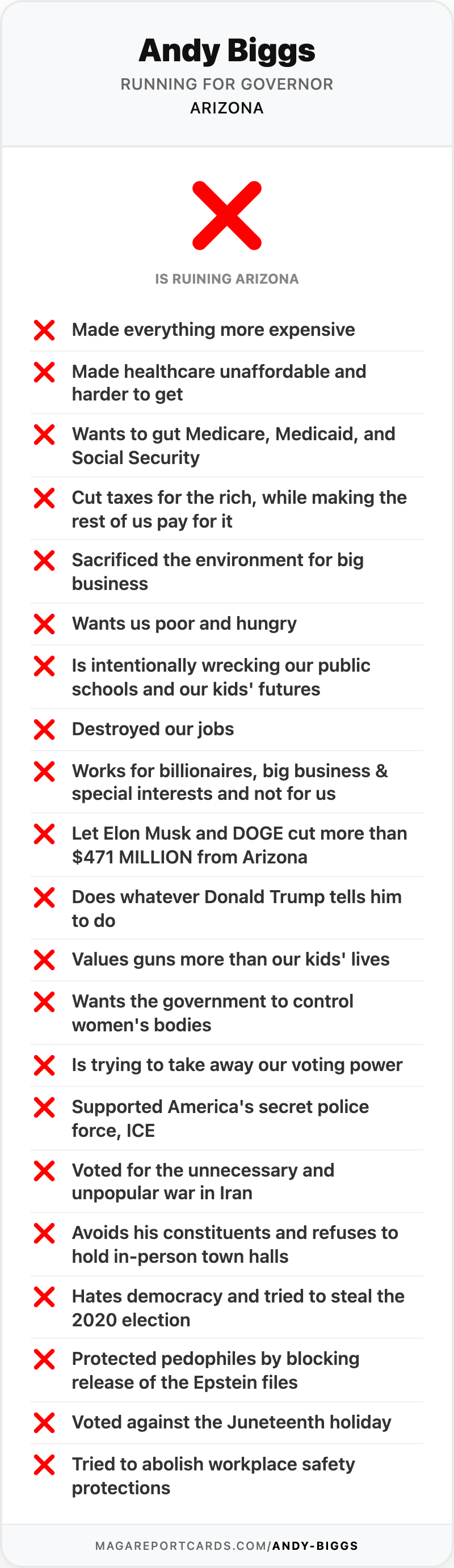
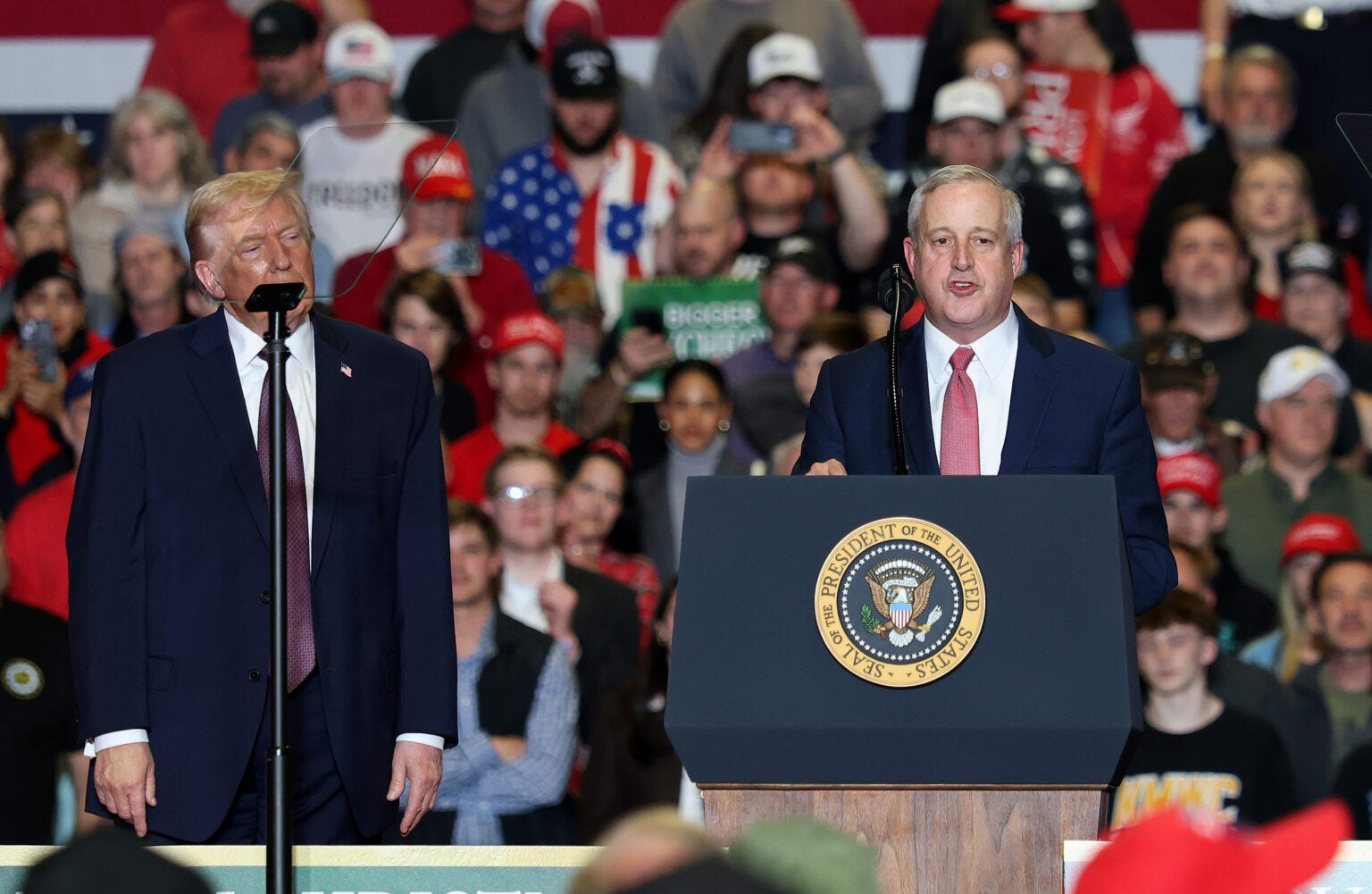
Andy Biggs is the Republican nominee for governor of Arizona. Before that he was president of the Arizona Senate. And in 2013, according to the Republican who wrote the bill, he is the reason women and children in Colorado City, Arizona suffered three years longer than they had to.
What the bill would have done
Colorado City, Arizona sits on the Utah line and is the historic seat of the Fundamentalist Church of Jesus Christ of Latter-day Saints — the sect that broke from the Mormon Church over polygamy. Its leader, Warren Jeffs, was convicted of sexually assaulting two underage girls he had forced into marriage.
Colorado City shares a police department, the Marshal's Office, with Hildale, Utah across the border. For years the accusation against that department was not that it failed to stop the FLDS. It was that it worked for them.
The U.S. Justice Department had sued both towns in 2012, alleging the shared marshal's office selectively enforced the law and served FLDS leadership rather than the public — including an effort to return a fleeing child bride to the group.
In 2013, Arizona legislators tried to do something about it. A bill to strip the marshal's office of its authority passed the state House overwhelmingly.
Then it went to the Senate, where Biggs was president. It never got a vote.
The bill's own sponsor says he buried it
Michelle Ugenti-Rita, then a Republican state lawmaker, wrote that bill. After the federal government won its case, she was blunt about what happened to it, and about the cost:
"Women and children suffered three years longer than they should have because he protected the bad guys."
Flora Jessop, who escaped the FLDS, told the Washington Post that legislators had "more than enough" to act on.
This is not a Democratic attack line. It's the bill's Republican author, and a survivor of the sect, saying the same thing.
The Post also spoke to a county Republican supervisor who said he cast an early ballot against Biggs over precisely this — he wanted a candidate "who has made a stand for women and children above religion."
Biggs's explanation
Asked in a TV interview last year about accusations that he helped kill the bill, Biggs said officials were trying to gather more information, and that he is "not sure we ever got to" the conclusion that the marshal's office was fully corrupt. He questioned whether legislators had enough evidence to justify the state stepping in.
Set that against the timeline. Warren Jeffs had already been convicted. The federal government's lawsuit against the towns was already pending, and it went on to win.
The evidence Biggs says he wasn't sure about was sufficient for the Department of Justice.
And note what gathering more information meant in practice. He wasn't required to pass the bill. He could have let it come to the floor and let 30 senators vote. Instead the thing died where nobody had to go on record — which is the specific power a Senate president has, and the specific reason it's hard to pin down afterward.
Except the sponsor pinned it down.
Twelve years later, the same instinct
In December 2024, Biggs was publicly demanding the Epstein files. He posted that "Americans deserve transparency from the corrupt FBI—starting with Epstein's client list and the Russian collusion hoax," and three weeks later asked flatly: "Where is Epstein's client list?"
On July 23, 2025, he got the chance to vote on it. A House subcommittee took up a measure demanding the Justice Department release the files. It passed 8 to 2, with three Republicans joining five Democrats.
Biggs was one of the two no votes.
His chief of staff didn't respond when the Phoenix New Times asked about it.
He is not the only Republican who found the files less urgent once a vote was attached. Clay Higgins was the only member of the entire House to vote against releasing them on the floor, 427 to 1. James Comer, who chairs the committee that could compel them, has handled the whole subject with conspicuous gentleness.
But the pattern is worth naming in Biggs's case specifically, because it's the same shape as 2013: loud in public about accountability, quiet where it counts, and unavailable for comment afterward.
What Arizonans are actually voting on
Biggs is asking Arizona to make him governor. A governor signs or vetoes bills, appoints agency heads, and decides which investigations the state pursues.
The record he brings to that job includes a stretch as the most powerful man in the Arizona Senate, during which a bill to strip a police force accused of serving child abusers of its authority passed the House and quietly expired on his watch — and the Republican who wrote it says he's the reason.
He's also asking for the job on an abortion record most Arizonans don't share.
Voters can weigh his explanation — that nobody was sure. They should weigh it against the fact that the Justice Department was sure enough to sue, and won.
Source
Hannah Knowles, "Small-town fight may haunt Andy Biggs, GOP governor candidate in Arizona," The Washington Post, July 20, 2026; and TJ L'Heureux, "Andy 'Where's the client list?' Biggs votes no on Epstein files release," Phoenix New Times, July 24, 2025. Photo via Wikimedia Commons.