In February 2025, about 487,000 Michiganders had health coverage through the Affordable Care Act marketplace. One year later, that number was 357,000.
That is 130,000 people gone — a 27% drop in twelve months, according to federal data reported by Bridge Michigan. Roughly one in four people who had that coverage no longer does.
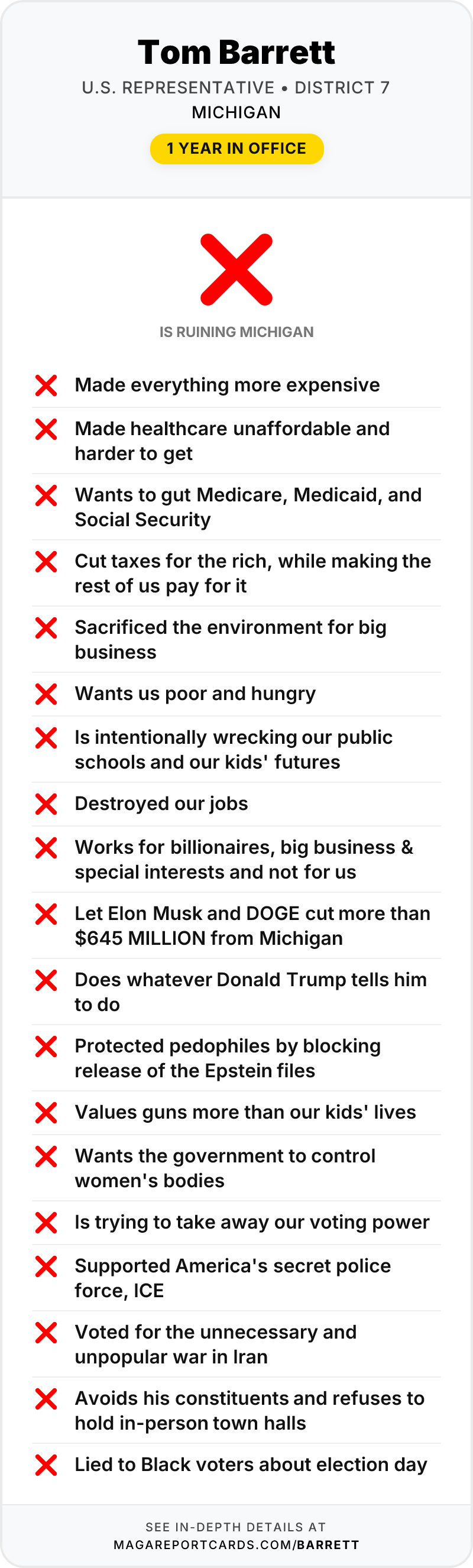
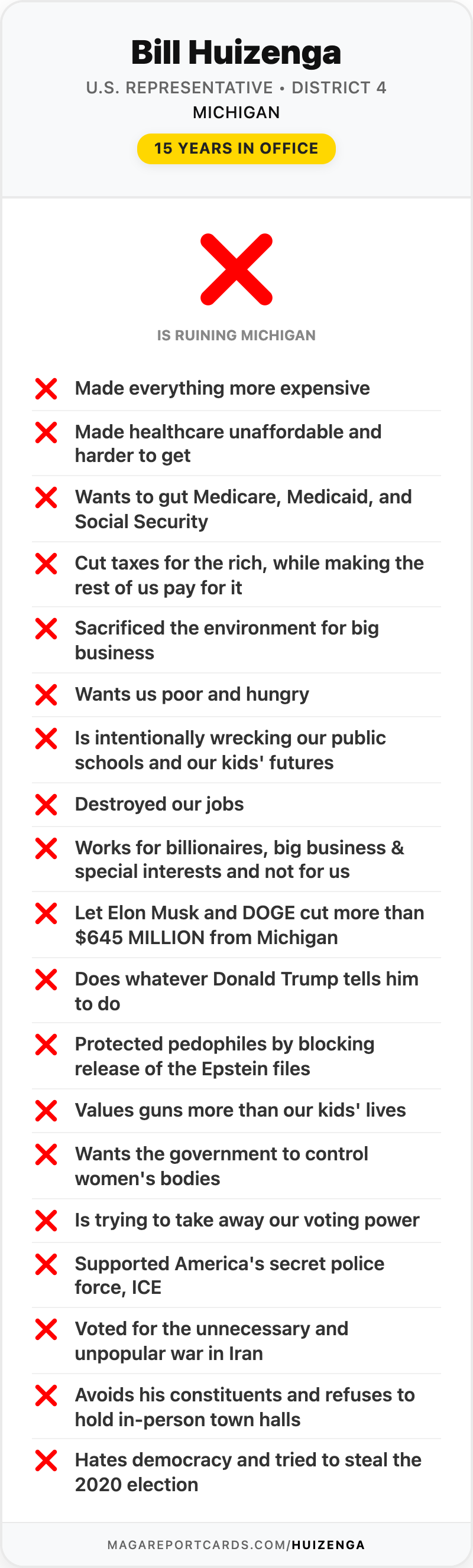
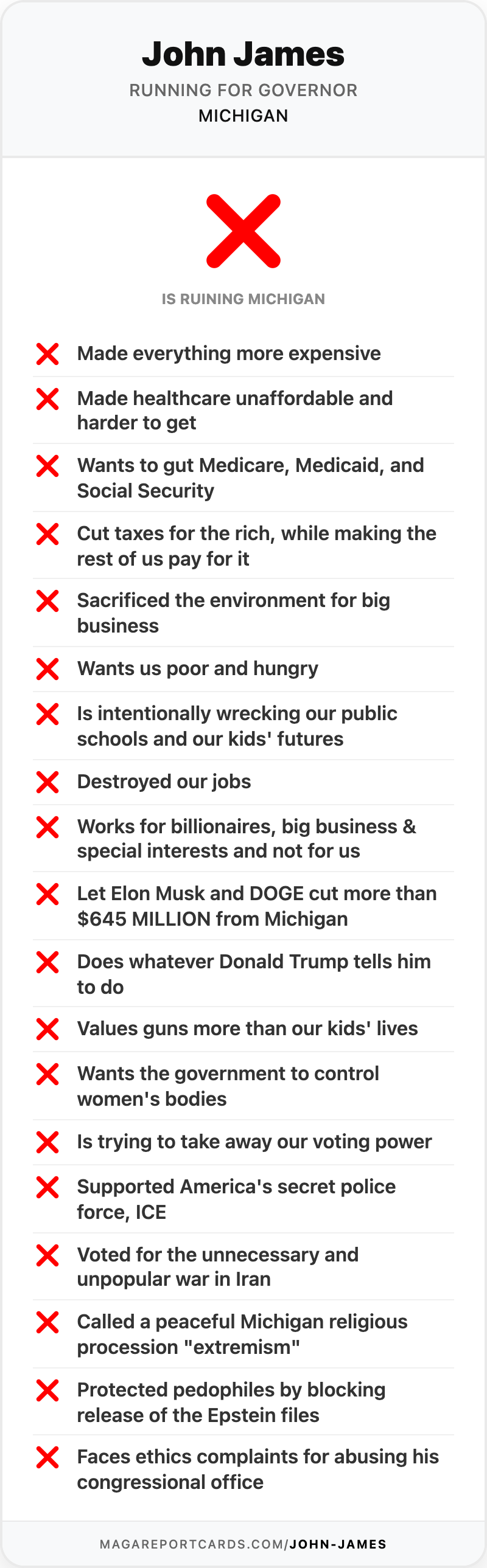
Michigan didn't do this to itself. Three of the people who did it represent Michigan in Congress: Tom Barrett, Bill Huizenga and John James.
What actually happened
For nearly five years, from March 2021 on, extra pandemic-era premium tax credits made marketplace insurance affordable. They expired at the end of 2025. Congress could have extended them, and did not. The House did vote on a three-year extension on January 8, 2026, and passed it 230 to 196 — with Barrett, Huizenga and James all voting no. The Senate has never taken it up.
The effect was immediate and entirely predictable. Michigan marketplace plans went up about 20% in 2026. When the price of something jumps 20% overnight and the help paying for it disappears, people drop it.
Dr. Mark Fendrick of the University of Michigan put it as plainly as it can be put:
"If you make people pay more for something, they buy less of it."
Nationally, nearly 3 million Americans lost or dropped marketplace coverage. Michigan's 27% loss puts it near the top of the list.
We've written this story before, in a different state. Ohio lost a bigger share of its marketplace coverage than any state in the country — nearly a third of everyone who had it — for exactly the same reason. This is not a Michigan problem or an Ohio problem. It is a policy, and it was chosen.
The vote
On July 3, 2025, the House passed H.R. 1 — the bill Republicans call the "One Big Beautiful Bill Act" — by 218 to 214.
Look up that roll call and you will find:
- Tom Barrett — Aye
- Bill Huizenga — Aye
- John James — Aye
Two votes the other way and it is a 216-216 tie, which fails. Michigan supplied three of the votes it needed.
That law is the reason the next round of losses is already scheduled. The Center on Budget and Policy Priorities tracks it month by month, and the picture is not ambiguous: 4.8 million fewer people had Medicaid in April 2026 than in April 2025.
And that is before the hard part starts.
What's coming in 2027
CBPP's tracker lays out the schedule. From the law Barrett, Huizenga and James voted for:
- 2027 is when the most significant Medicaid coverage losses begin — that's when more frequent, more burdensome eligibility renewals kick in, along with a work requirement.
- October 2026 is when the law further narrows immigration-related eligibility, taking coverage from more people who are here lawfully.
- 2028 brings another round of Medicaid cuts.
The Congressional Budget Office projects it will take several years for the full effect to land. In other words: what Michigan has lost so far is the beginning, not the end.
What it looks like from a clinic
Michigan Families for Fair Care, which is calling on all three to reverse the cuts, collected an account from a substance-abuse counselor in Huizenga's 4th District named Jeannette:
"My patients depend on Medicaid to afford the treatment they need, and these new rules that will kick people off of Medicaid are just cruel. Patients struggling with addiction used to be able to rely on Medicaid or the Affordable Care Act, but my Congressman Bill Huizenga took both of those options away."
That is the whole mechanism in two sentences. Someone in treatment for addiction had two ways to pay for it. Both were narrowed by the same two votes, cast by the same person.
The thing to hold onto
A congressman can say a lot of things about health care. What is on the record is how they voted, and what happened after.
Barrett, Huizenga and James voted yes on July 3, 2025. Michigan then lost 130,000 people off its marketplace coverage in a year, premiums rose about 20%, and the Medicaid provisions that do the heavier damage don't even take effect until next year.
None of them has moved to undo it.
Source
Michigan Families for Fair Care: "Medicaid and ACA Enrollment Are Dropping After Barrett, Huizenga, and James Backed Health Care Cuts." Enrollment figures from Eli Newman's July 13, 2026 reporting for Bridge Michigan, drawn from CMS data.