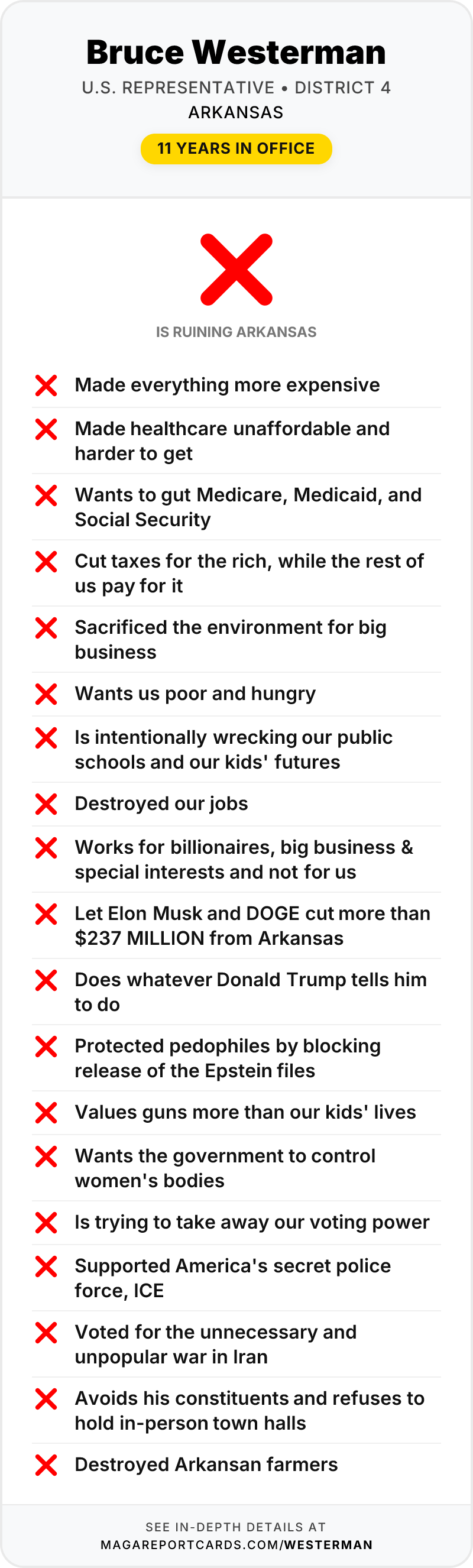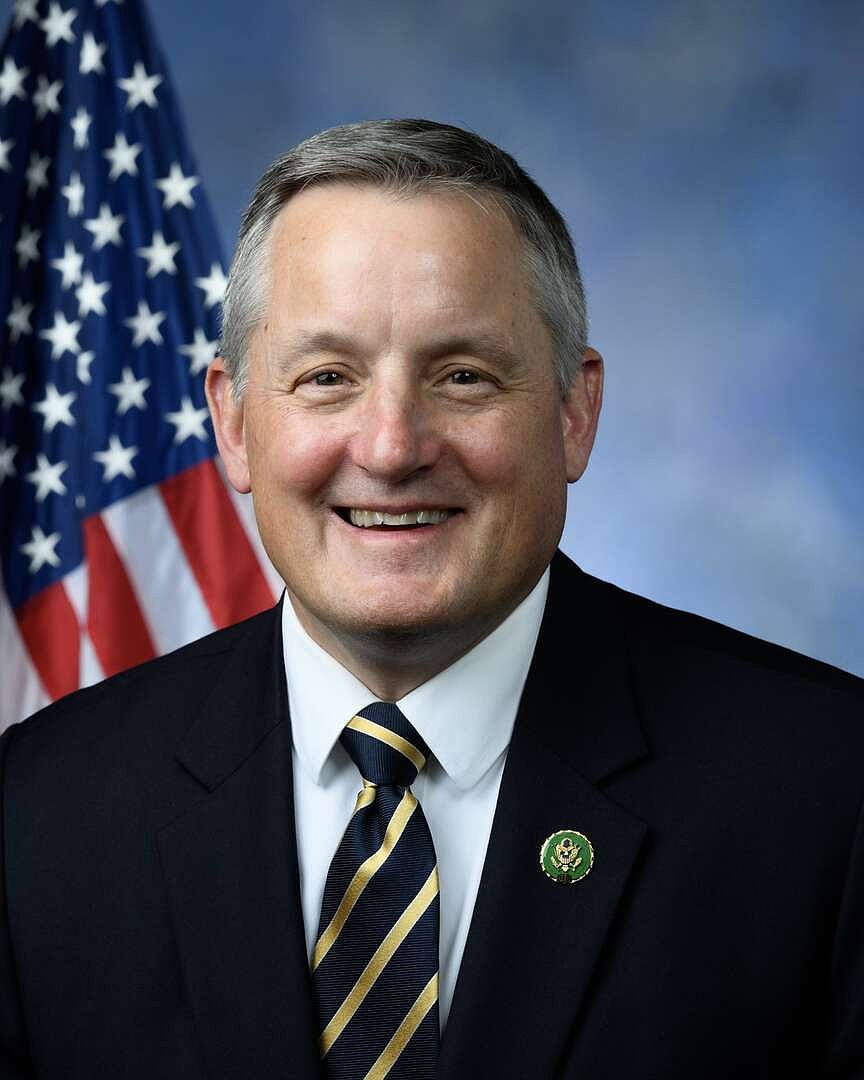
On May 14, 2026, Bruce Westerman put out a press release with this headline, in all capital letters:
WESTERMAN REINTRODUCES COMPREHENSIVE HEALTH CARE REFORM PLAN TO LOWER COST AND EXPAND COVERAGE FOR ALL AMERICANS
The bill is called the Fair Care Act of 2026. According to his own announcement, it combines "over 75 bipartisan proposals to lower costs, decrease the number of uninsured individuals, protect those with preexisting conditions, and expand coverage options."
Westerman's statement went further:
"[W]e cannot afford to let partisan politics stand in the way of common sense and quality care. That's why I introduced the Fair Care Act, an overarching solution that increases the number of people with health insurance coverage, decreases patient costs, and lowers long-term government spending."
Now go look the bill up. It's H.R. 8840, and the record on Congress.gov says this:
Cosponsors (0)
No cosponsors.
Not one Democrat. Not one Republican. Not a single other member of the House of Representatives has put their name on the "bipartisan" plan. It was referred to nine committees on the day it was introduced, and nothing has happened to it since.
This is the fifth version of the Fair Care Act. Westerman has been filing it since 2019. Across all five, it has drawn five cosponsors in total — four on the 2020 version and one on the 2022 version — every one of them a Republican.
What he does when a health care bill actually gets a vote
A bill nobody signs can say anything. Westerman's roll-call record is where you find out what he'll actually vote for, and it runs directly against the press release.
The first item on his own list of Fair Care Act provisions is "codifying the Affordable Care Act preexisting condition protections in HIPAA."
On May 4, 2017, Westerman voted for the American Health Care Act — the bill to repeal the Affordable Care Act. It passed the House 217 to 213. He was one of the 217.
His press release says the plan will "decrease the number of uninsured individuals."
In 2025 he voted for Trump's budget bill. The Center for American Progress projects that law, together with the expiration of the enhanced Affordable Care Act tax credits, will leave 40,000 more people in Westerman's district without health coverage by 2034. Not in the country — in Arkansas's 4th District, the people he represents.
His press release says the plan will "lower costs."
On December 17, 2025, Westerman voted for H.R. 6703, which House Republicans named the "Lower Health Care Premiums for All Americans Act." That bill did not extend the expiring tax credits that were actually holding premiums down, and the Congressional Budget Office found it would leave about 100,000 more people uninsured. It passed 216 to 211.
In Arkansas, the result showed up fast: 14,441 Arkansans lost their Obamacare coverage this year after the subsidies lapsed.
The pattern is the name
Look at the two bills next to each other.
One is called the Lower Health Care Premiums for All Americans Act. It doesn't lower premiums. Westerman voted for it, and it became the thing Republicans could point to instead of the fix.
The other is called the Fair Care Act. It has no cosponsors and no path. It is the thing Westerman can point to when a constituent asks what he's doing about health care costs.
Both bills serve the same purpose, and it isn't covering anybody. A member of Congress in his sixth term, on a committee-heavy schedule, does not accidentally file the same 75-provision bill five times without ever recruiting a single Democratic cosponsor. Getting cosponsors is the easiest thing in Congress. It costs nothing. It's a signature.
Zero Democrats, five times running — and zero anybody this time — is a result.
What "expand coverage options" means in the fine print
To be fair to the bill, some of its provisions are real ideas with real support — price transparency, pharmacy benefit manager reform, cracking down on hospital consolidation, expanding telehealth. Those show up in bipartisan bills all the time.
But look at what else is on Westerman's own published list. It would eliminate the employer health insurance mandate. It would establish "a flexible Medicaid funding option for states," alongside "promoting fiscal accountability and solvency for Medicare and Medicaid." It would expand the use of pretax dollars for medical expenses — which helps most if you have money to set aside in the first place.
The two outside experts he quoted praising the bill in his press release both come from the same place — the Foundation for Research on Equal Opportunity, a free-market think tank whose chairman calls it "the most rigorous, credible, carefully constructed, free-market health reform plan that Republicans have ever advanced."
That may well be true. It's also the answer to why nobody signed it.
What Arkansans are left with
Arkansas already ranks 49th out of 50 states on the measures we track — health, income, hunger and the rest. It is not a state with coverage to spare.
Its 4th District congressman voted to repeal the law that covers them, voted for the budget bill that — along with the lapse of the enhanced ACA tax credits — is projected to leave 40,000 more of them uninsured by 2034, and voted for a "lower premiums" bill that the CBO says covers fewer people.
Then he filed a bill with a nice name and told them he was fighting for fair care.
We could not find any record of Westerman ever holding an in-person town hall where somebody could hold up the press release and the roll call side by side and ask him to explain.
We deserve better.
Sources
Westerman Reintroduces Comprehensive Health Care Reform Plan — Office of Rep. Bruce Westerman, May 14, 2026.
H.R.8840 — Fair Care Act of 2026, All Information — Congress.gov. Photo: Arkansas Democrat-Gazette.