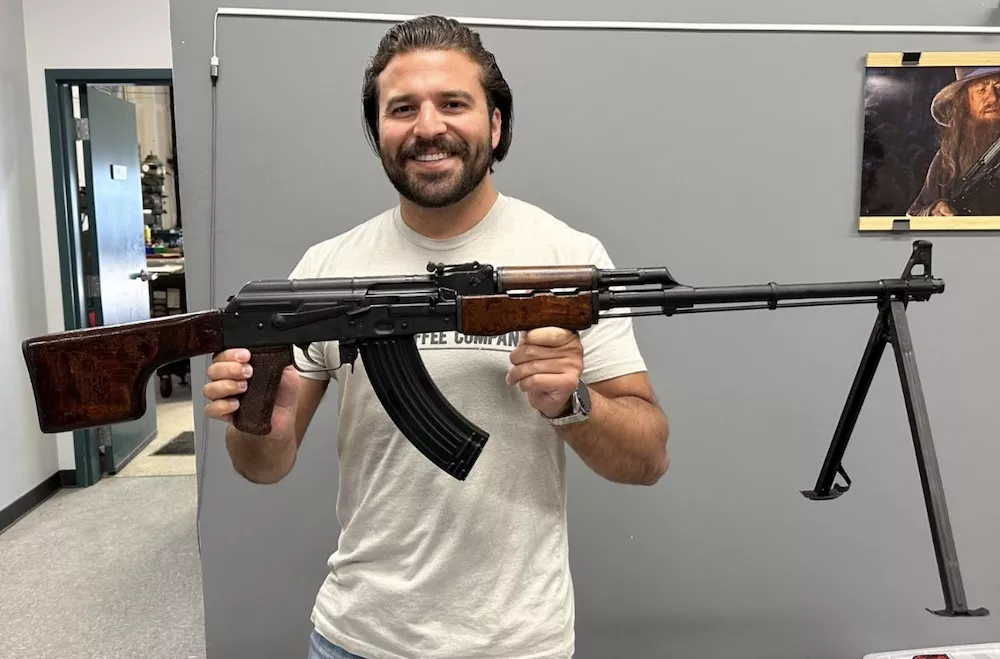
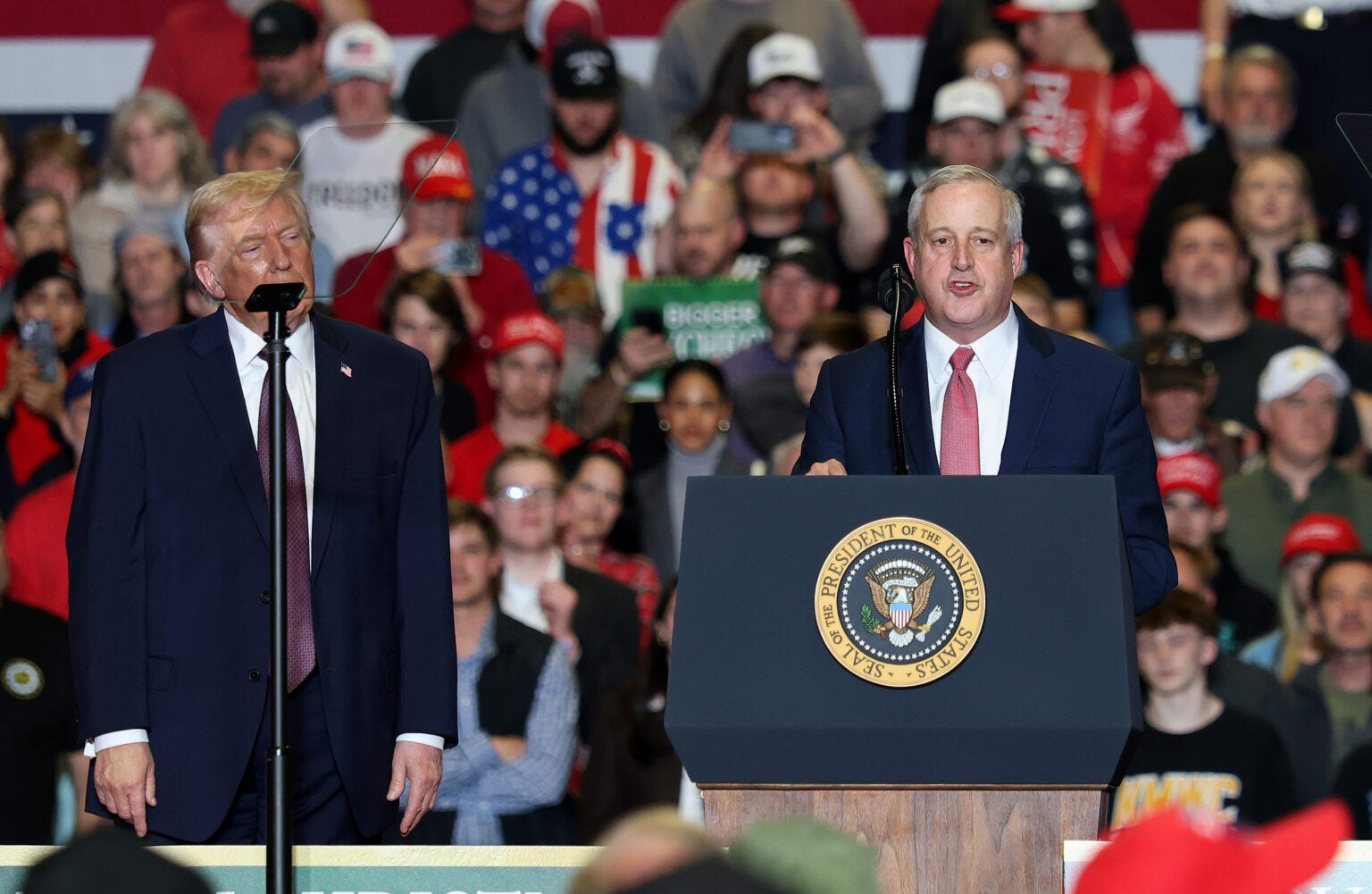
In September 2022, Nebraska's Board of Pardons voted 2-1 to pardon John Arias, a man who pleaded guilty to raping his estranged wife at knifepoint in 1993. The pardon took his name off the state's sex offender registry and gave him back his right to own guns and to vote.
Pete Ricketts was governor then. He chaired the board. He voted yes. With the attorney general also voting yes and the secretary of state voting no, that yes was one of the two votes the pardon needed.
Now Ricketts is running to keep his U.S. Senate seat, and the woman Arias attacked is telling her story on TV. As Talking Points Memo's Josh Marshall wrote this week, the ad a group backing Ricketts's opponent Dan Osborn is running about it is "a brutal ad about a brutal crime." The ad is political. The record it rests on is not — it was reported in detail by the Nebraska Examiner in 2022, the month after the vote.
What Arias did
Court records describe the attack. According to the Nebraska Examiner, Arias broke into the Ogallala home of his estranged wife and terrorized her with a knife. He tied her to a bed and sexually assaulted her while their children, ages 5 and 7, were in the home. Then he took the children and fled to Texas, leaving her bound and gagged.
He was convicted of first-degree sexual assault in 1994 and sentenced to 15 to 30 years. He finished the sentence in 2008.
His ex-wife, Jody Snogren, spoke to the Examiner after the pardon. She said Arias came to her door on April 30, 1993, with a large hunting knife and parachute cord.
"He had that knife out and he was pushing me toward that bedroom. I yelled my oldest son's name. I'm not sure what that did to him, because he couldn't help me."
Arias pleaded guilty in a plea deal. Five other felony charges and a misdemeanor were dropped — among them use of a weapon to commit a felony, terroristic threats and false imprisonment.
What the board heard
At the pardon hearing, Arias told a different story. He said the couple had argued over the boys and his anger got the best of him. He said he pushed her onto the bed and threatened to kill her if she took his sons away. Then, he told the board, "She started to take her clothes off ... We had sex."
Snogren gasped when she was told of that account.
The one board member who voted no, Secretary of State Bob Evnen, said he didn't think Arias had "fully come to grips" with "what happened that night and what you did." "This is a really serious charge," Evnen said.
Ricketts voted yes anyway. So did Attorney General Doug Peterson, who called the request a "bubble" case and said Arias's military service and work with other veterans had convinced him.
Ricketts's defense: "remorseful"
After the pardon became public and members of the American Legion planned a protest at the State Capitol, Ricketts defended his vote. In a statement, he said Arias had accepted responsibility for a crime committed nearly 30 years earlier and "has shown to be remorseful."
The victim says she never saw that remorse.
"Had he been honest and walked in there and said, 'I committed a horrible, violent crime and I'm sorry,' that would be a wholly different story. But no violent offender who did what he did deserves a pardon."
Snogren told the Examiner her ex-husband had instead been "sticking it to me" when something bad happened in her life, telling her "she deserved it." She had opposed his early release on parole years before.
Nobody told the victim
Snogren did not get a chance to tell the board any of this. She wasn't notified of the hearing. She found out about the pardon by reading about it in the Nebraska Examiner.
A spokeswoman for the board said state law requires victims of serious crimes to tell their county attorney if they want to be notified of pardon hearings, and there was no record of that here. Snogren said she didn't know about the requirement.
So the board Ricketts chaired heard from only one of the two people in that bedroom — the man who pleaded guilty to what happened there — and forgave him.
"My PTSD has kicked back in," Snogren said after the pardon. "I'm going around making sure all my windows are locked."
Why Arias wanted it
Arias told the board he mainly wanted off the public sex offender registry. The listing, he said, kept him from rising to higher office in the American Legion and required him to get permission before visiting school grounds. His name was removed after the pardon.
The pardon also restored his gun rights. When Arias contested his lifetime registry listing in 2009, the state had determined he was a "dangerous" sex offender who warranted it.
At the same meeting where Ricketts voted to forgive Arias, the board unanimously denied a pardon to Earnest Jackson, an Omaha man who had spent 22 years in prison for a murder he says he didn't commit — a case in which two co-defendants were found to have acted in self-defense.
The bottom line
As Nebraska's governor, Pete Ricketts cast one of the two votes on a three-member board that pardoned John Arias for the 1993 knifepoint rape of his estranged wife while their young sons were in the house. The pardon removed Arias from the sex offender registry and restored his gun rights. Ricketts defended it by calling Arias "remorseful." The only other person who could have spoken to that — the woman he attacked — was never told the hearing was happening.