In March 2025, a federal judge struck down nine provisions of Texas Senate Bill 1 — the 2021 law that rewrote how Texans vote by mail — because they violated the Americans with Disabilities Act. The plaintiffs argued the requirements were overly cumbersome and restrictive for voters with disabilities, and the judge agreed. In Texas, mail voting is open to voters with certain disabilities and to anyone over 65.
On August 12, the Fifth Circuit put all of it back, reversing the district court in its entirety.
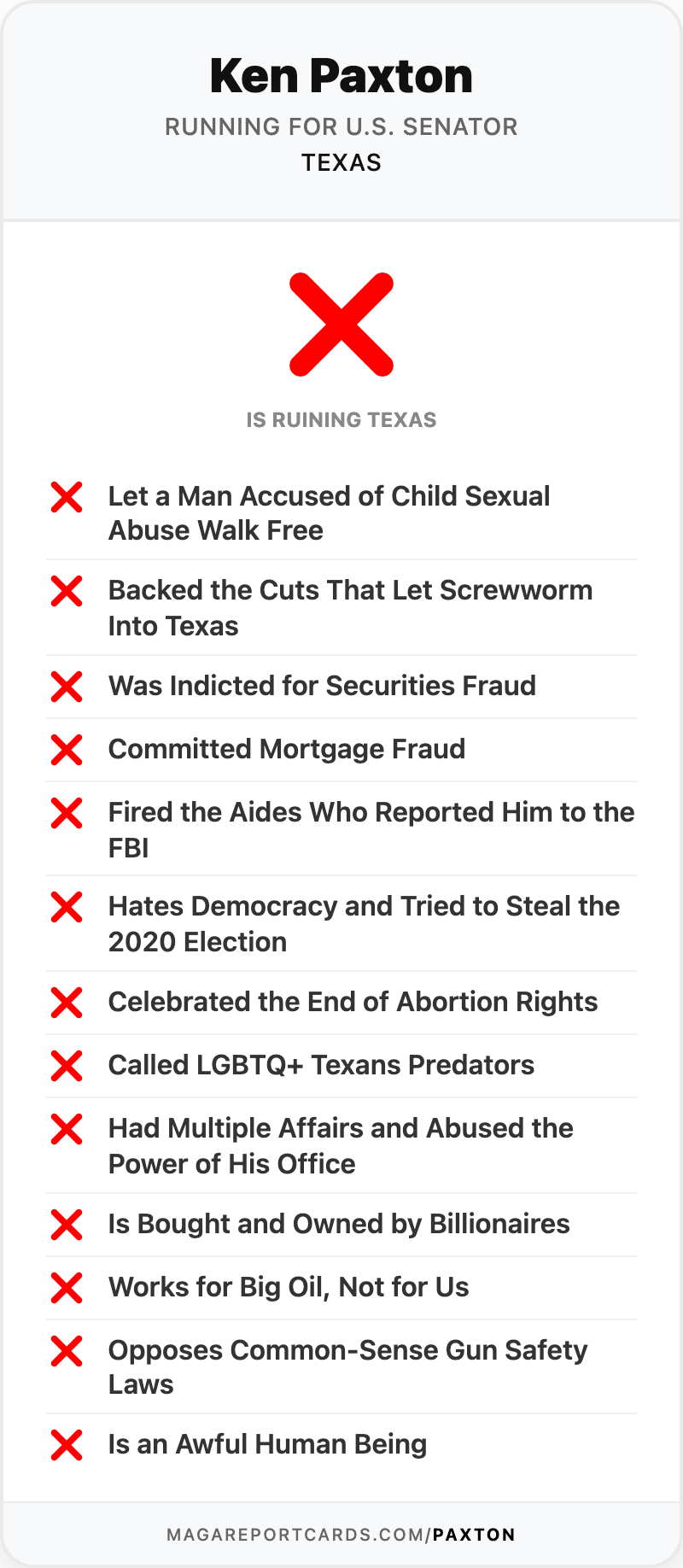
Ken Paxton, the defendant in the case and now his party's nominee for U.S. Senate, posted: "BREAKING VICTORY: I just secured a major win upholding election integrity and preventing voter fraud." His office called it "a major victory for election integrity."
What just got restored
The Fifth Circuit's 11-page ruling reinstated, among other things:
- The ID-matching requirement. Texans applying for a mail ballot must write down a driver's license number or the last four digits of their Social Security number — and it has to match whichever number the state happens to have on file for them. Not the number you have. The number they have.
- The ballot-curing process for fixing a defective ballot.
- Oath requirements for voters and for anyone assisting them, including disclosures about their relationship to the voter.
That last category matters more than it sounds. If you're blind, or you have a tremor, or you can't hold a pen, somebody has to help you vote. SB 1 wrapped that person in paperwork and legal exposure.
The Arc, which calls itself the country's largest community-based organization advocating for people with intellectual and developmental disabilities, called the ruling a setback and noted the obvious: more than three million eligible Texas voters have a disability. Shira Wakschlag, the group's senior executive officer for legal advocacy and general counsel, put it plainly — "This decision is a huge setback for Texans with disabilities, making it harder for them to vote on issues that impact their daily lives."
And the timing is not incidental. The barriers are back in place for the November 2026 midterms.
The number matching thing is not hypothetical
We already know what this rule does when it's switched on, because Texas ran the experiment in 2022.
The Brennan Center pulled the individual voter records for that year's primary — the first election held under SB 1 — and found that of roughly 215,000 Texans who requested a mail ballot, some 30,000 had their application or their ballot rejected because of the ID-number rule. Roughly one in seven voters who tried to vote by mail.
One in seven. Not for fraud. For a number mismatch. As the Brennan Center describes it, "if a voter had only ever provided their Social Security number but later used their state ID number on their mail ballot, their ballot would be rejected — even if their state ID number was valid."
The state's defenders point to a different figure, and it's in Judge Andrew Oldham's own opinion: rejections of mail-ballot applications and mail ballots "caused by missing or mismatched identification numbers dropped from 11 or 12 percent to 2.7 percent in just eight months." Officials testified the rate would "continue to decline" as the state's identification database got "more robust" and voters got "more used to" the procedures.
Take that number at face value and it still indicts the law. 2.7% of mail-ballot applications and ballots thrown out over a missing or mismatched number is an enormous number of real people in a state the size of Texas — and the population most dependent on mail voting is exactly the population least able to absorb a rejection: seniors, the disabled, people who can't drive to a polling place to fix it.
The reasoning: nobody has standing to complain
The Fifth Circuit didn't rule that SB 1 is good law. Mostly, it ruled that the people harmed by it aren't allowed to say so. Oldham wrote:
"The bulk of the plaintiffs' claims fail for lack of standing. One fails on the merits. But none justifies interference with the State Legislature's efforts to prevent voter fraud and to protect election integrity."
That is the opinion's closing paragraph, before it reverses the district court "in its entirety." Standing is the doctrine that decides who's permitted through the courthouse door. Disability rights groups brought a case saying a law makes it harder for disabled people to vote, a trial judge agreed after hearing the evidence, and an appeals court answered that they weren't the right plaintiffs.
Note also the framing in that final clause: "the State Legislature's efforts to prevent voter fraud." That's the premise the whole thing rests on — that Texas had a fraud problem worth this cost.
Paxton has been running this play for years
The man celebrating this ruling is the same attorney general who built a career hunting voter fraud — and who, according to a Texas Tribune and ProPublica investigation, voted six times in two years while registered at a Collin County home he moved out of in June 2024. Collin County Democrats filed a complaint with the Texas secretary of state, whose office refers such complaints to the attorney general — Paxton's own office — when it finds reasonable cause to suspect a crime.
That's the whole shape of Paxton's voting-rights record. Enormous machinery aimed at ordinary voters; a shrug for himself.
Texas Republicans nominated him for the U.S. Senate anyway, on a record of scandals, indictments and abuse of office that was fully public at the time.
What it means in November
Every Texan who votes by mail this fall — every senior, every voter with a disability, every person who can't get to a polling place on a Tuesday — now has to match whichever identification number the state has on file for them — or work through the cure process that The Arc's members testified is itself inaccessible.
Paxton spent state resources defending that rule all the way to the Fifth Circuit. He won. He called it a major win.
For whom?
Source
"Federal court restores Texas mail ballot ID requirements for 2026 election," Votebeat Texas and "Texas' mail ballot ID requirements restored by federal appeals court," The Texas Tribune, Aug. 12–13, 2026.