On July 21, 2026 — in the middle of a summer of dangerous heat across the country — a House committee voted 18 to 15, straight down party lines, to make sure the federal government can never again try to keep workers from dying of heat on the job.
The bill they voted on was written by Mark Messmer.
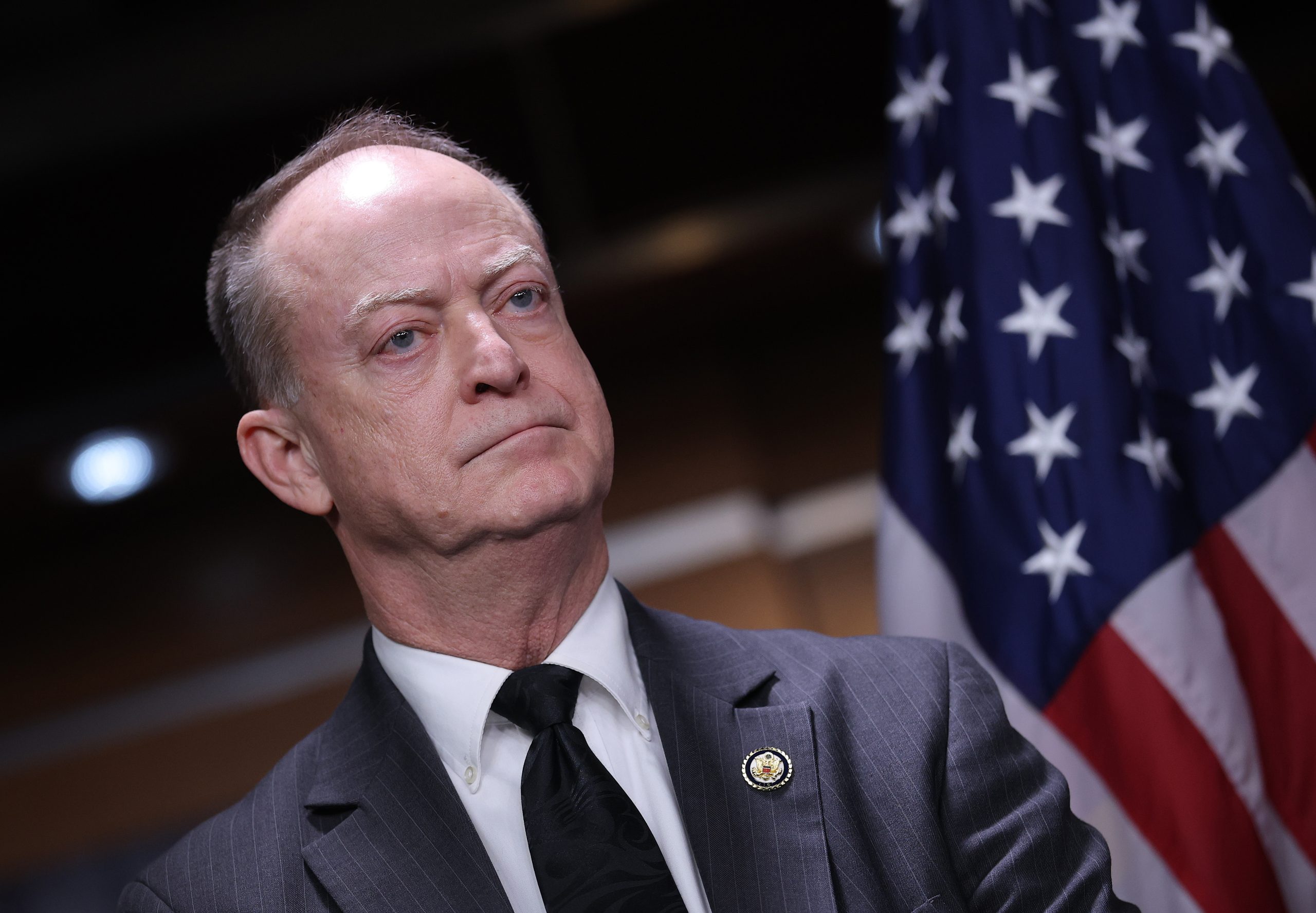
Messmer has been Indiana's 8th District congressman since 2025. He sits on the House Education and Workforce Committee, and on that committee he serves as vice chair of the Subcommittee on Workforce Protections — the panel whose entire job, by name, is protecting workers.
The bill he wrote is called the Heat Workforce Standards Act. Apart from a line giving it that name, here is the whole of it:
"The Secretary of Labor may not finalize, implement, or enforce the proposed standard titled Heat Injury and Illness Prevention in Outdoor and Indoor Work Settings published by the Occupational Safety and Health Administration in the Federal Register on August 30, 2024 (89 Fed. Reg. 70698), or any substantially similar standard."
That's the whole bill. Fifty words. There's no replacement standard in it. There's no expiration date. There's no process for a future administration to try again. It just says: never.
What the rule would have required
The rule Messmer wants to kill forever is not exotic. OSHA published it in August 2024. It sets two trigger points:
- At a heat index of 80°F — drinking water (a quart per worker per hour, kept "suitably cool"), a break area to cool off in, and a gradual ramp-up period for new workers.
- At a heat index of 90°F — a paid rest break of at least 15 minutes every two hours.
Water. Shade. A break. OSHA picked 80 degrees because, by its own analysis, that threshold catches 96 to 100% of heat-related worker deaths. The rule would cover roughly 36 million workers — about a third of the country's full-time workforce.
The people it covers are the ones who don't get to sit in air conditioning: farmhands, roofers, road crews, warehouse workers, delivery drivers, line cooks, foundry workers.
The body count
The Bureau of Labor Statistics has documented 1,042 American workers killed by heat on the job between 1992 and 2022 — an average of 34 a year. Over the decade from 2011 to 2020, BLS estimated 33,890 heat injuries and illnesses serious enough that the worker missed days of work.
Safety researchers say both numbers are undercounts, because heat deaths get written down as heart attacks.
Sixty-four organizations and elected officials — occupational-health physicians, nurses' unions, farmworker groups and a dozen state legislators — wrote to Congress the day of the vote, pointing out what makes this bill different from an ordinary "we don't like this regulation" fight:
"H.R. 6213 would permanently prohibit the Department of Labor from finalizing, implementing, or enforcing a federal heat standard ... no sunset provision, no mechanism for future reconsideration."
Their other line was blunter: "Workers have no control over extreme heat, and many are unable to refuse hazardous assignments without jeopardizing their livelihoods."
"The Biden Heat Rule was never about safety"
That's Messmer's own description of a rule about drinking water and rest breaks. He said it in his own press release announcing the bill in November 2025:
"The Biden Heat Rule was never about safety, but was rather, unsurprisingly, focused upon expanding federal bureaucratic control over hard working Americans."
He framed it as a small-business owner's complaint about red tape: "As a small business owner myself, I've seen how unwarranted, heavy-handed regulations can crush innovation, increase costs, and undermine the productivity of American institutions."
Notice what's missing. Not one word in that release about the workers who die. The release lists what the rule would do to businesses — paperwork, fines, "regulation requirements" — and never once mentions a worker who has died, or a single person who has been hurt.
The line in his own press release that doesn't survive contact with Indiana law
Buried in the background section of that release is the argument Messmer uses to say nobody gets hurt by his bill:
"State governments already have the authority to establish their own occupational safety and health standards and are required to have their plans be 'at least as effective' as Federal OSHA standards."
Fine. So what does Indiana do?
Indiana has a state workplace-safety agency, IOSHA. And Indiana has a state law, Indiana Code 22-8-1.1-17.5, that says this:
"The commissioner may not adopt or enforce any provision used to carry out the enforcement of this chapter that is more stringent than the corresponding federal provision enforced by the United States Department of Labor under the Occupational Safety and Health Act of 1970."
Read those two passages together. Messmer's defense is that states can write their own heat rules. Indiana law says its labor commissioner is forbidden from going beyond the federal standard. Indiana can only ever copy Washington.
So if Messmer's bill becomes law and the federal heat standard is dead forever, the state ceiling drops to zero — and by Indiana statute, Indiana cannot raise it. Hoosiers working in the heat would have no federal protection and no legal path to a state one.
Messmer spent sixteen years in the Indiana legislature before he came to Congress — six in the state House and ten in the state Senate. This is not a corner of state law he can plausibly claim to be unfamiliar with.
Who asked for this
Messmer's press release names them. The Heat Workforce Standards Act is endorsed by the National Federation of Independent Business, the National Ready Mixed Concrete Association, the Mason Contractors Association, Independent Electrical Contractors, the National Restaurant Association, the American Building Materials Alliance, and about twenty more trade groups — an almost perfect list of the industries whose workers the rule would have covered.
That's the same pattern a report published in May 2026 by the Groundwork Collaborative, Workshop, and Harvard Law School's Center for Labor and a Just Economy laid out: the US Chamber of Commerce and major employers publicly praising worker safety while lobbying to block heat rules. That report estimated a real federal heat standard could save up to 1,500 lives a year.
Messmer's own campaign money comes from the same neighborhood. His donors include the home builders' BUILDPAC and the Indiana Farm Bureau's political action committee, according to FEC filings compiled by Who Bought My Rep — construction and agriculture, two of the four sectors OSHA's rule names by name.
He is not the only one. Florida's Byron Donalds signed on as a co-sponsor, which we wrote about in Byron Donalds Co-Sponsored a Bill to Block Heat Protections for Florida's Outdoor Workers. But Donalds was one of 62 co-sponsors as of August 2026. Messmer is the author.
The part that should bother his own district
Messmer also sits on the House Agriculture Committee. Agriculture is one of the four sectors OSHA's rule explicitly covers, and southwest Indiana is farm country — the same constituents he tells farm audiences he's fighting for.
Indiana is not Arizona. Nobody has to pretend it is. But a grain bin, a warehouse dock, or a roof in Evansville in July is hotter than the air outside it, and the rule Messmer wants permanently banned would have meant that on those days, the worker gets fifteen minutes and cold water.
His committee sent the bill forward in the middle of a stretch of dangerous heat across the country. It now waits for a floor vote.
Source
Jake Johnson, "Amid deadly temperatures, GOP advances bill to ban federal heat protections for workers", The Real News Network / Common Dreams, July 24, 2026. Photo of Rep. Mark Messmer by Kevin Dietsch/Getty Images.